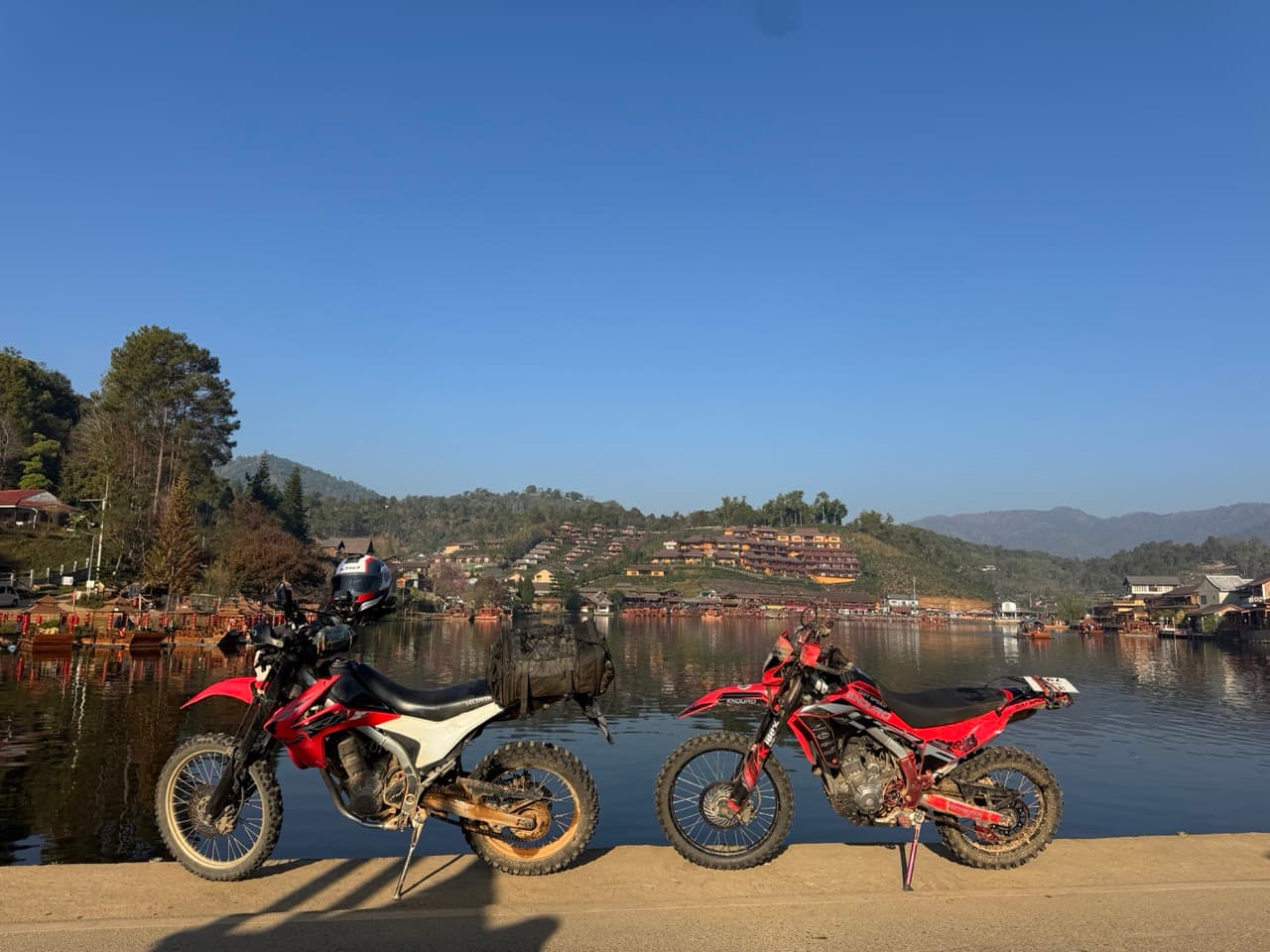
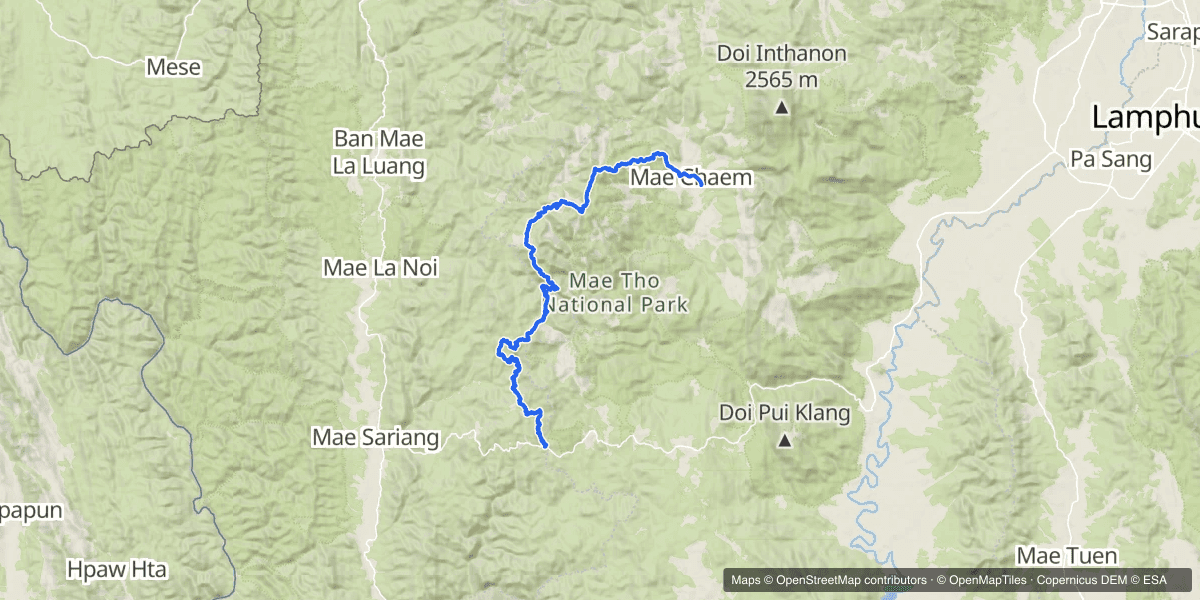
The whole plan came off a phone screen. I had been scrolling around Gaia GPS looking at the gap between Mae Sariang and Mae Chaem — a lot of thin grey lines that might be roads and might be nothing — and joined enough of them together to make something that looked like it would go. That was the entire amount of research this ride got. One bike, one rider, and a decent chance of turning around at lunchtime.
| Quick Facts | |
|---|---|
| Date | Sunday 20 September 2026 |
| Total distance | 342.7 km — 118.8 km of it dirt |
| Dirt section | Off the 108 near Mae Sariang to Mae Chaem |
| Riding window | 09:26 to 18:12 — 8h46m door to door |
| Riders | 1 — solo, Honda CRF250L |
| Season | Late rainy season (September) |
| Elevation range | 462 m to 1,574 m on the dirt |
| Surface | Red clay, graded dirt, rock, a little concrete village road |
| Weather | Overcast with intermittent rain, clearing to blue by mid-afternoon |
| Notable | Four separate false endings |
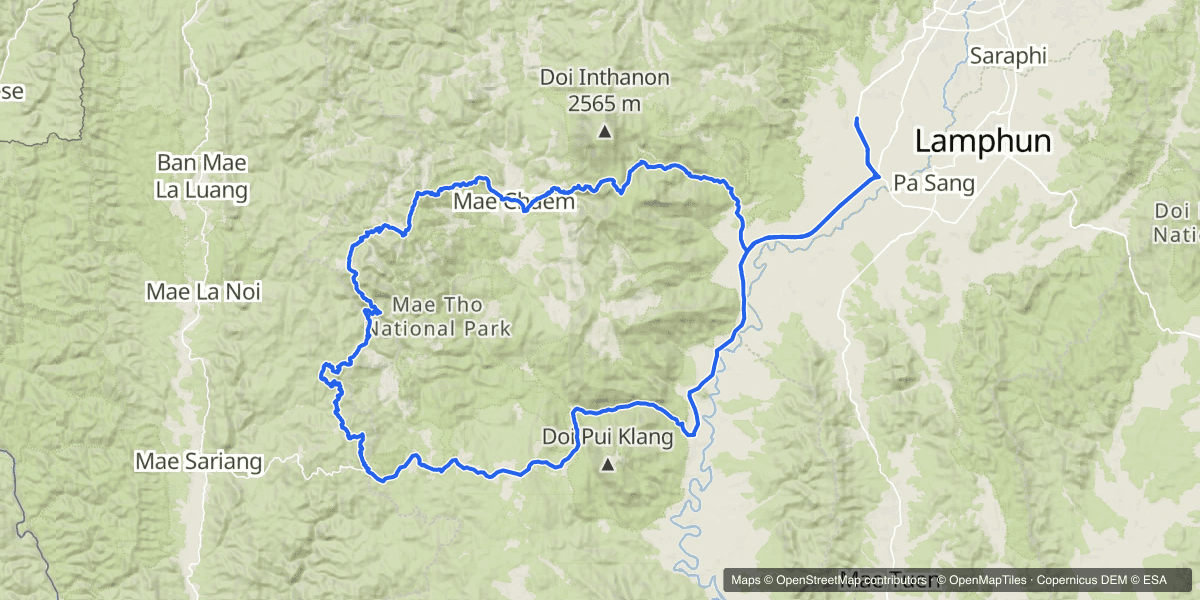
| Leg | Time | Distance | Surface |
|---|---|---|---|
| Chiang Mai to the turn-off | 09:26–11:19 | 133.5 km | Paved — the 108 |
| Turn-off to the river bridge | 11:19–14:17 | 56.1 km | Red clay, two-track |
| Bridge to the pine forest | 14:17–14:48 | 8.1 km | Rutted clay |
| Pine forest to Ban Or | 14:48–15:26 | 20.0 km | Graded dirt, then concrete |
| Ban Or to Mae Chaem | 15:26–16:46 | 34.6 km | Mixed dirt, then pavement |
| Mae Chaem to Chiang Mai | 16:46–18:12 | 90.4 km | Paved |
First, 133 km of the 108
Nothing about the first three hours is interesting and all of it is necessary. Chiang Mai to the turn-off is 133 km of highway, south through Hot and then west toward Mae Sariang, done at whatever speed a CRF250L will hold without complaining about it. I left at half past nine and pulled off the tarmac at twenty past eleven. It had already rained once by then. It would rain again.
Onto the Dirt
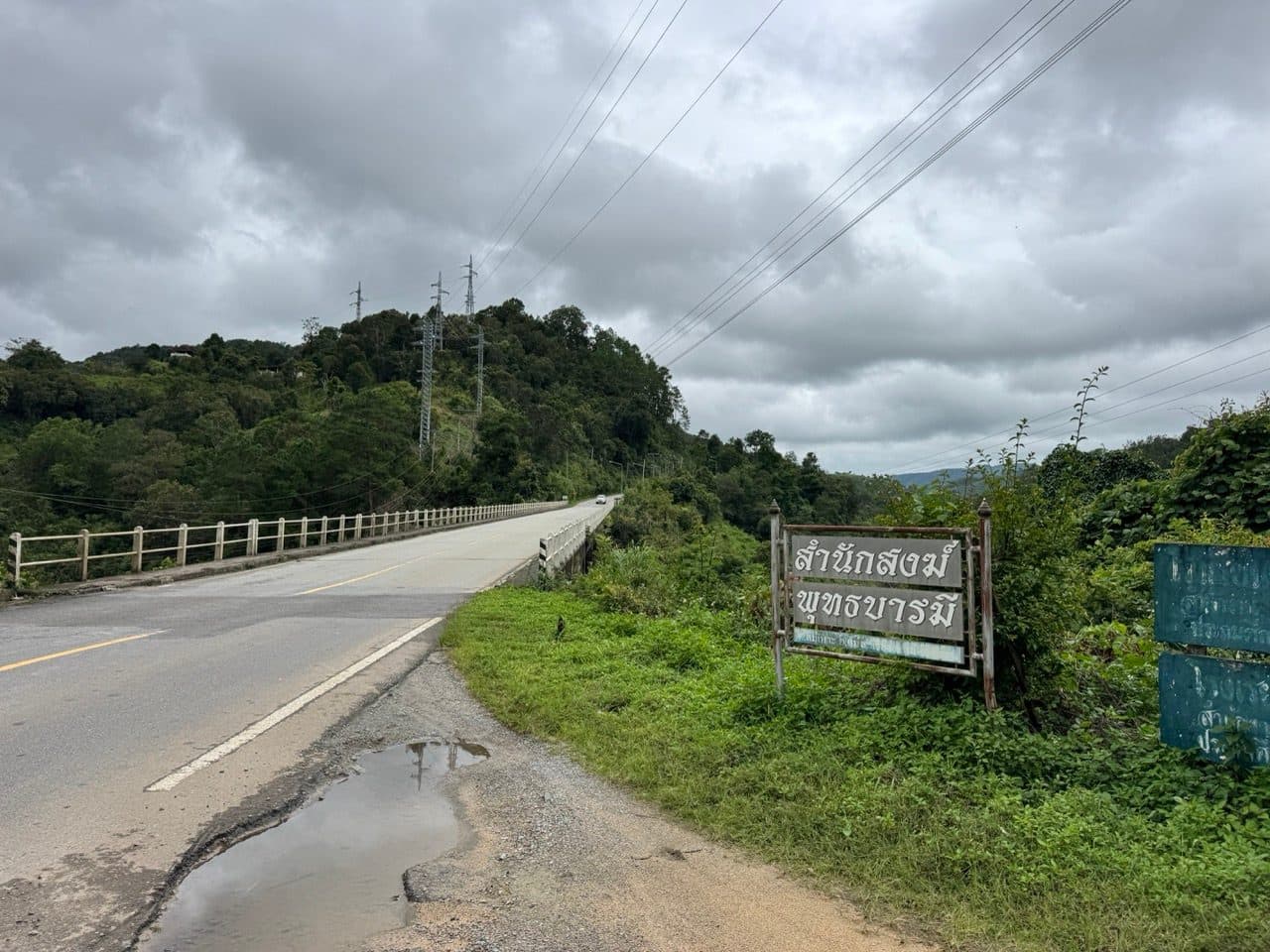
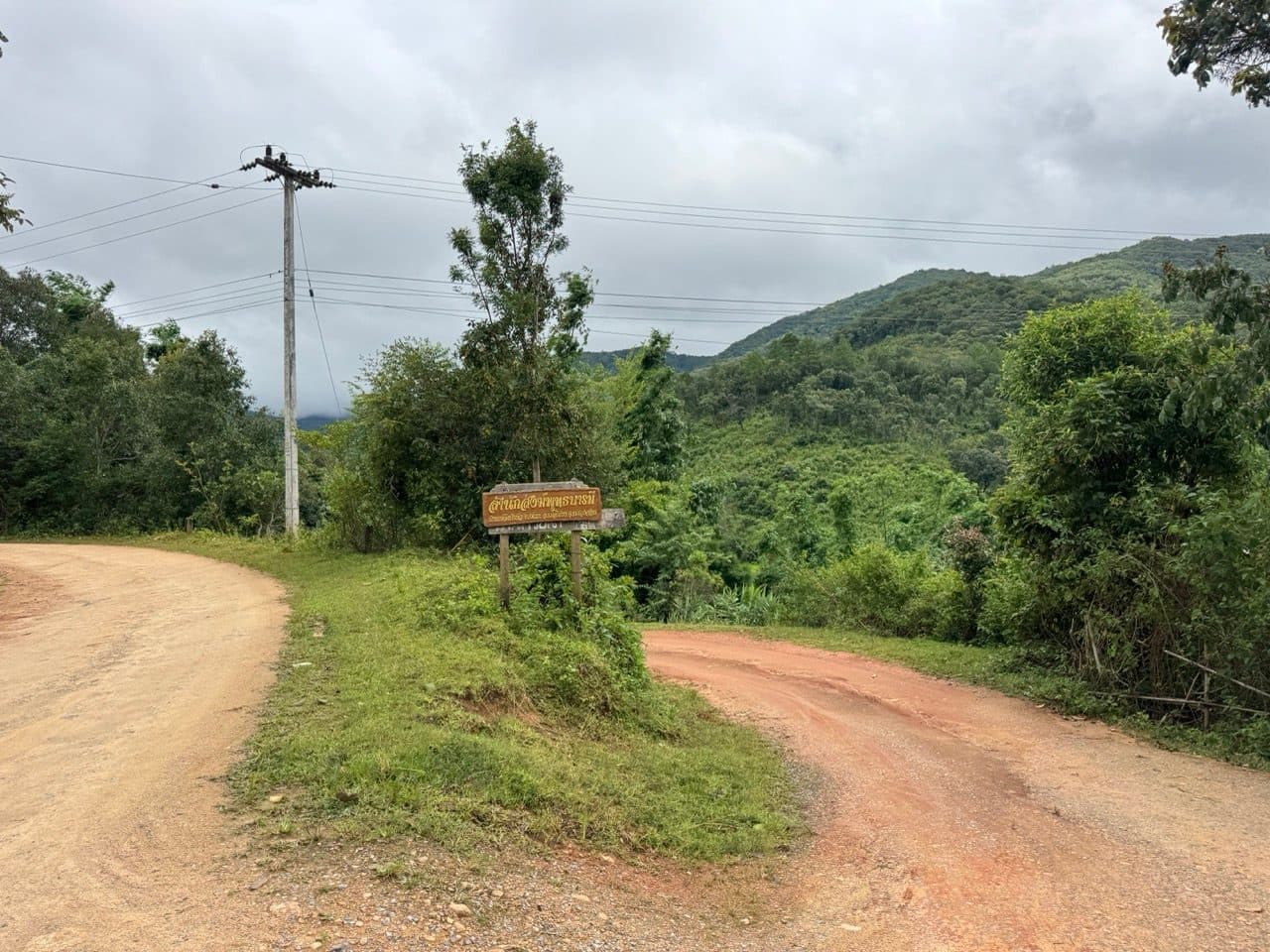
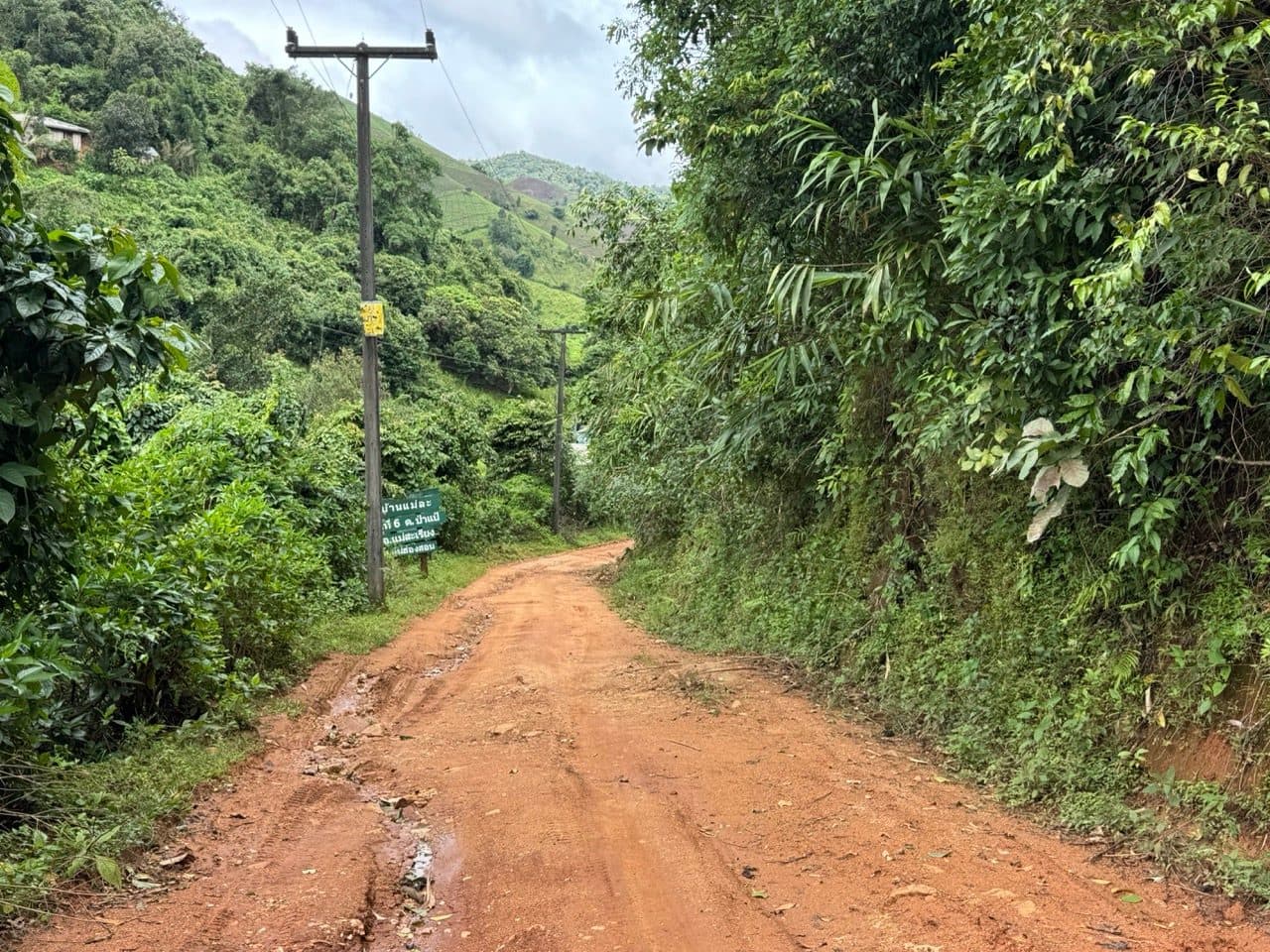
The turn itself is unremarkable: a bridge, a sign for a forest monastery, and a road that stops being sealed about a kilometre later. Then a fork with a hand-painted board on it, and after that you are committed, because the next sensible place to turn around is a long way back the way you came.
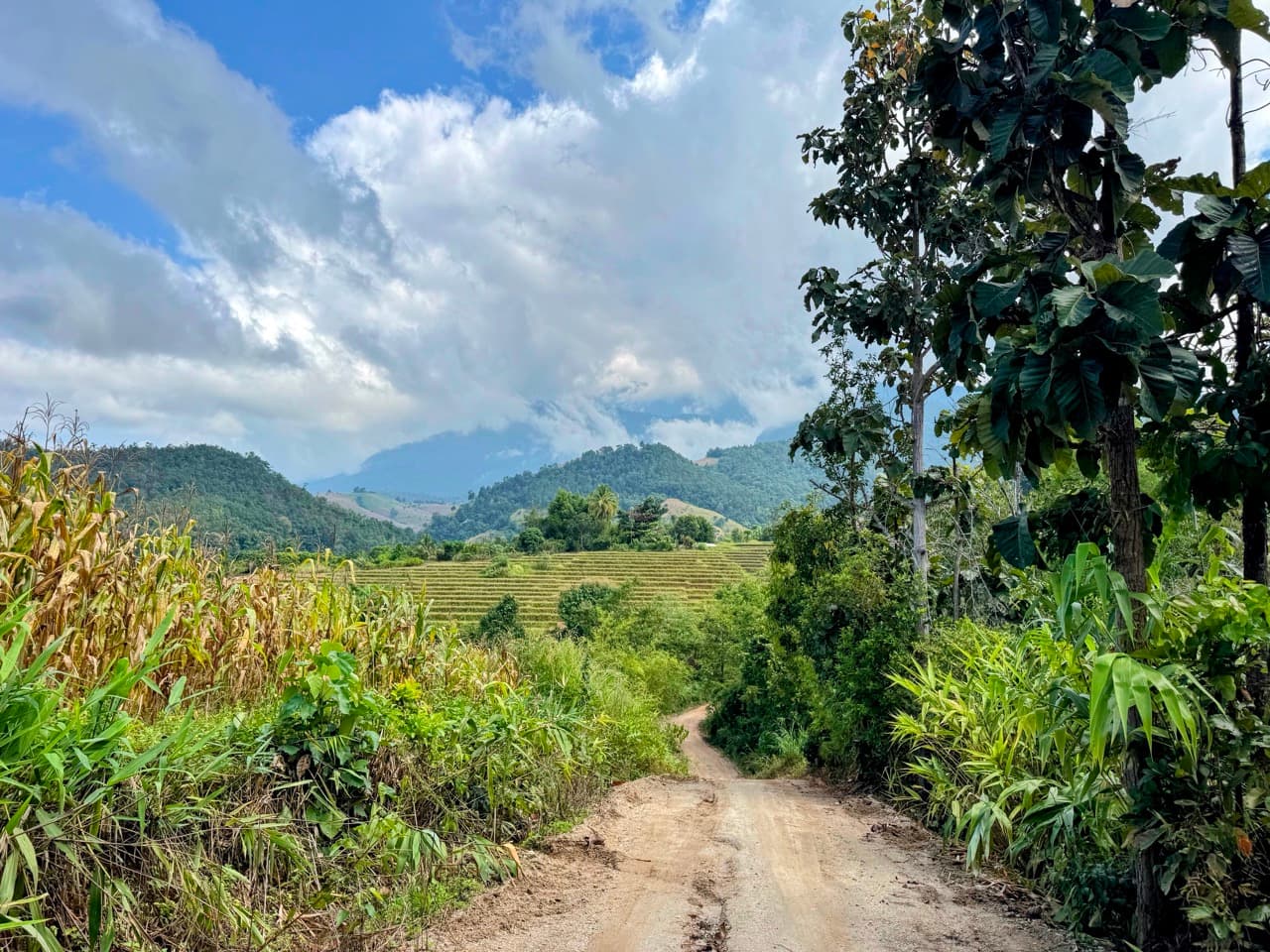
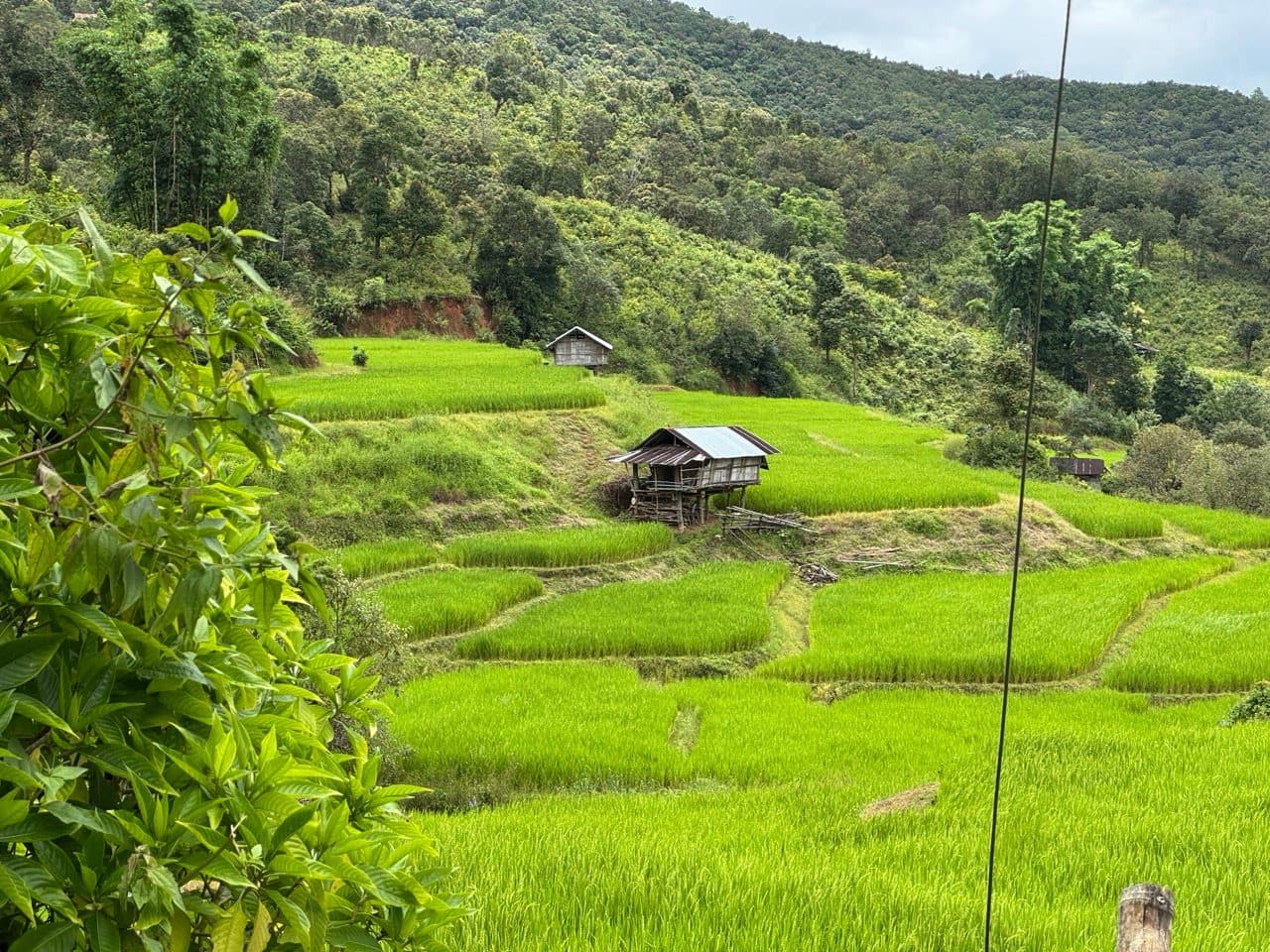
Two minutes past the fork, the first rice. This is the trade you make riding up here in September — everything is wet, and everything is green in a way it simply is not for the other nine months of the year.
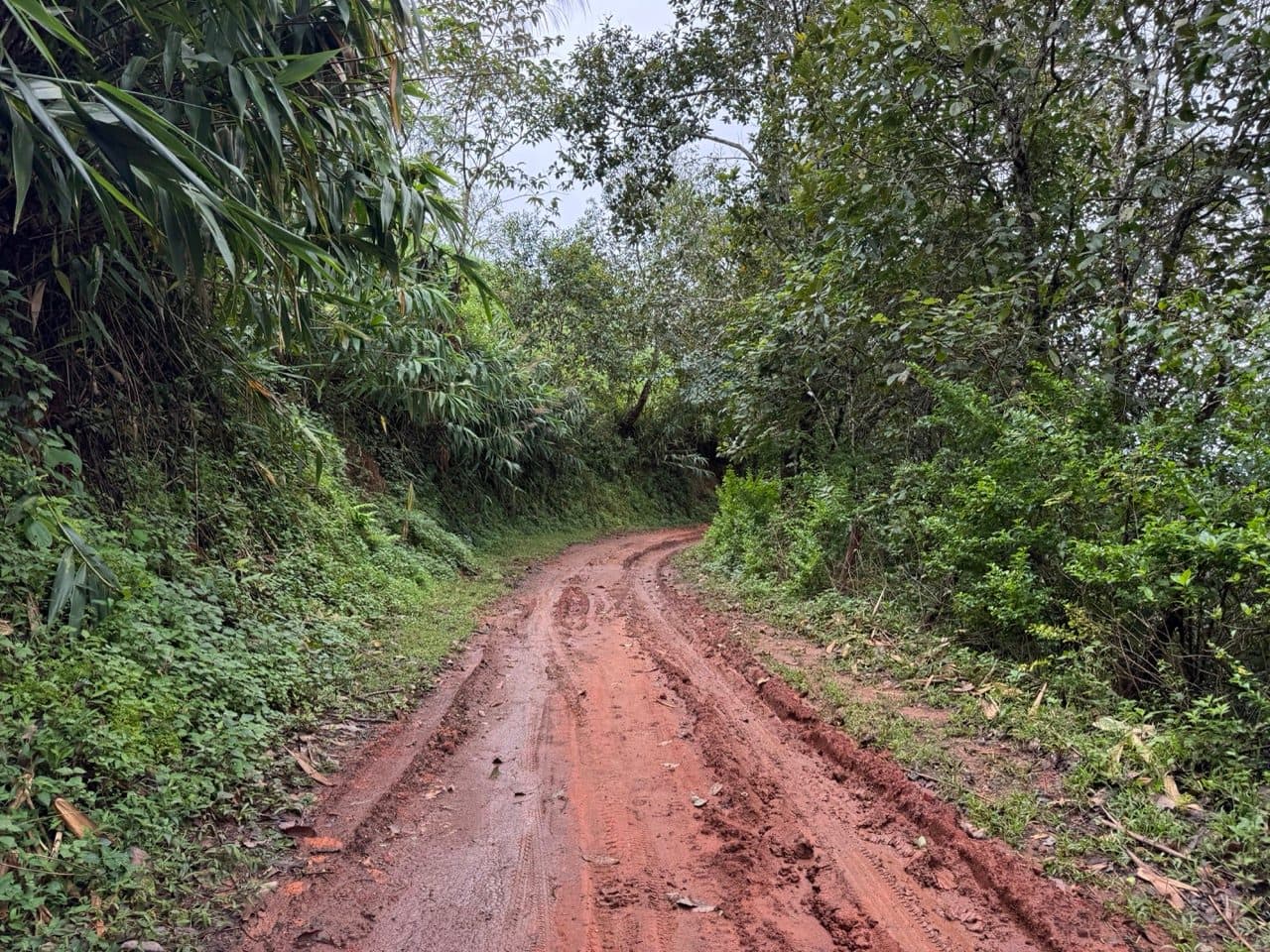
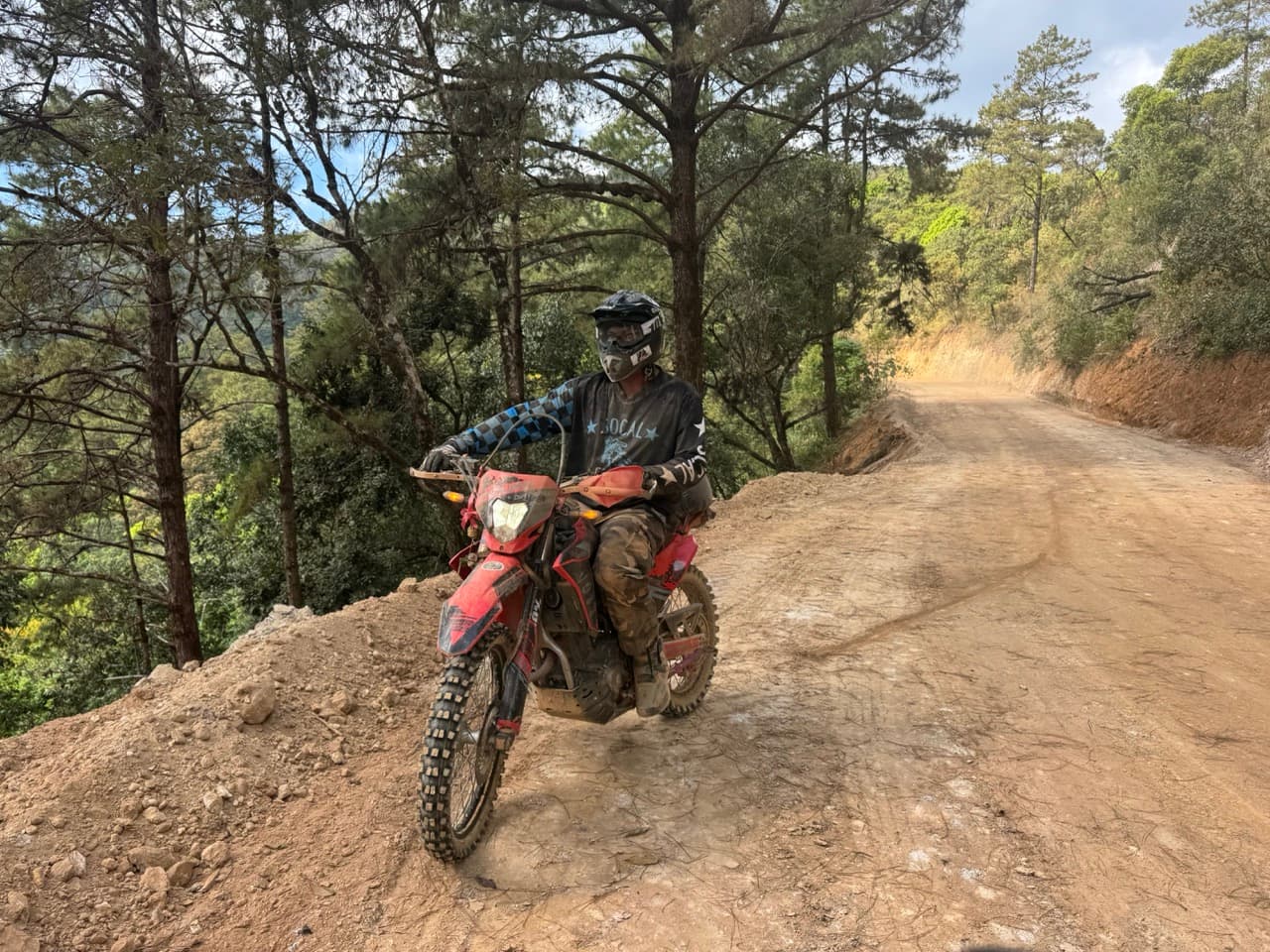
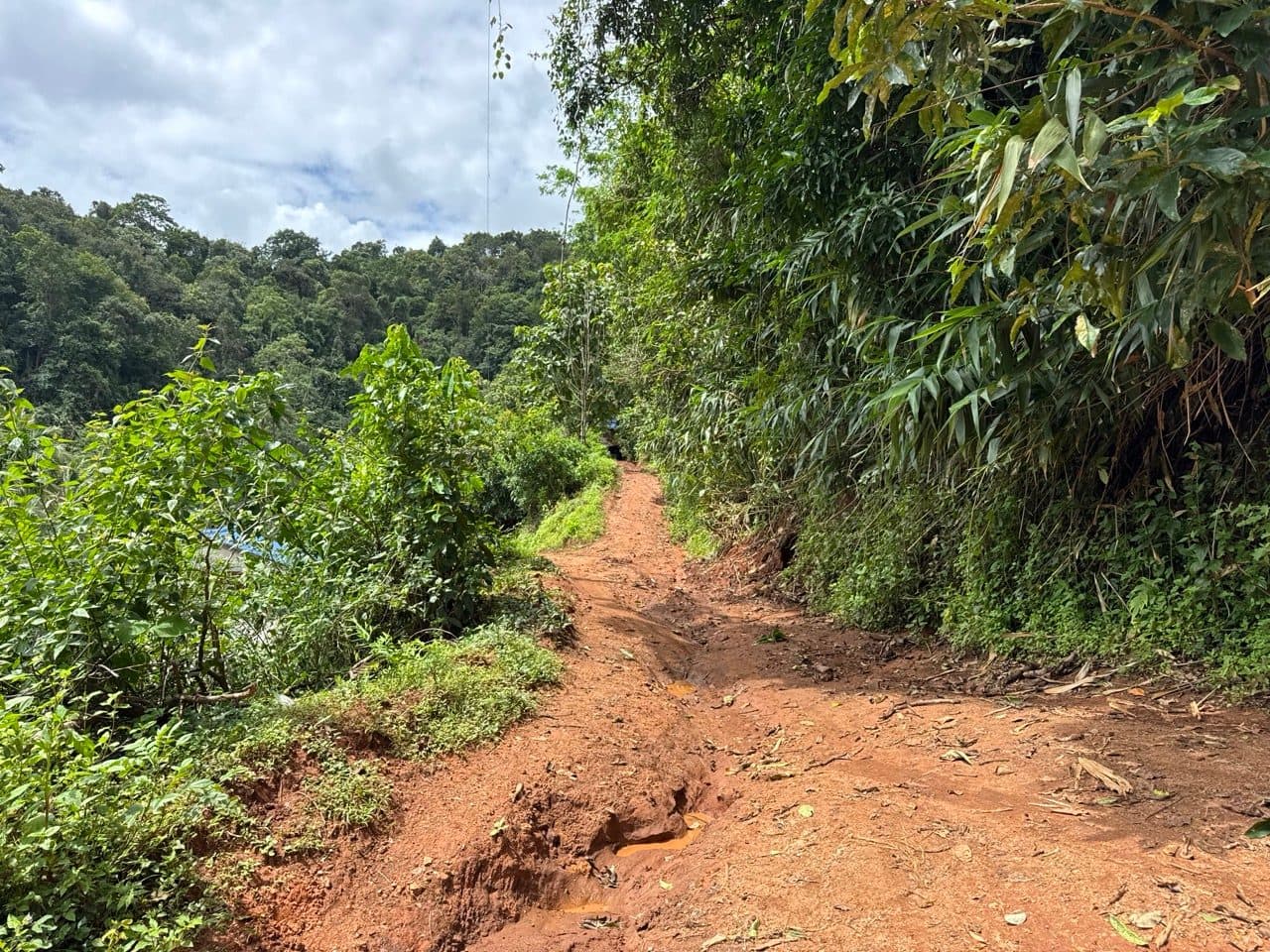
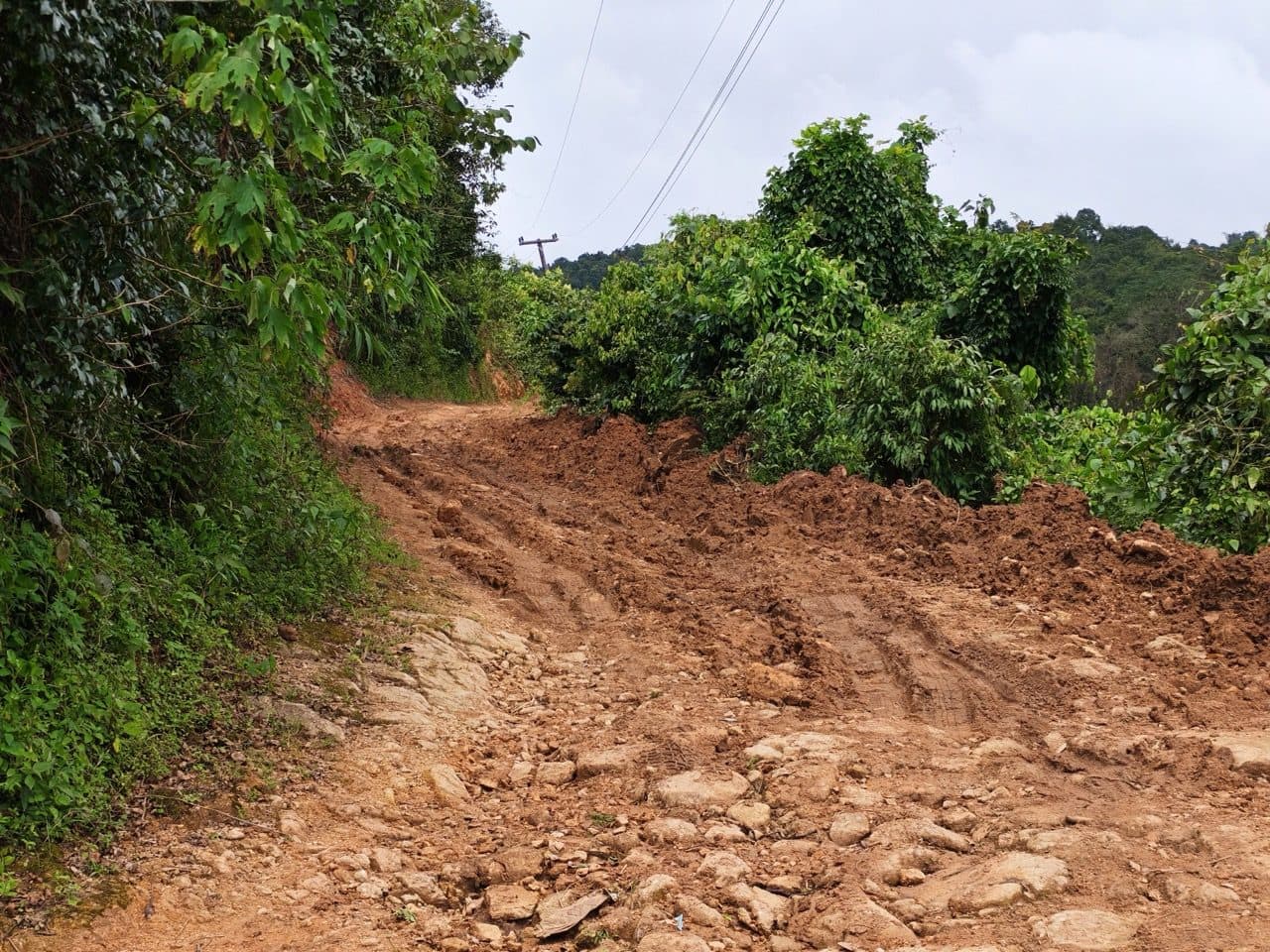
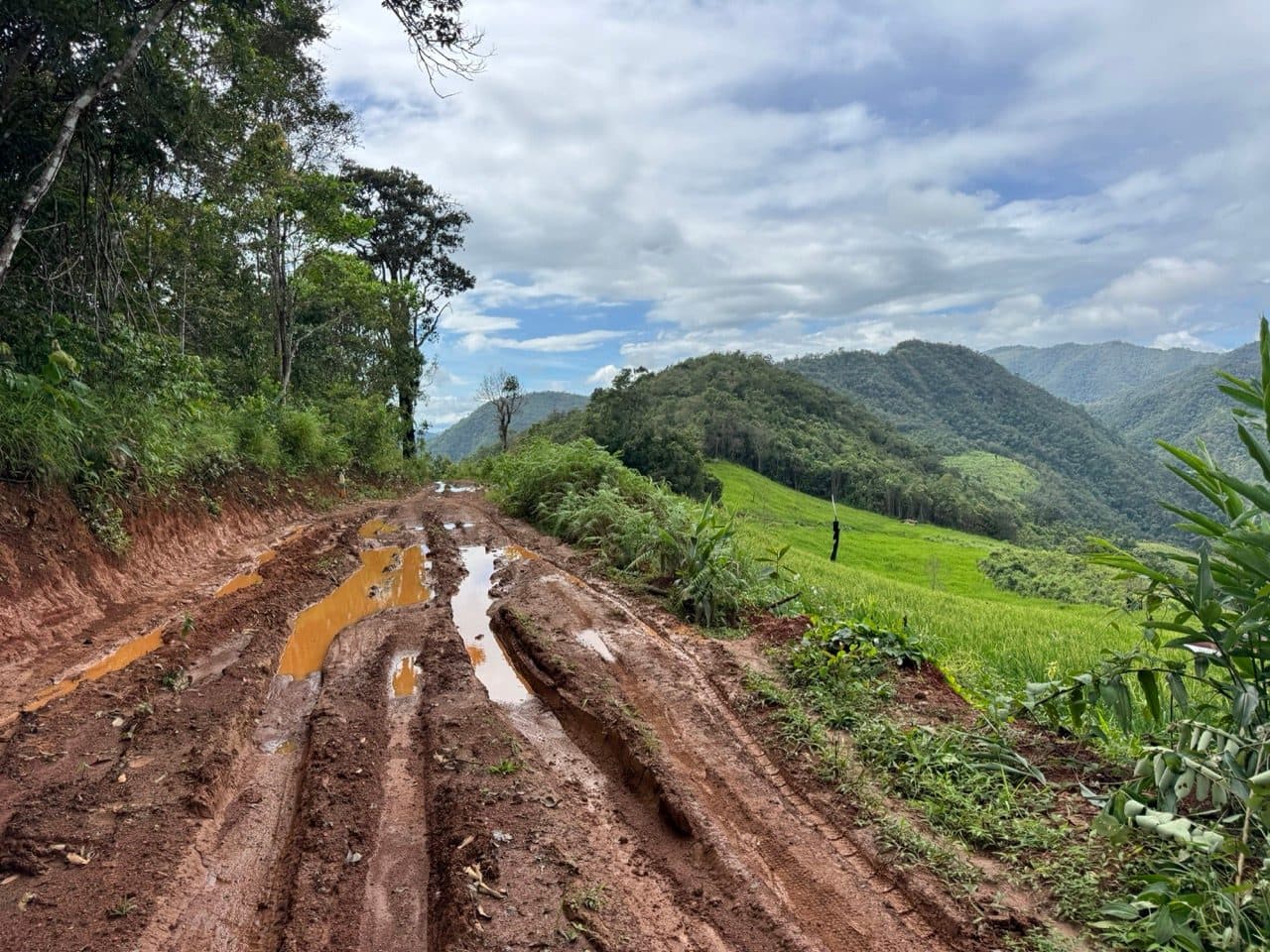
And there is the other half of the trade. Northern red clay in the wet is not mud. It is a thin greased film sitting on a firm base, which means the bike rolls along entirely normally until it stops doing that, generally without warning. Climbing it is mostly fine. Descending it is where people get hurt, because the front wheel goes out from under you before you have registered that anything changed. The route page carries a disclaimer about exactly this, and it is not being dramatic.
Ridges, Villages and Rice
The climb out of the valley goes up onto a ridge and then simply stays there, which is the single best thing a dirt road can do. By noon the sun had found a gap and the whole thing opened out.
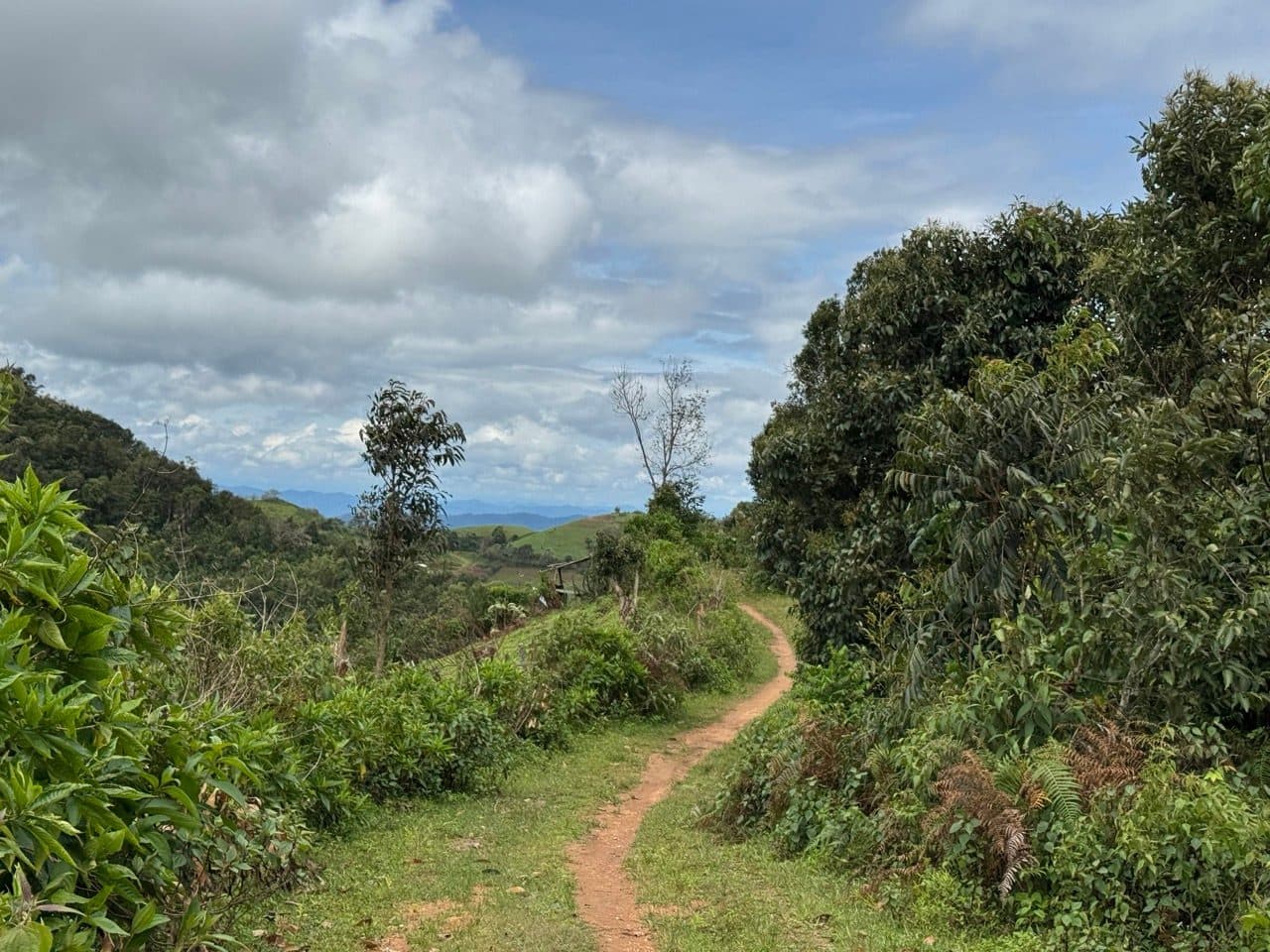
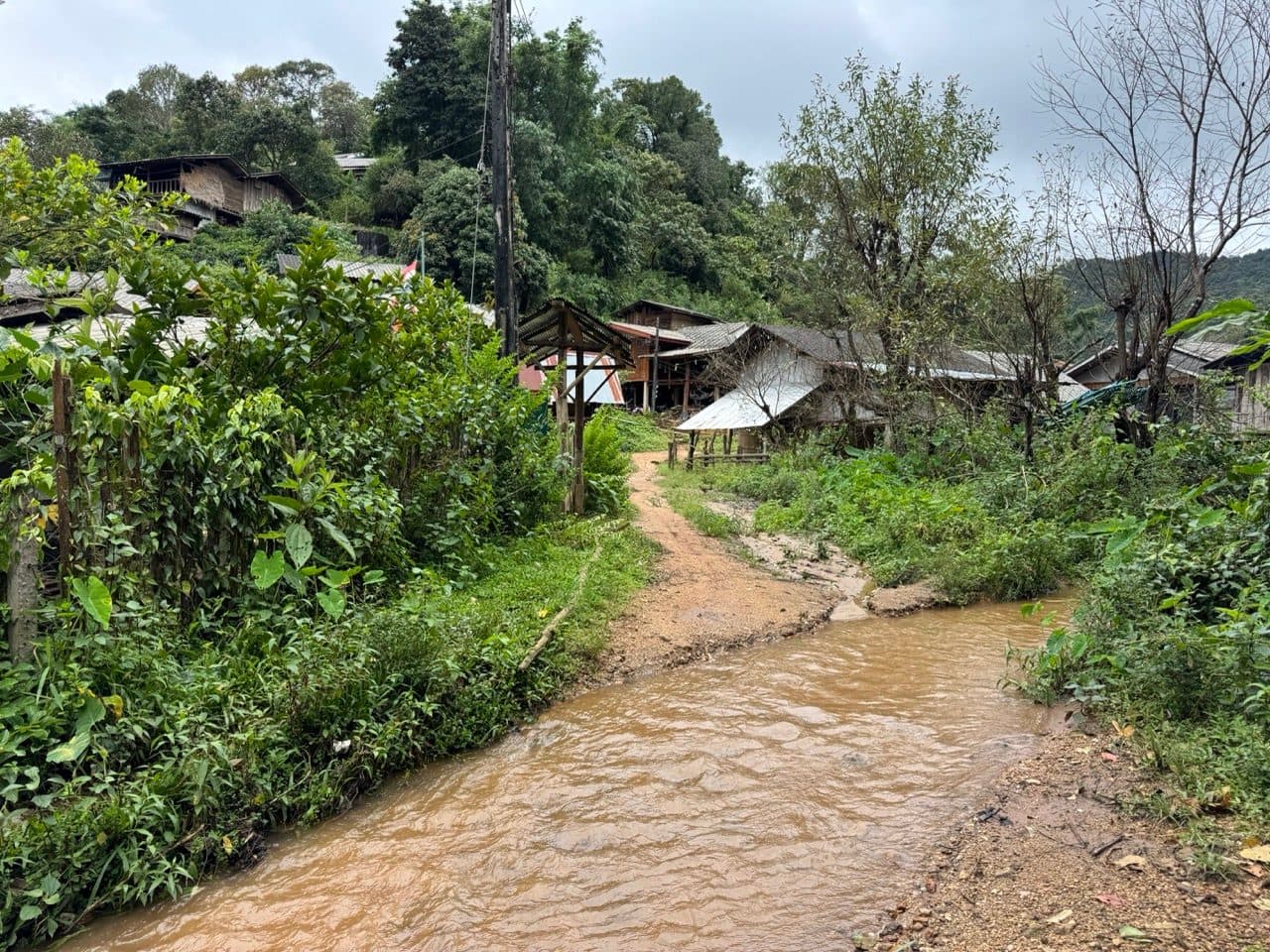
The villages are Karen and they come every few kilometres — houses on the slope, a stream through the middle, a school, a shop. I got waved at a lot. Kids shouted at the bike. Nobody appeared even slightly surprised to see a motorcycle caked in clay come through, which is about the reception you want when you are making the route up as you go.
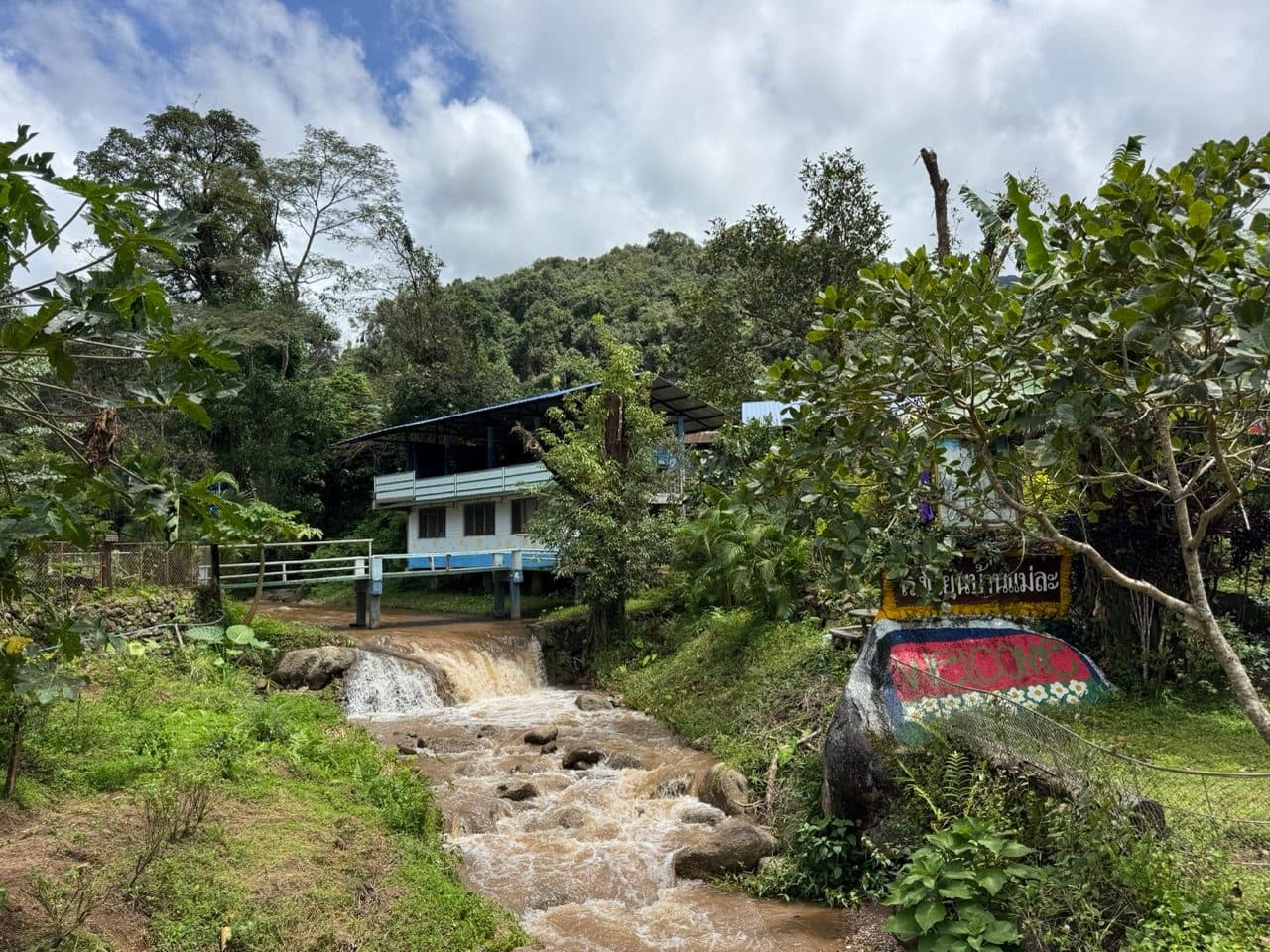
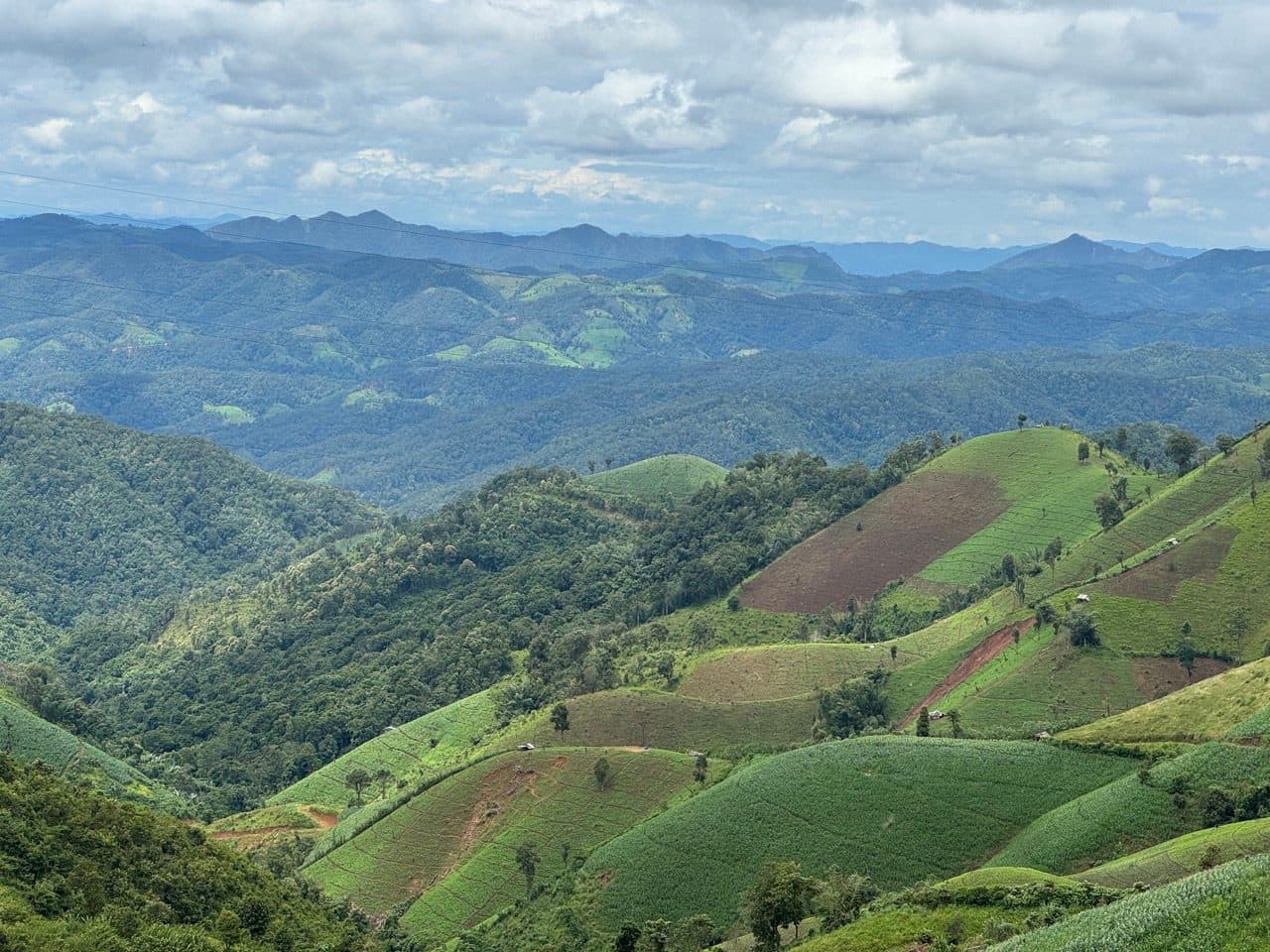
And between the villages, the reason you came.
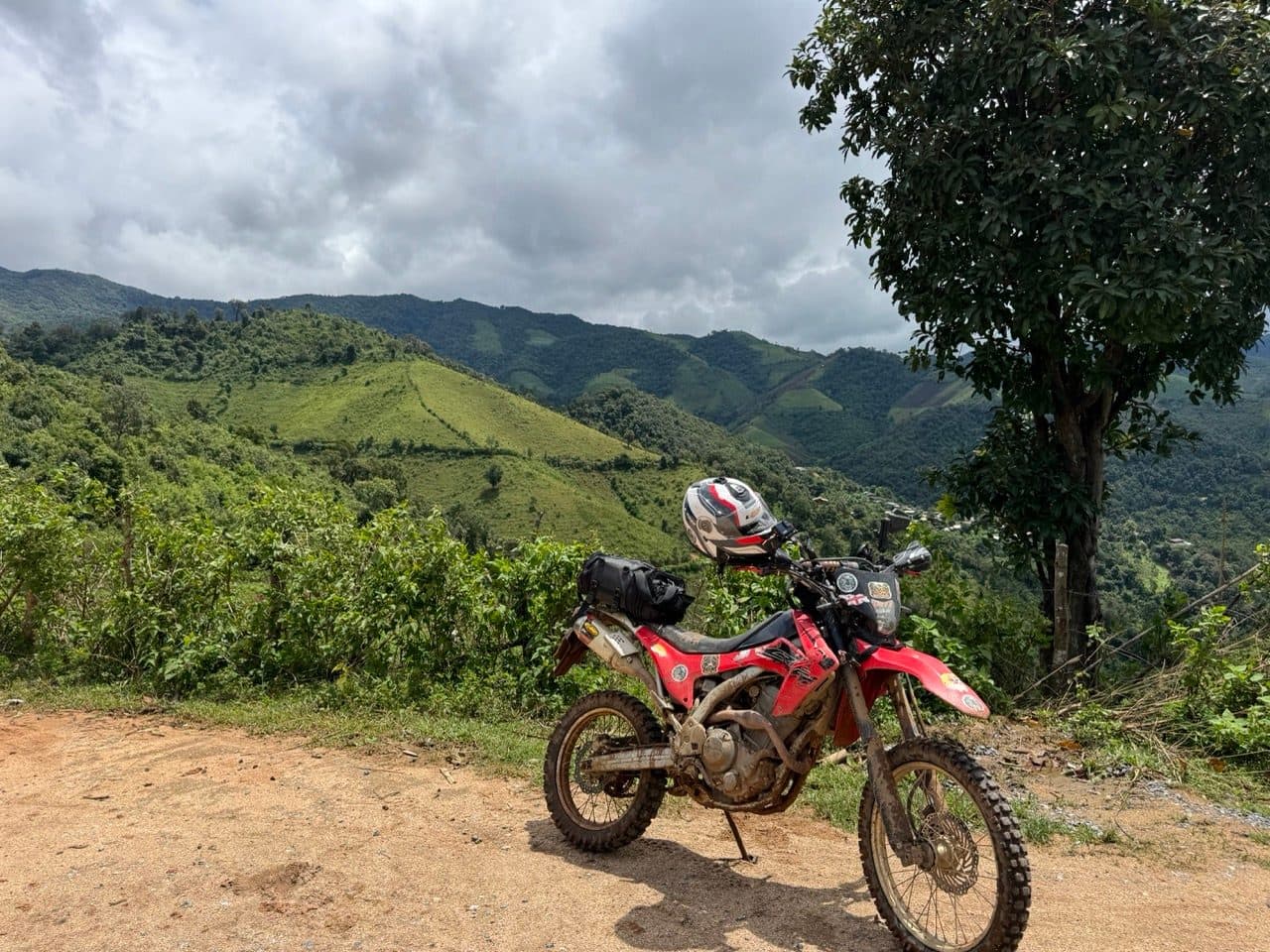
The Long Middle
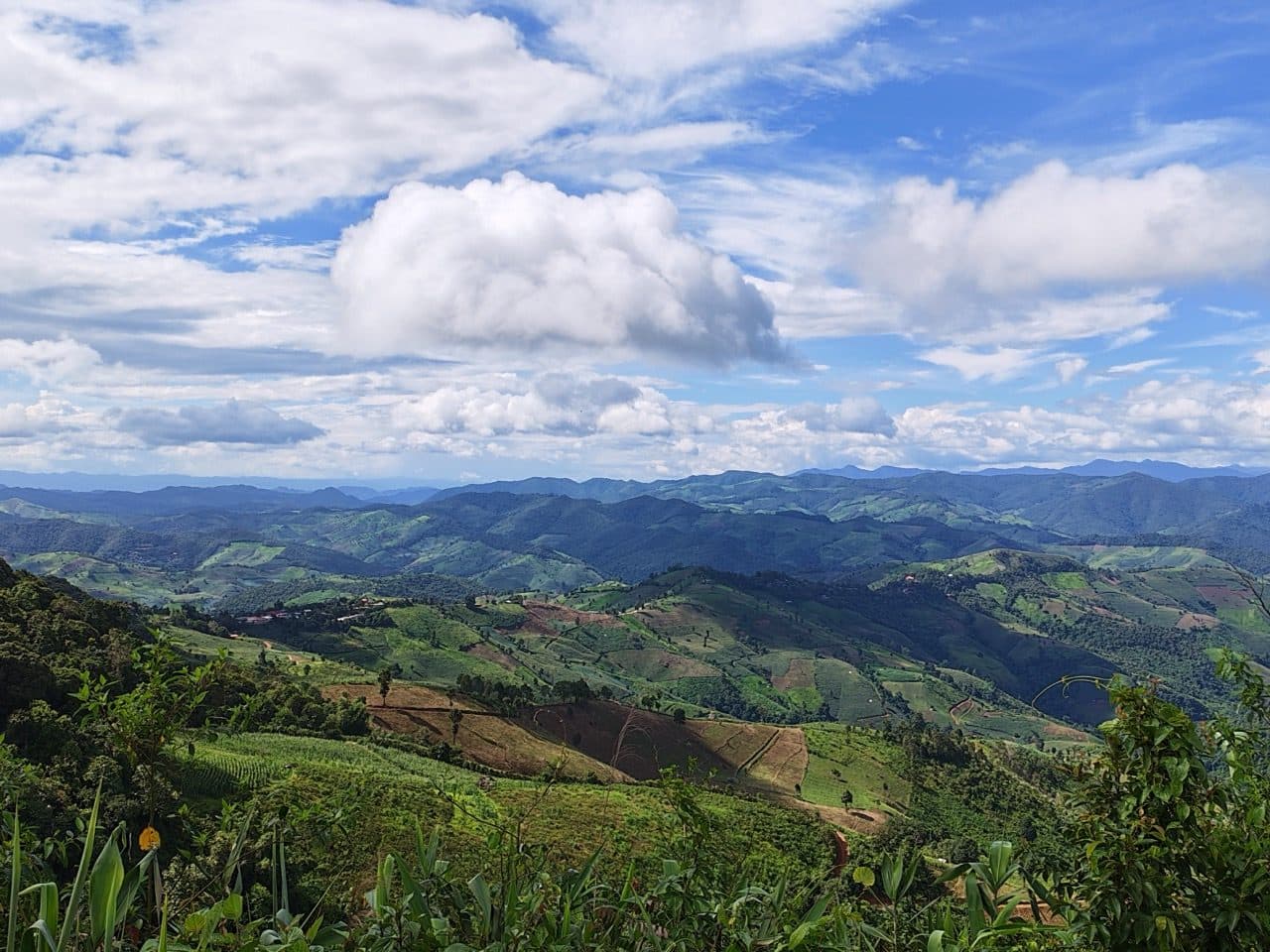
For the next hour and a half the route does the same excellent thing on repeat: climbs onto a ridge, runs along it with a valley falling away on both sides, drops through a village, climbs the next one. Rice terraced up the hillsides wherever the gradient allows it, corn on everything too steep for rice, and cloud sitting low enough that the far ridges kept appearing and disappearing.
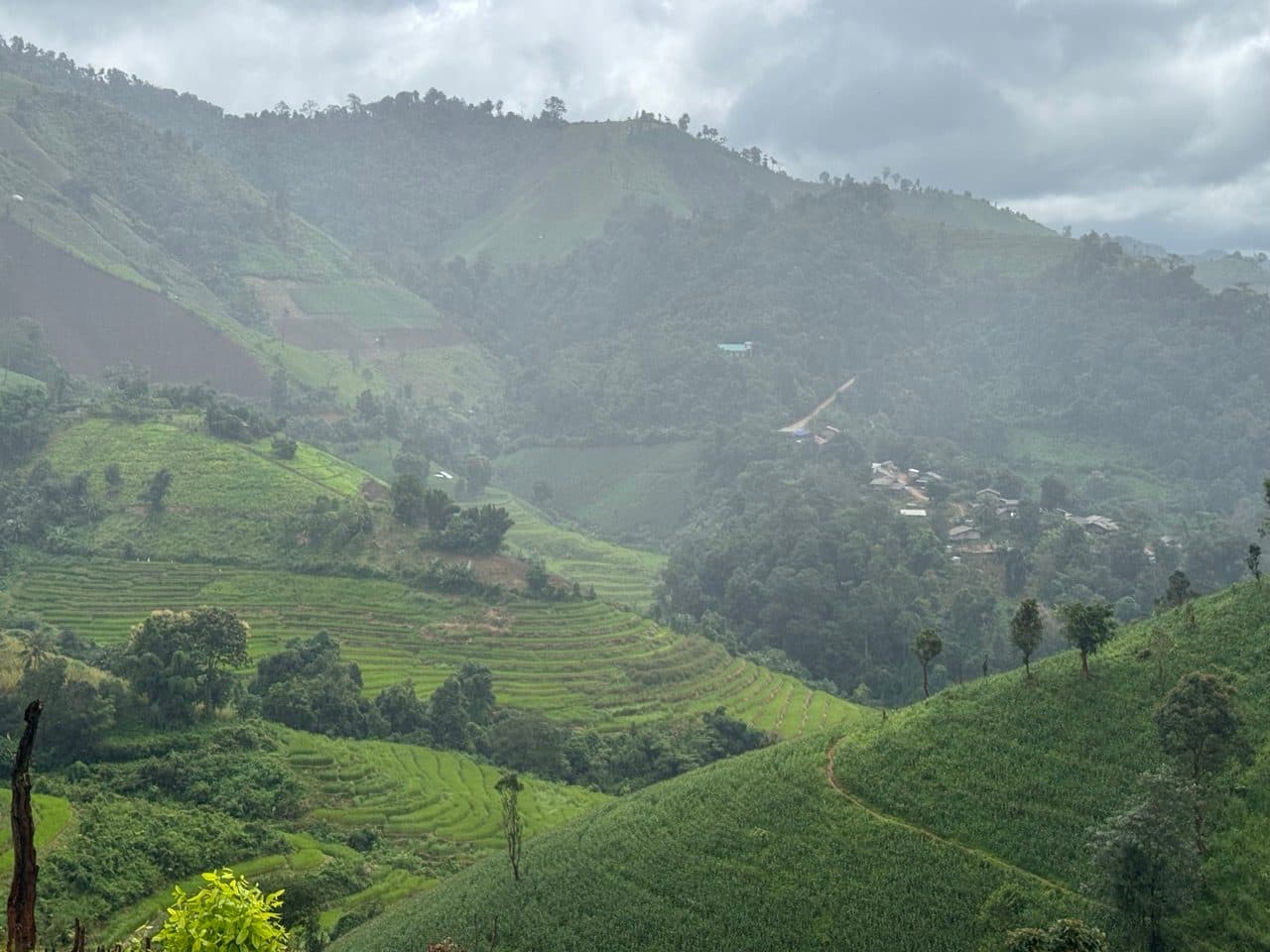
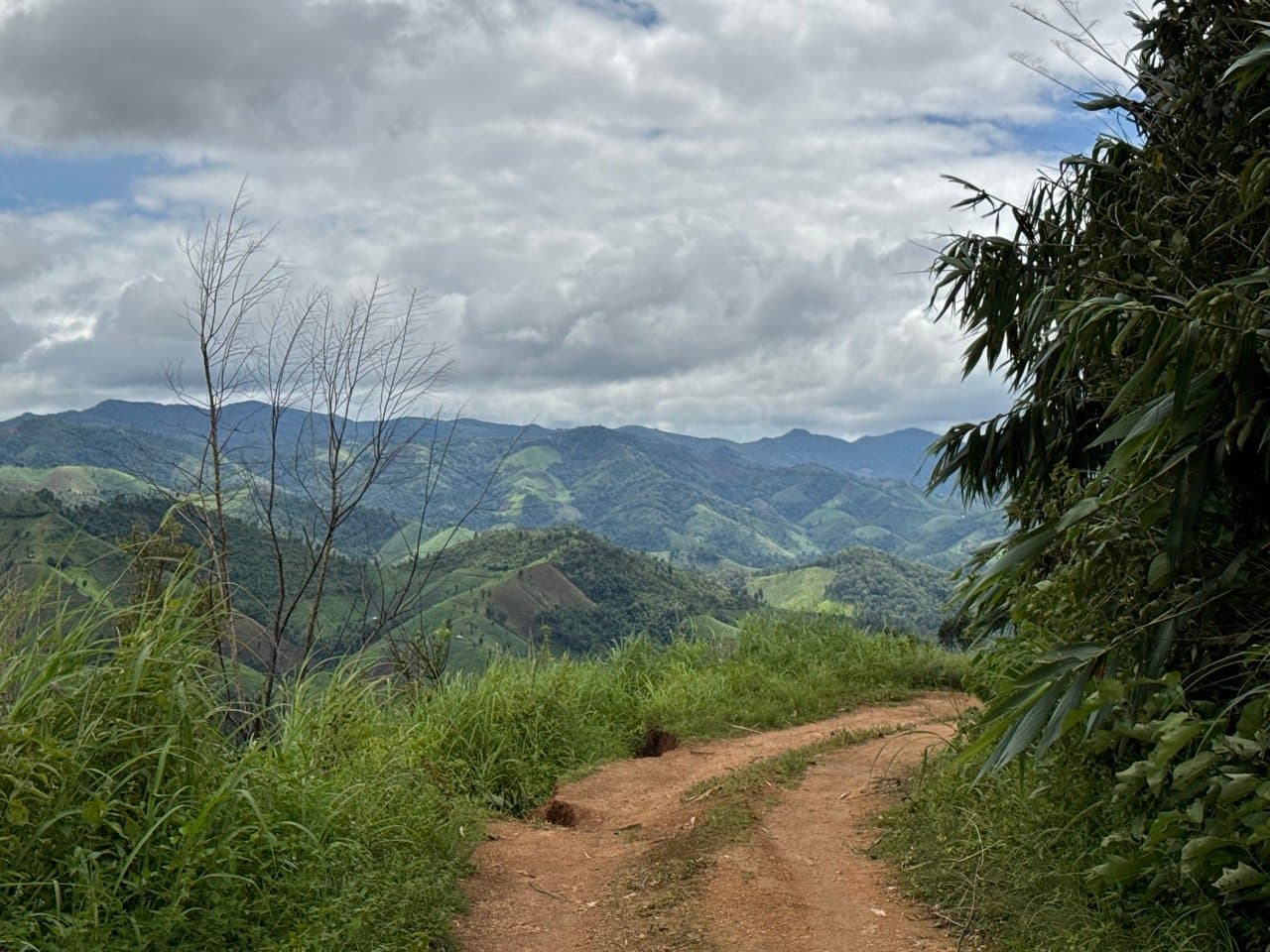
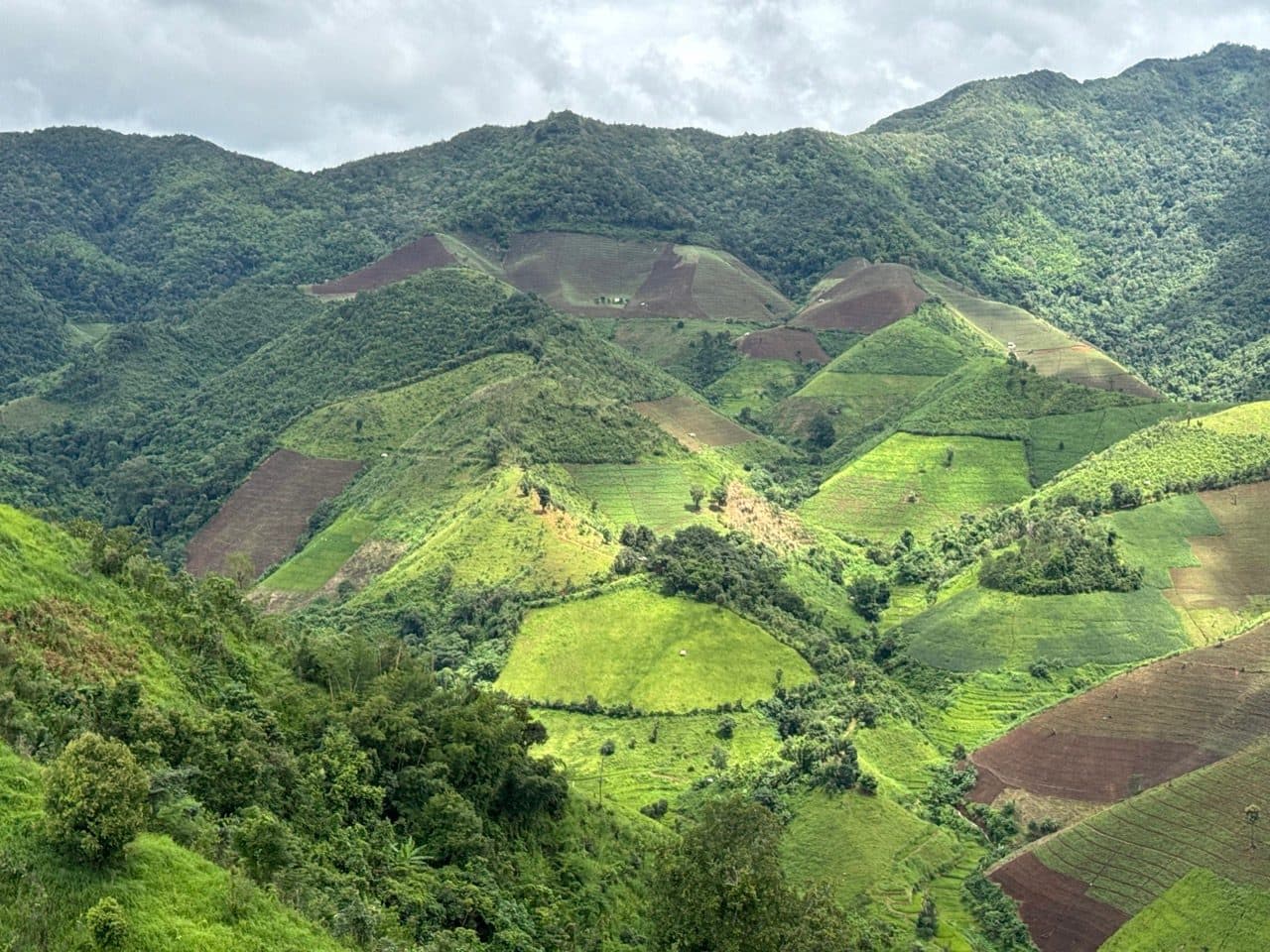
Most of it is not hard riding. What it is, is relentless. There is no stretch where you can stop paying attention, because the surface changes every few hundred metres and nothing is signposted — the greasy bit and the rocky bit and the washed-out bit all look the same from fifty metres back.
The First Time I Thought It Was Over
At about twenty to two the road tipped off the ridge and went down into a valley, and I took no photographs at all for the next thirty-nine minutes, which tells you most of what you need to know about the descent. Steep, wet, rutted, and worth all the attention I had. Twenty-one kilometres later it put me out onto a concrete bridge over a river running loud and brown, with a properly graded road on the far side. That will do, I thought. Good day out.
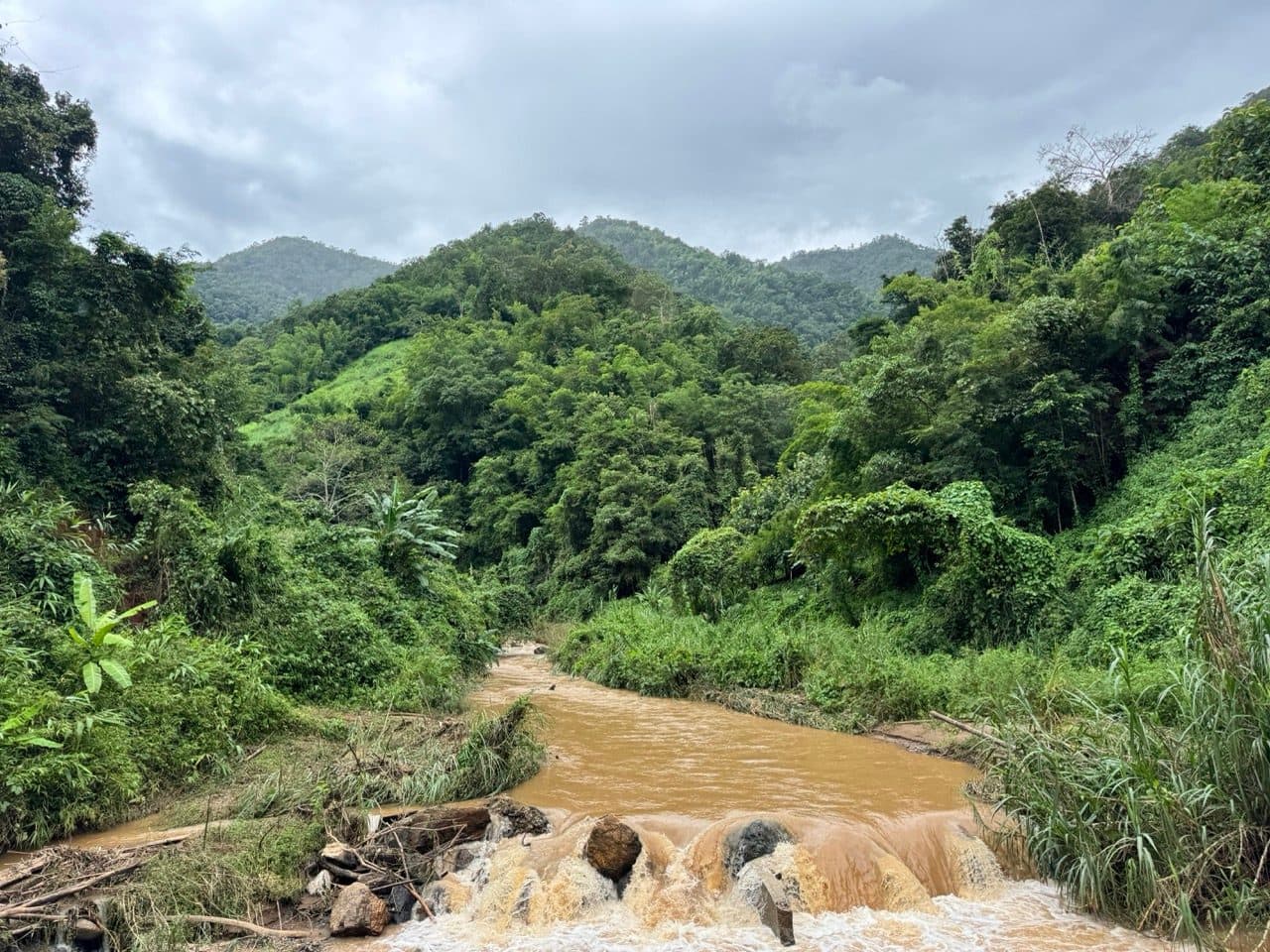
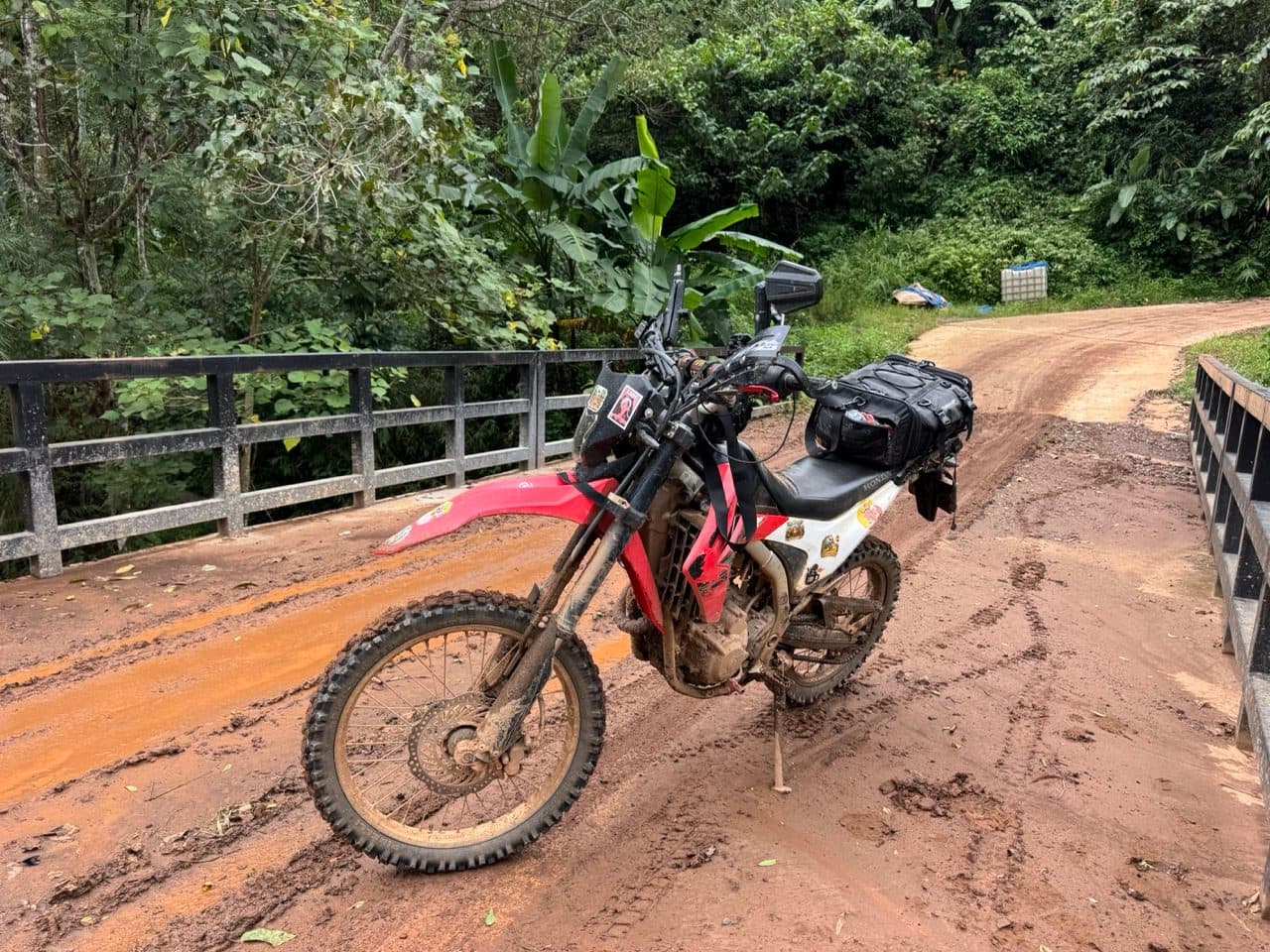
It was not over. Within a couple of kilometres the graded road had gone back to clay, this time with ruts deep enough to be holding standing water, and a drop off the right-hand edge to make the point.
The Second Time
The clay ran out into rice fields and, briefly, actual blue sky — the first of the day, at half past two.
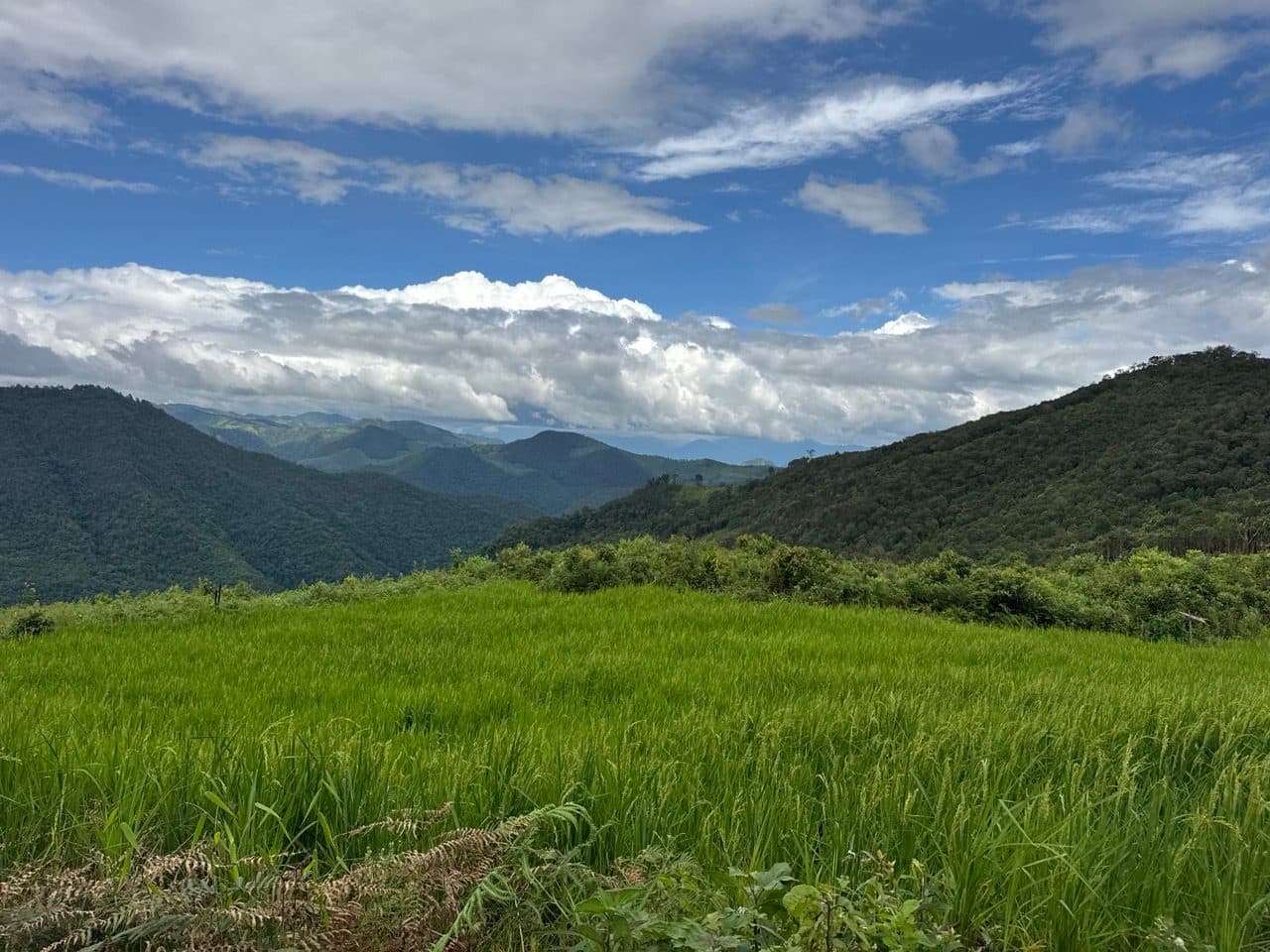
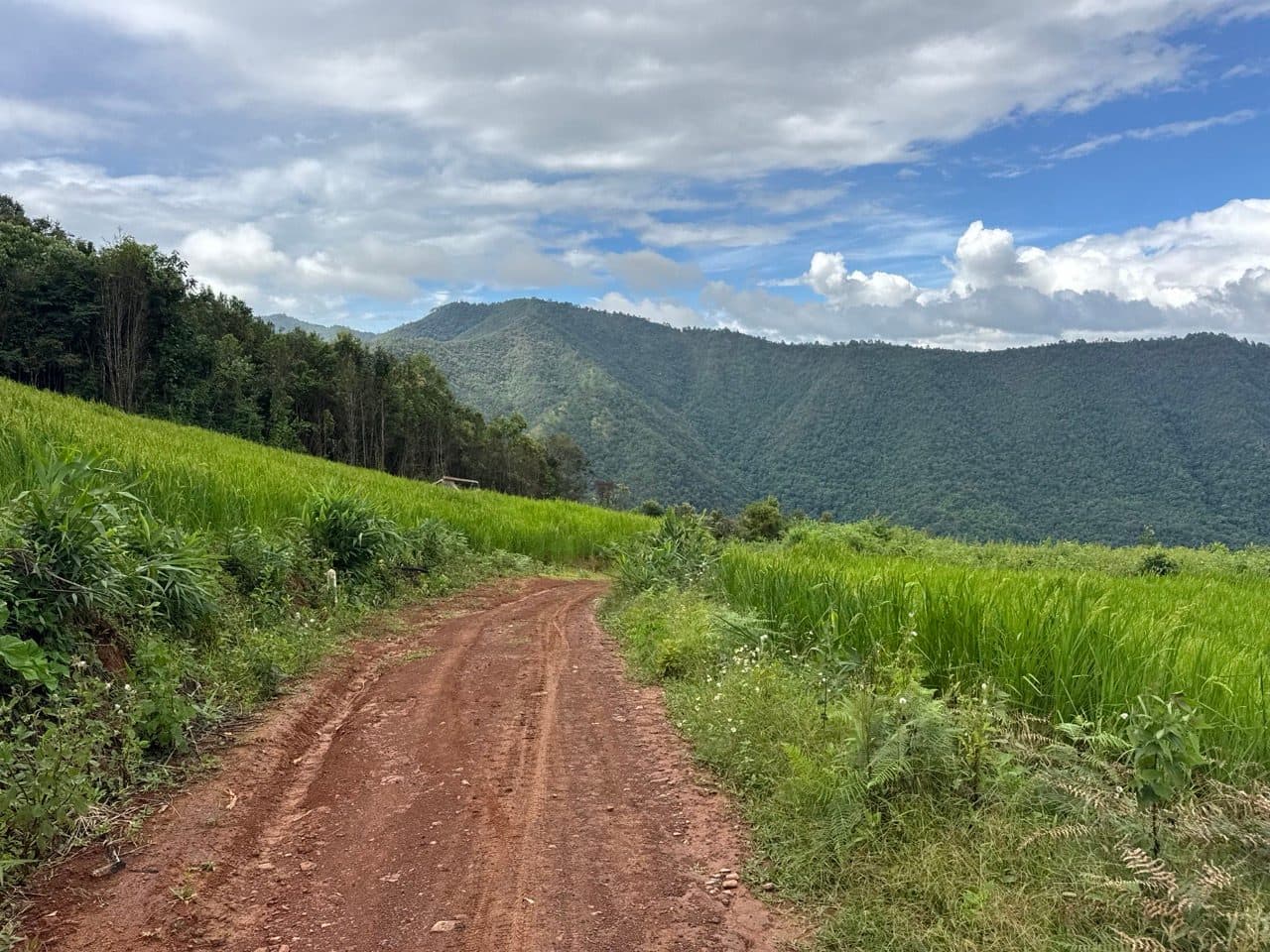
Then the surface changed completely. Pine forest, leaf litter, dry hardpack — the sort of road you could take a saloon car down without thinking about it. Different country altogether, and it felt very much like the hills had finished with me.
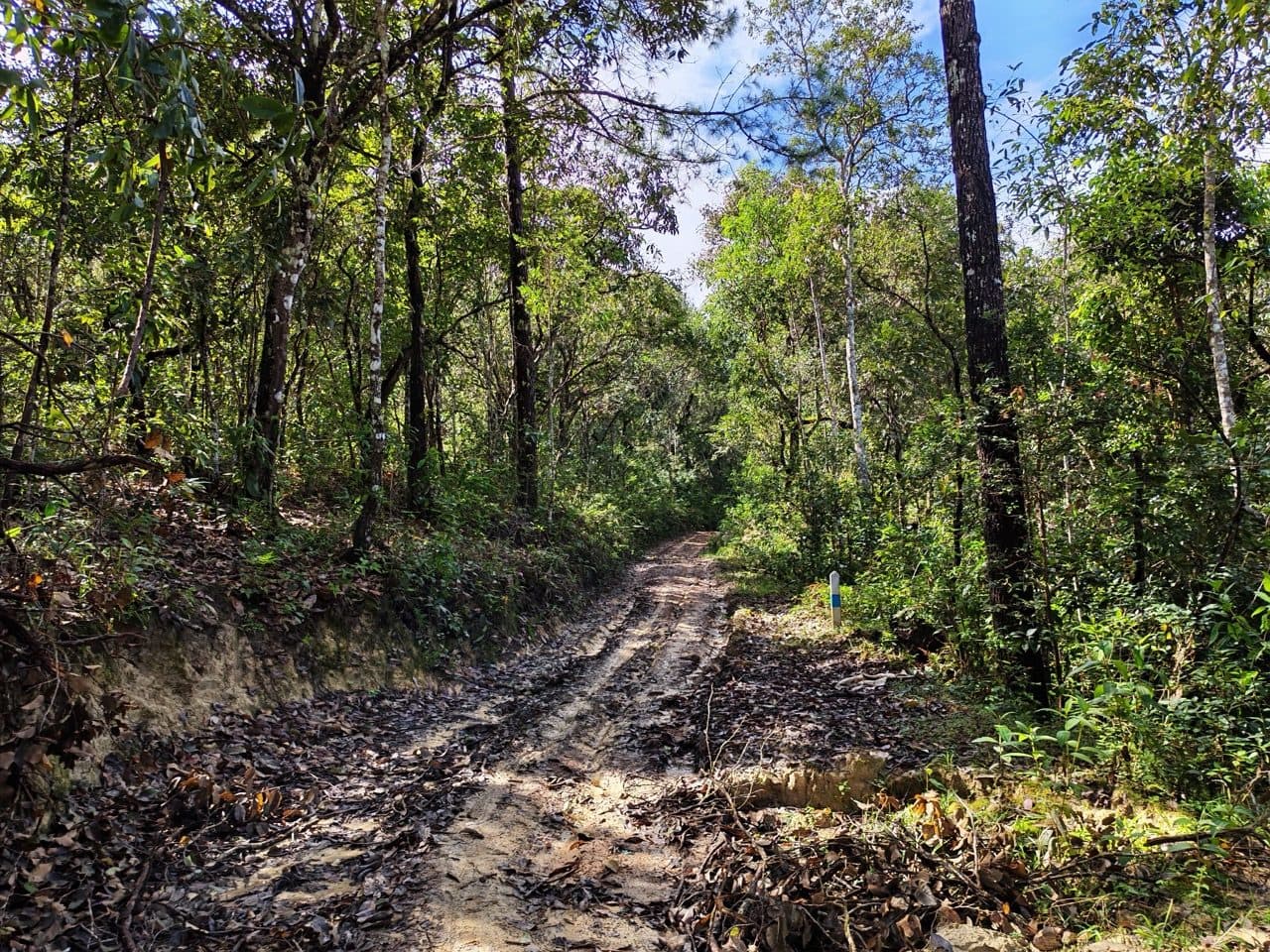
The Third Time, and the Fourth
The third one was the most convincing. New concrete, solar streetlights, a guardrail, chevron boards on the bends — the full furniture of a road that goes somewhere and is expected to keep going there. Nobody builds all that and then stops.
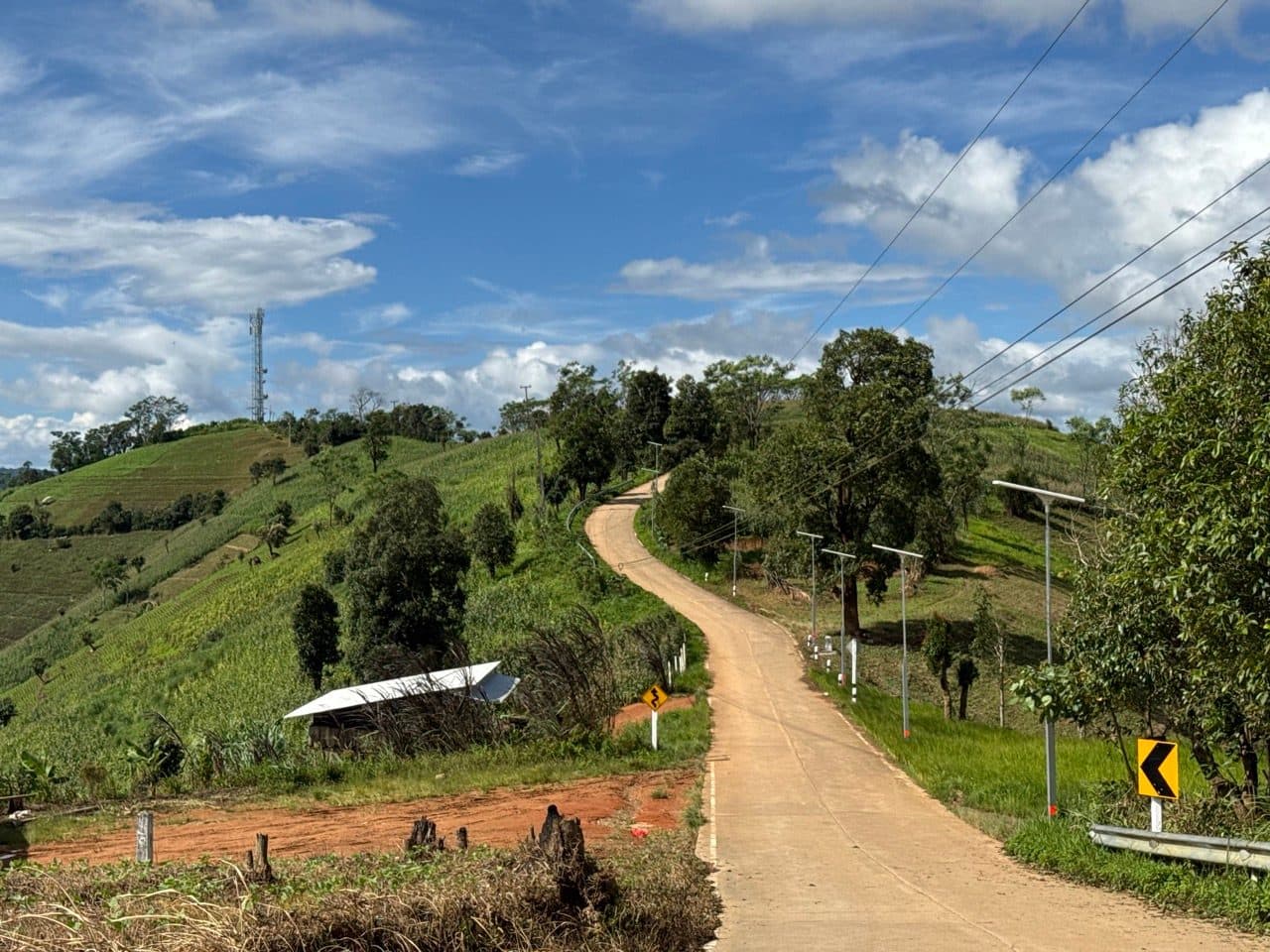
They built all that and then stopped. Past the school at Ban Or it went back to dirt, and there were still thirty-four kilometres between me and Mae Chaem.
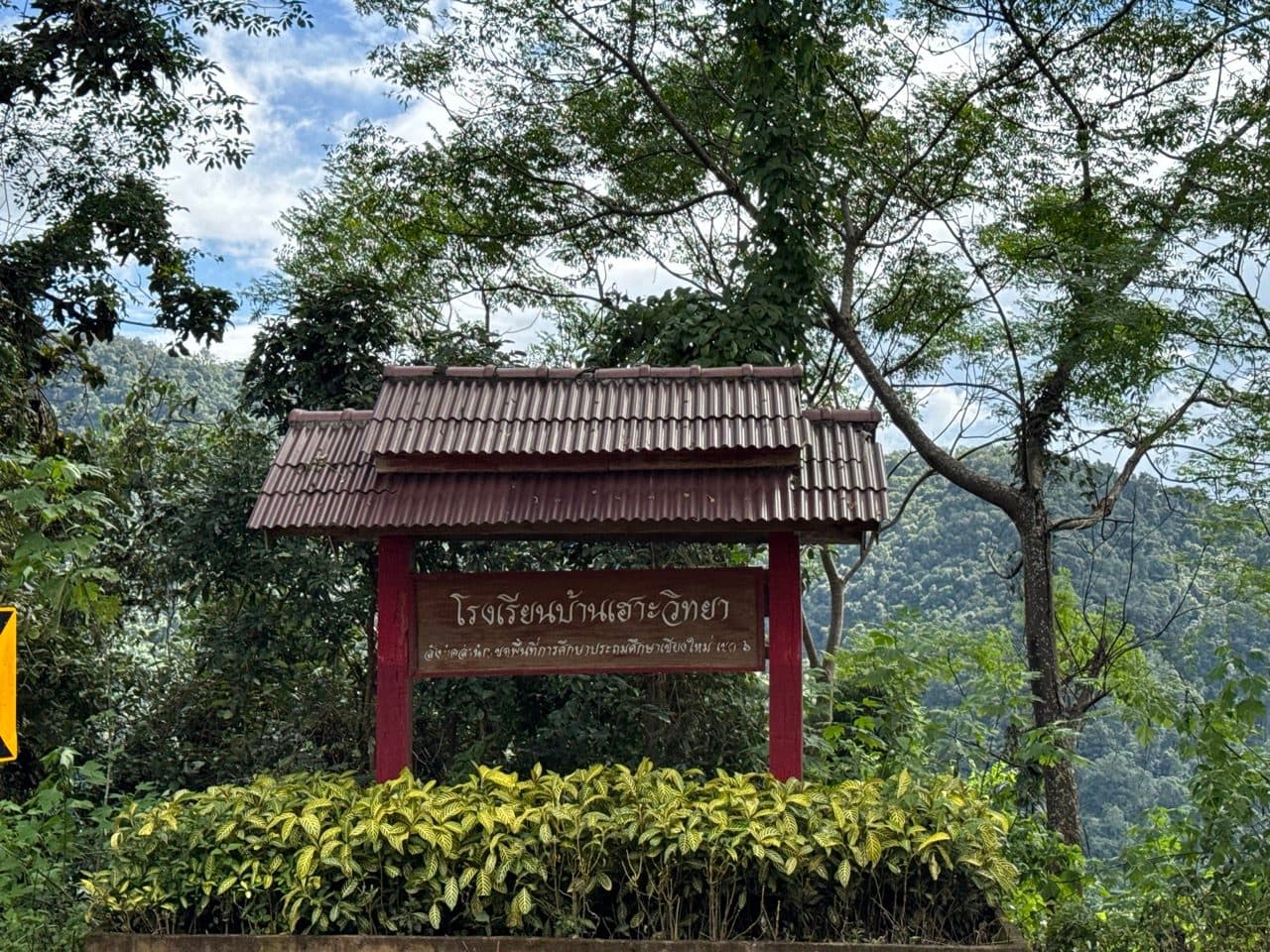
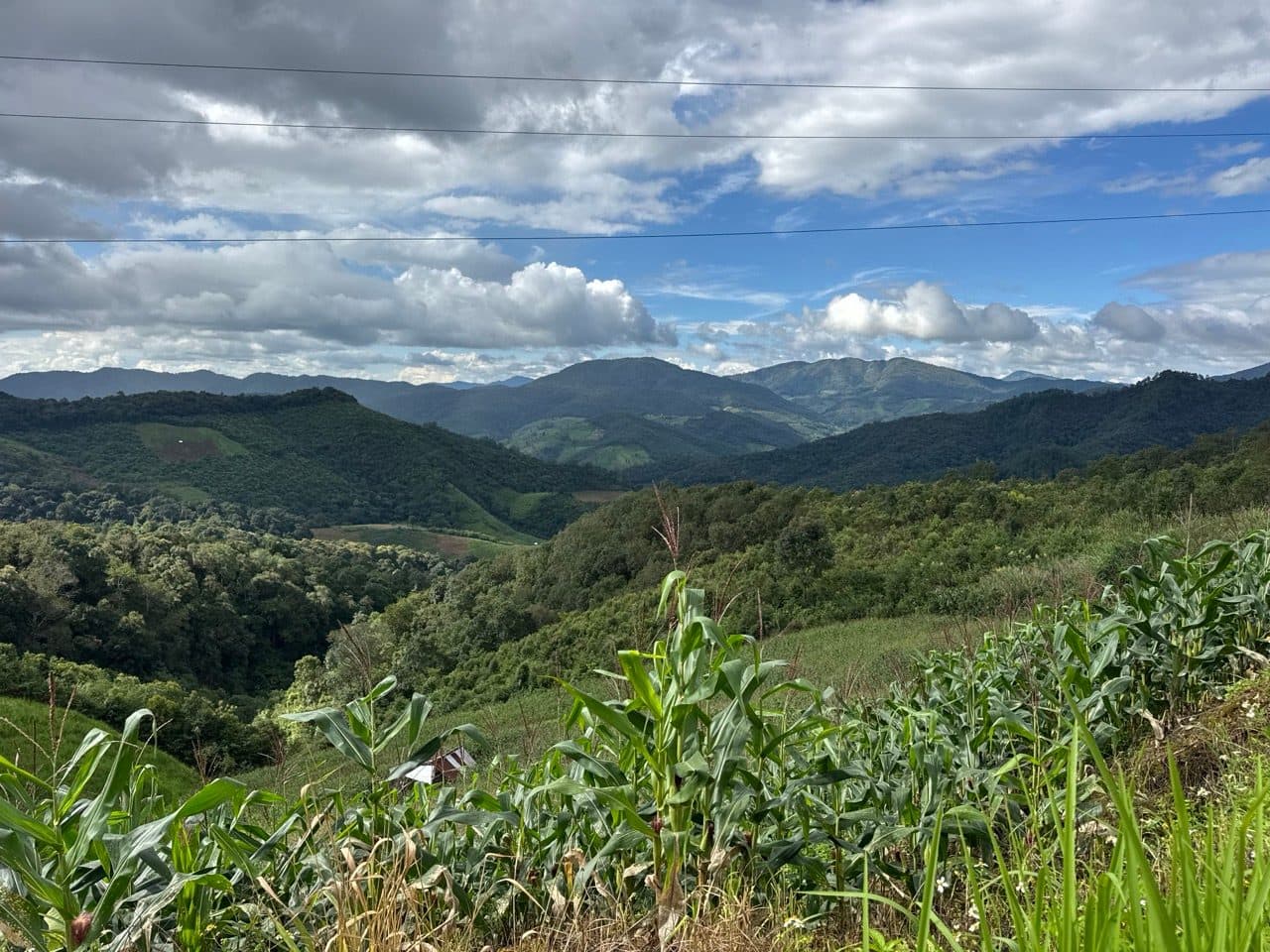
Mae Chaem, Finally
Dirt for a while longer, then eventually pavement, and into Mae Chaem at a quarter to five. Five and a half hours to cover 118 kilometres, which is the honest arithmetic of riding this kind of country in the wet.
Then 90 km home over the top, which is its own quiet ordeal at the end of a day like that, and back at ten past six. Three hundred and forty-three kilometres, a bit under nine hours, and no drama at all — nothing broke, nothing fell over, nobody had to come and get me. Just a route I made up on a phone that turned out to be much better than it had any right to be.
If You're Thinking About Doing This
- ·Bike: a 250 is plenty. The CRF250L did the whole thing loaded, and anything lighter with decent ground clearance would be fine. This is not a route that rewards a big adventure bike — there are sections where you want to be able to pick it up on your own.
- ·Tyres: knobbies, and not worn ones. On wet red clay a tired tyre is dead weight. This is the single thing that most changes how the day goes.
- ·The descents are the hazard, not the climbs. Going up greasy clay is a traction problem you can feel coming. Going down it is a front-wheel problem that arrives all at once. Engine-brake, stay off the front, and take the speed off before the corner rather than in it.
- ·Fuel: fill in Mae Sariang or Hot before you start, and again in Mae Chaem before you head home. Village shops along the way sell fuel, but treat that as a bailout rather than a plan.
- ·Water crossings: there are several and none of them were deep on the day, even with everything running high after rain. That can change quickly in the wet season — look before you ride into one.
- ·Season: September gives you maximum green, full rice and the slick clay all at once. Come in the cool season and the same route is faster, browner and a lot less pretty. Pick which one you actually want.
- ·Riding it solo: the route runs between Mae Sariang and Mae Chaem with not much else at either side, so if something goes wrong you are a long way from either end of it. Tell someone your plan and give yourself enough daylight to walk out of a problem rather than ride out of one.
- ·Time: budget the entire day. Door to door from Chiang Mai this was 343 km and a bit under nine hours, and that was without stopping for anything longer than photographs.
FAQ
- Can you ride from Mae Sariang to Mae Chaem on dirt?
- Yes. There is a continuous 118 km dirt and village-road link between the 108 east of Mae Sariang and Mae Chaem, running north through Karen farming communities. It is not a single named trail — it is a chain of village roads, farm tracks and graded forest road joined together, which is why it is worth carrying the GPX rather than navigating it on the fly. It took five and a half hours in the wet.
- How hard is the Mae Sariang to Mae Chaem route?
- Moderate, with one real hazard. There is nothing technically extreme on it — no hike-a-bike, no serious rock steps, and the water crossings are shallow. What makes it demanding is the wet red clay on the descents, plus the sheer length of time you spend concentrating. An intermediate rider comfortable with losing traction will be fine. A first-timer on a big bike will not enjoy it.
- What is wet red clay actually like to ride?
- Greased rather than muddy. A thin slick film forms on a firm base, so the bike rolls along normally right up until the tyres let go, usually without warning. Climbs are manageable. Descents are where the front wheel washes out from under you. Ride smooth, engine-brake, stay off the front brake, and accept a much lower average speed than the surface appears to allow.
- How long does it take, and can you do it in a day from Chiang Mai?
- You can, but it is a full day and then some. The dirt section alone took five and a half hours. Adding the 133 km of highway down and 90 km back made it 343 km and a bit under nine hours door to door, leaving at 09:26 and getting back at 18:12. If you would rather not do the highway twice, stay in Mae Sariang or Mae Chaem and ride it one way.
- When is the best time of year to ride it?
- It goes year round, but the character changes completely. September, in the back half of the rains, gives you full rice fields, streams running high and hillsides at maximum green — and slick clay with it. The cool and dry season gives you a faster, safer, considerably browner version of the same route. This report is the wet version.
Ride this — GPX tracks
2 files · 2.3 MB
Two versions of the same Sunday. The dirt section on its own is the one most people want; the full day is there if you are riding it out and back from Chiang Mai like I did.
Want this as a standalone route? The dirt section is on the routes page with the GPX, the surface notes and the fuel and water-crossing detail.