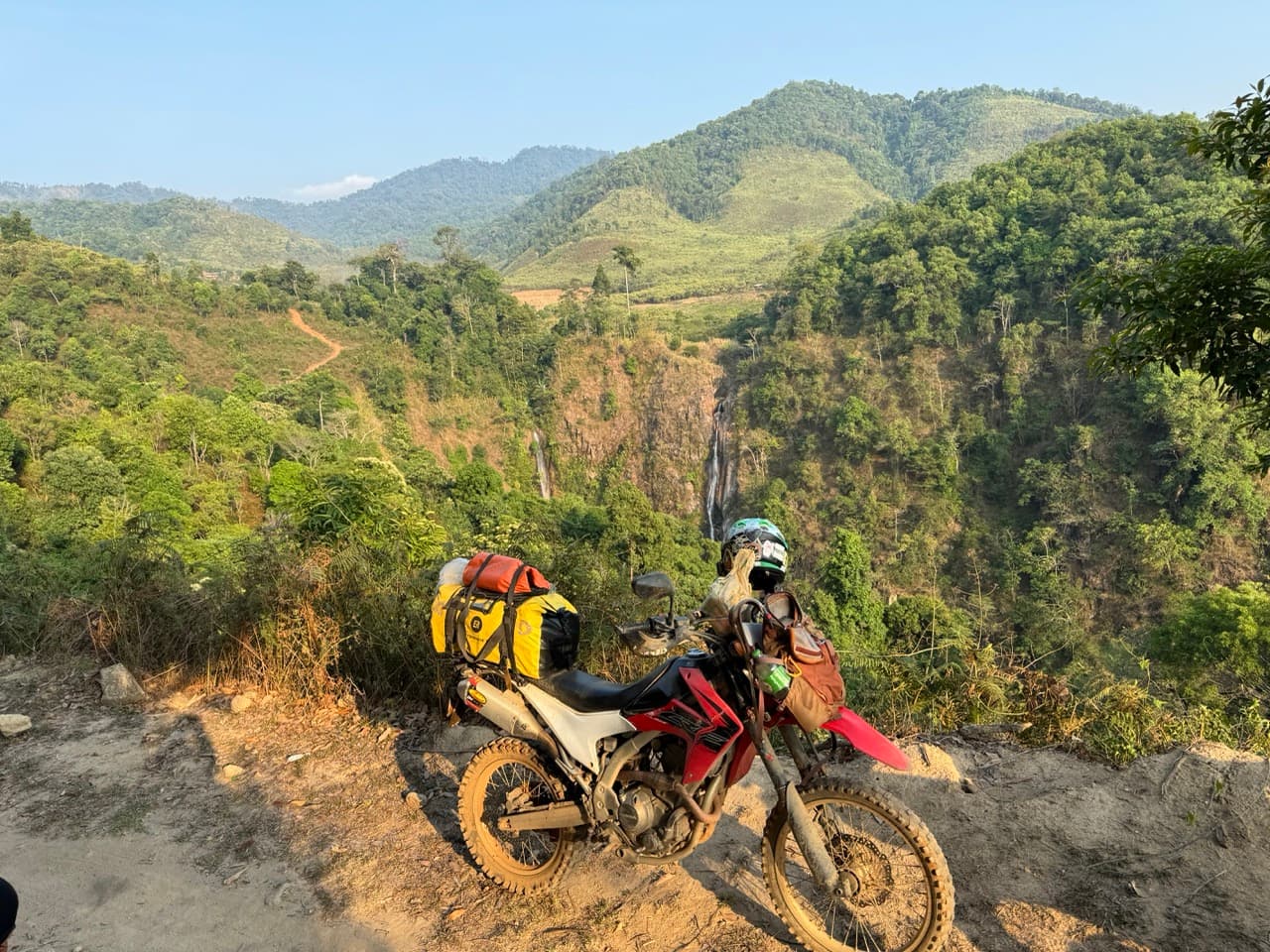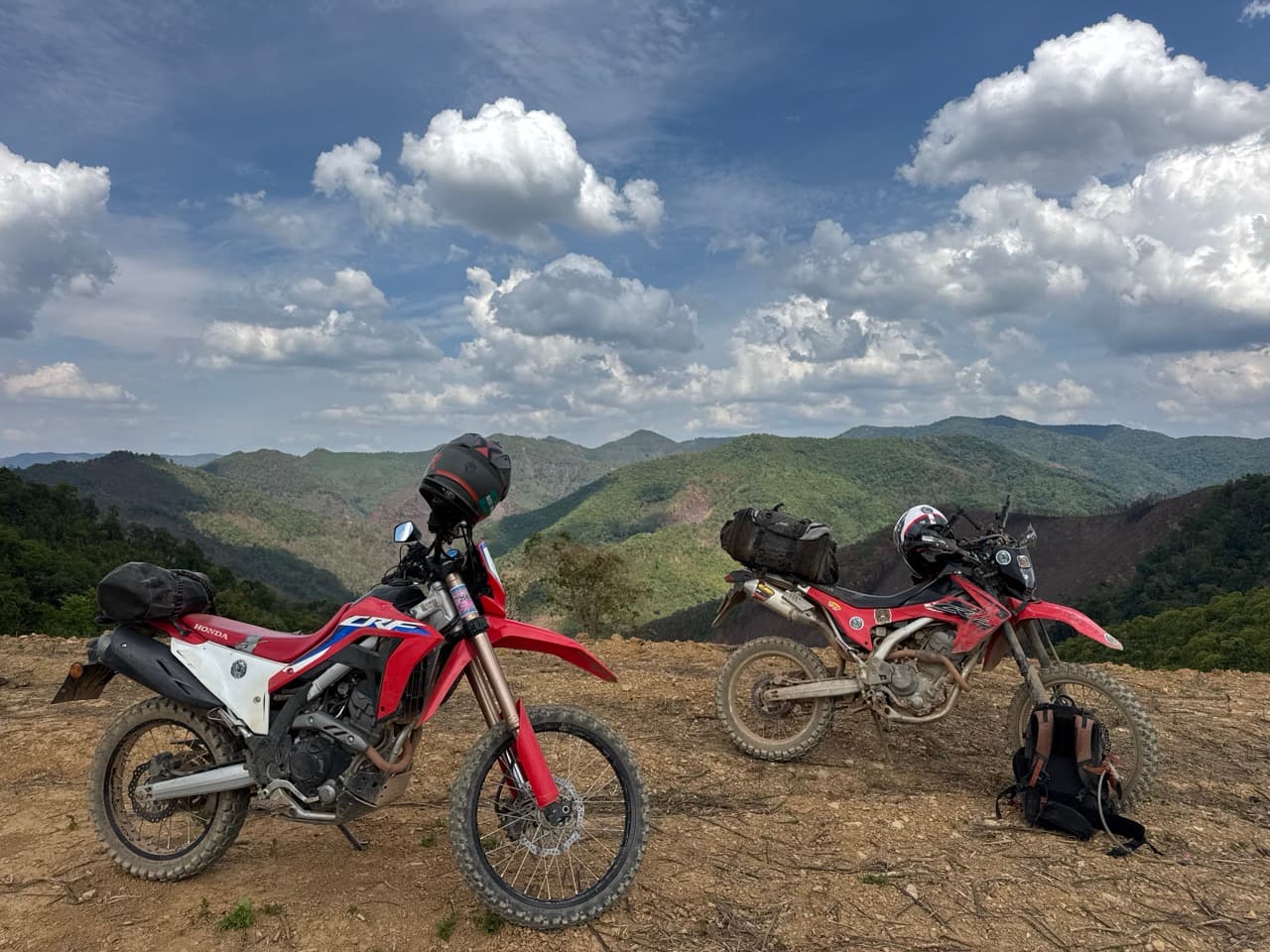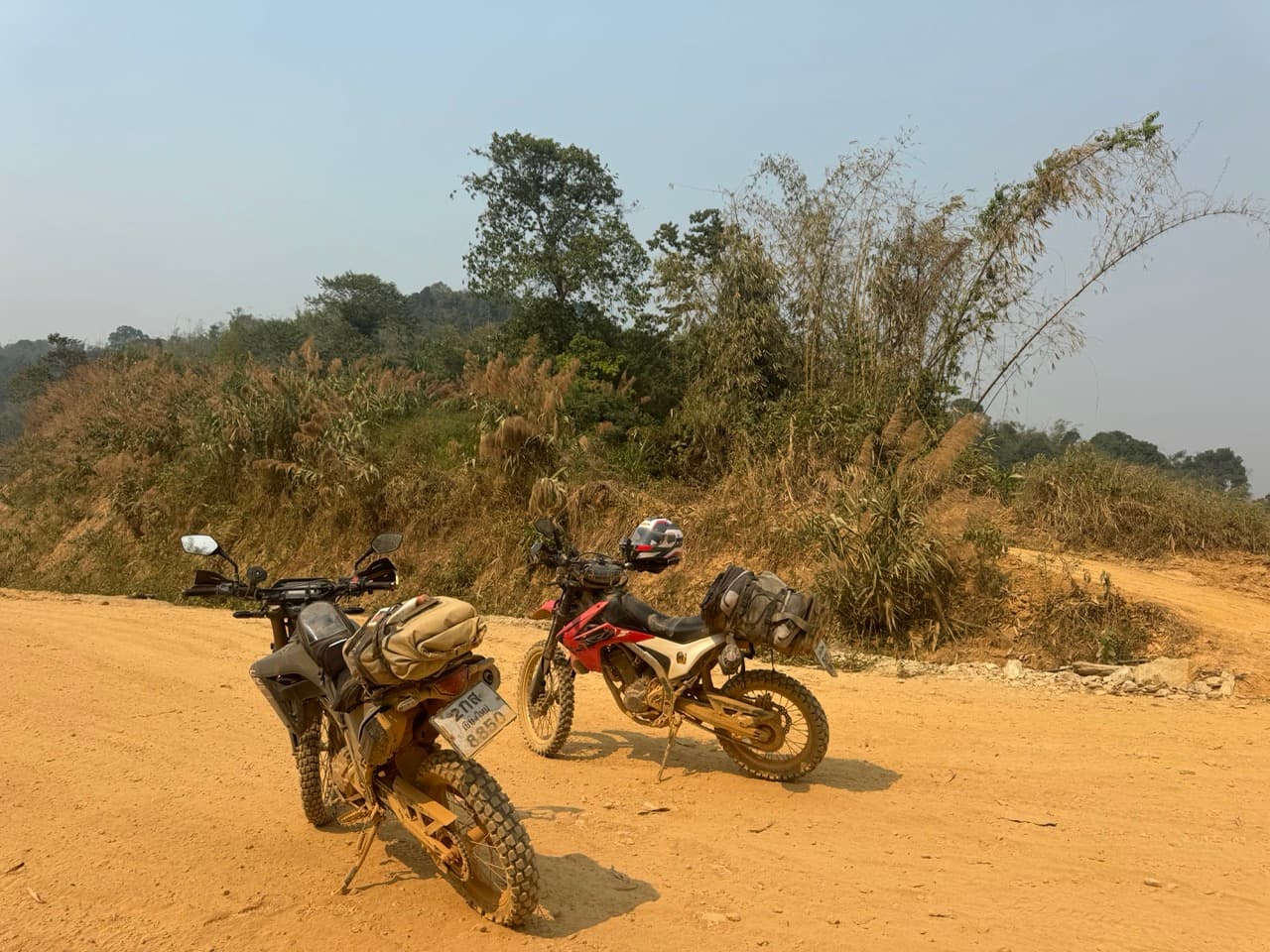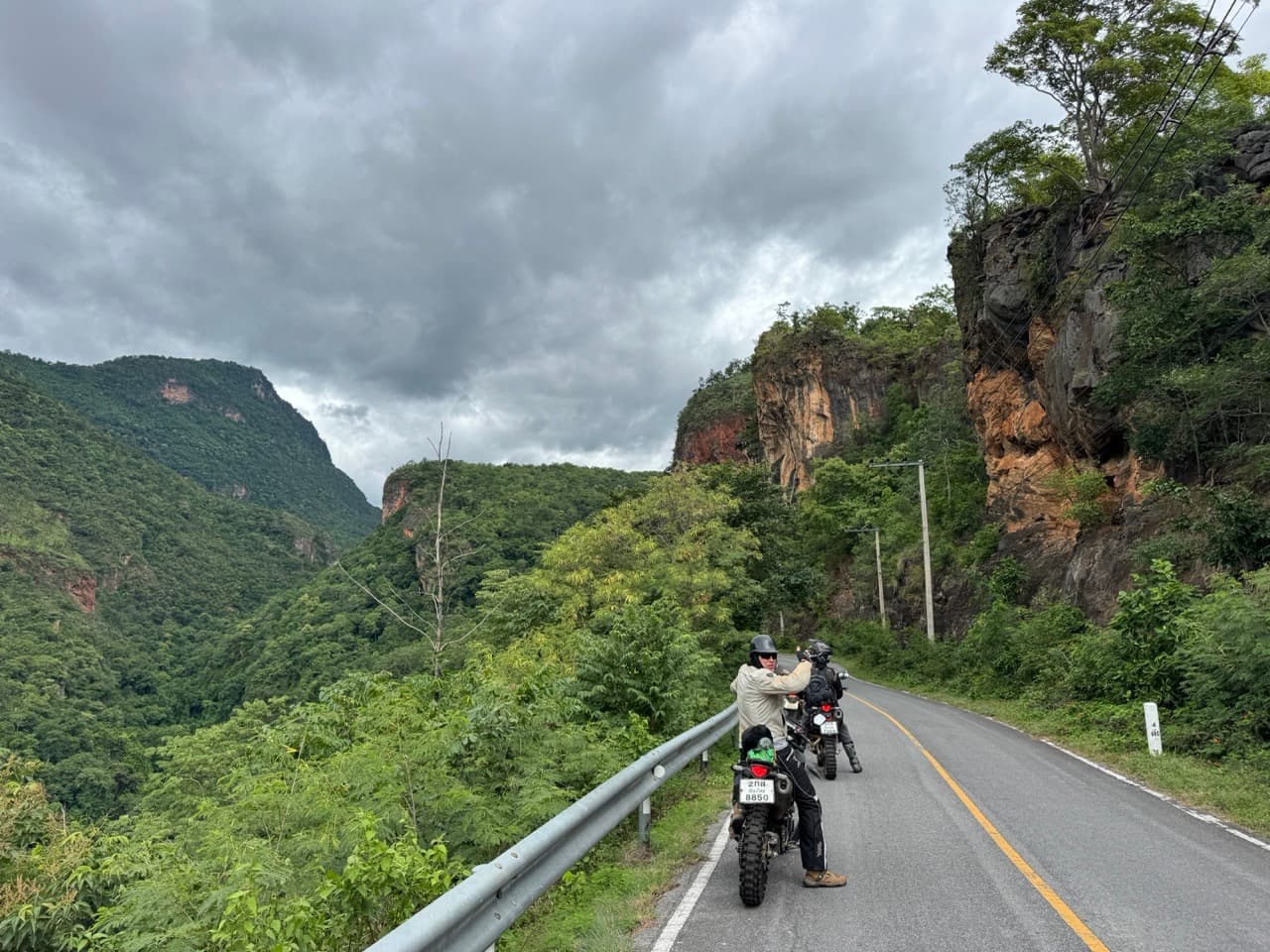
Most people get from Chom Thong to Mae Chaem the sensible way: up and over Doi Inthanon on the 1009, an hour and a half of good tarmac and viewpoints. We went the other way round — south along the river first, then west into the hills on farm roads, and north to Mae Chaem the long way. On a map it looks like a detour. On a bike in August it is the whole point.
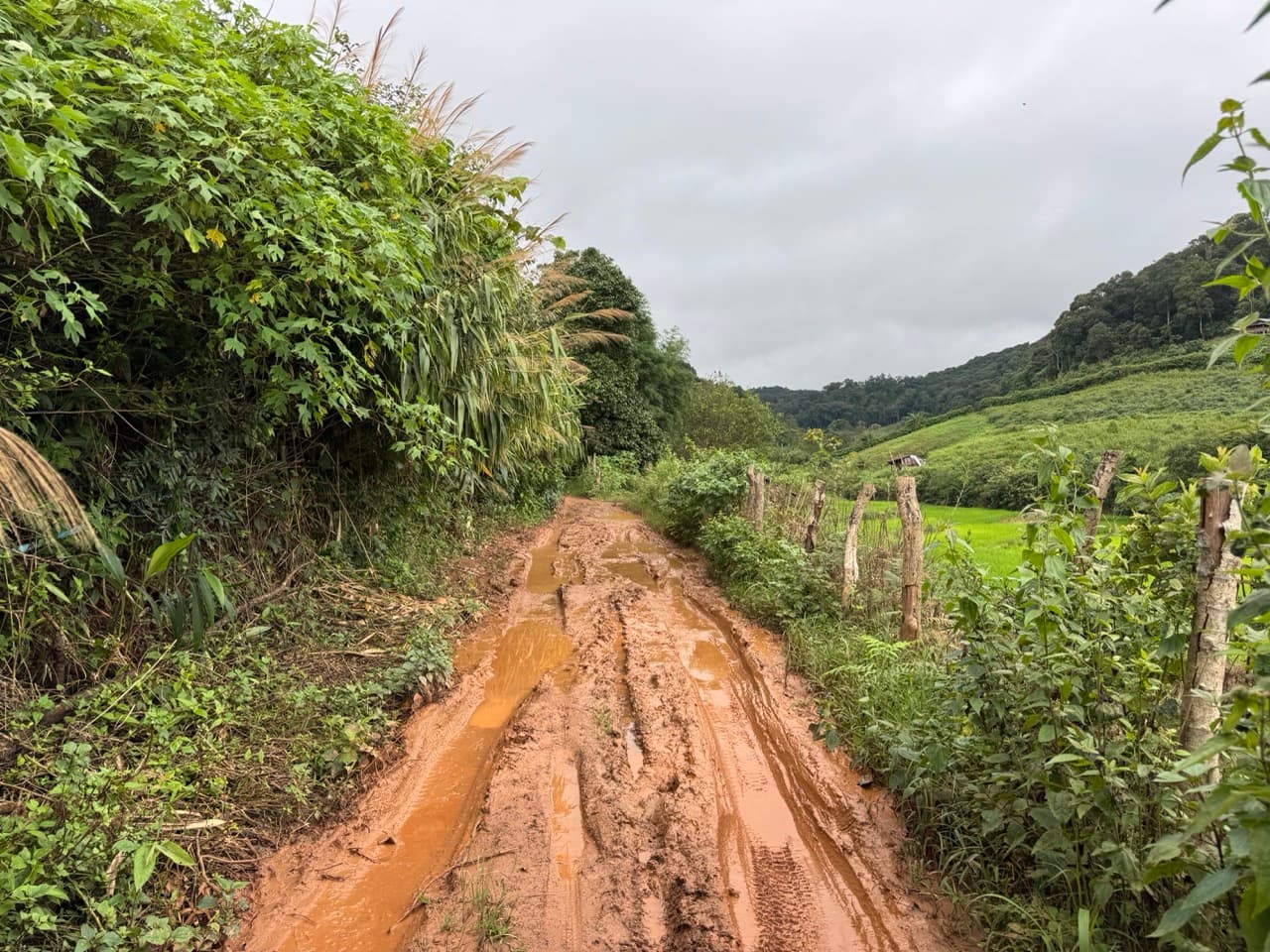
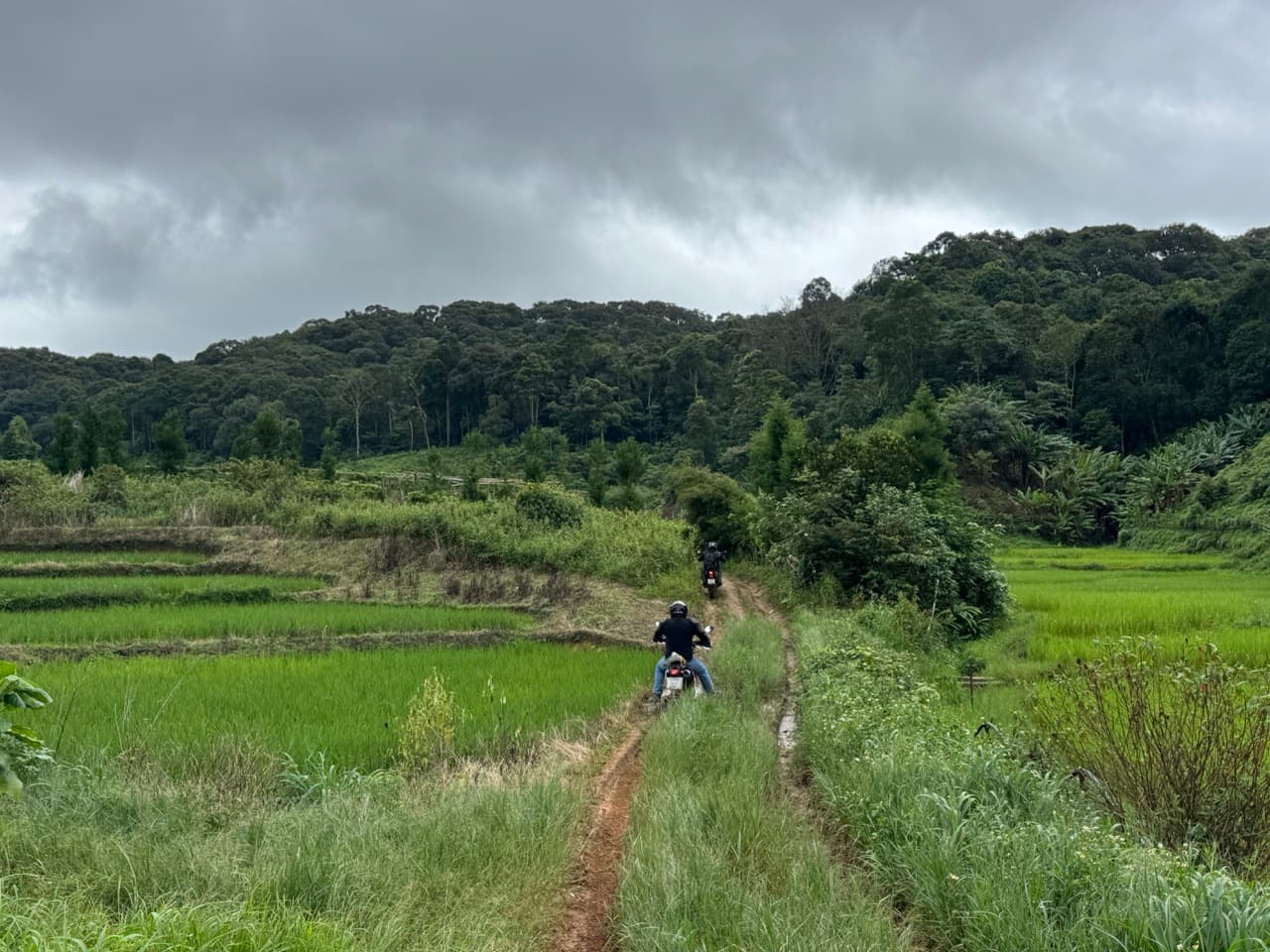
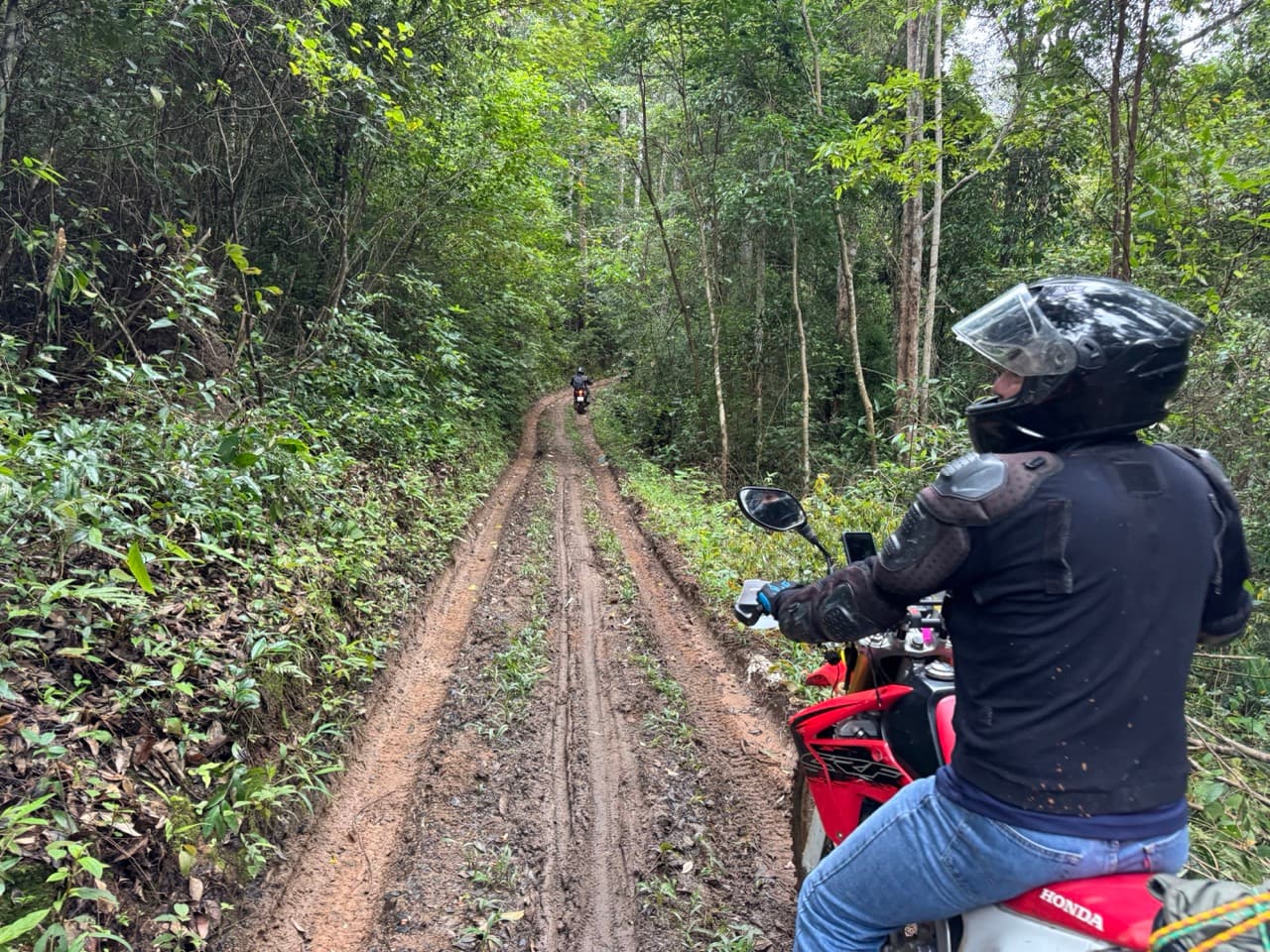
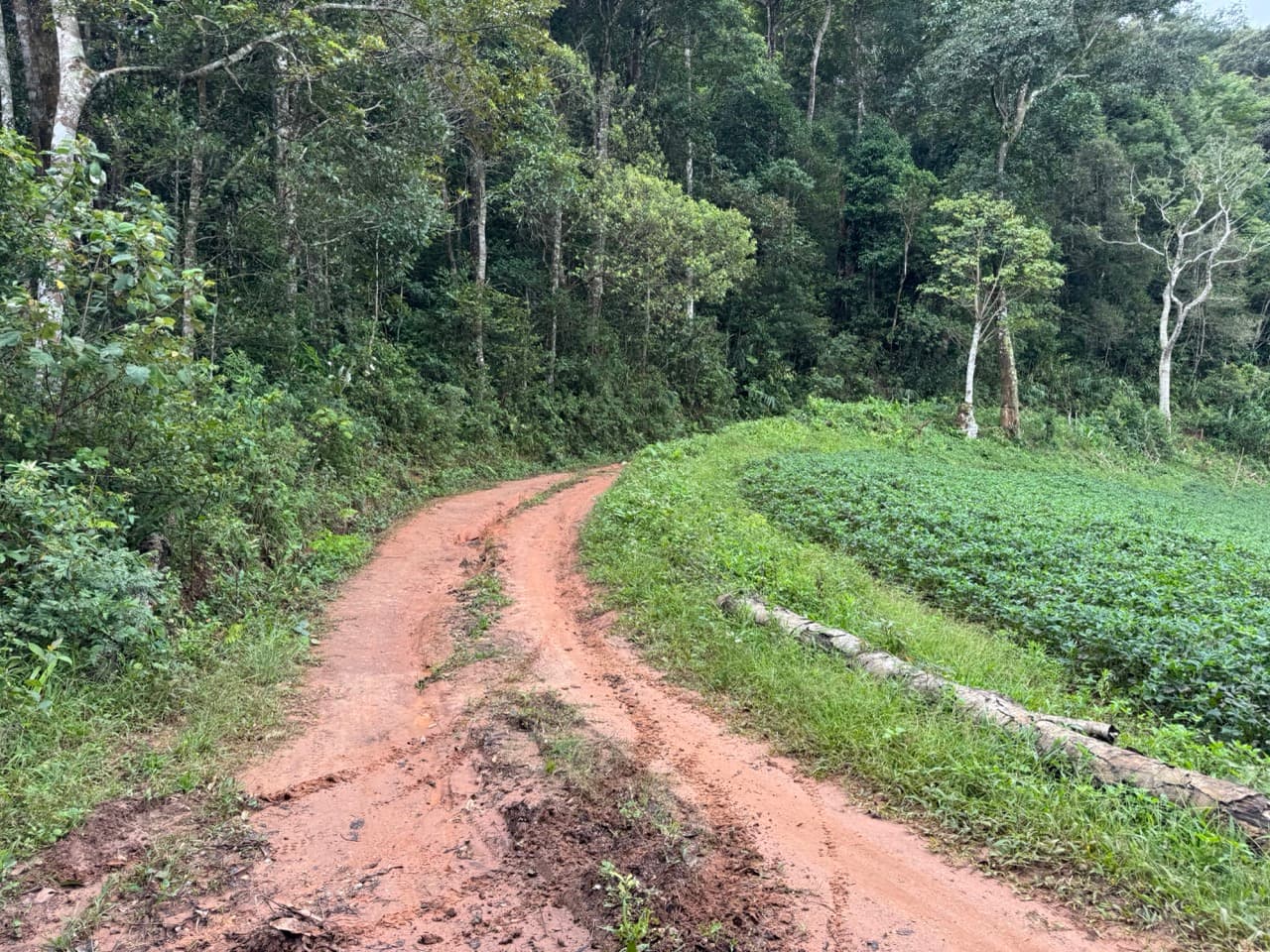
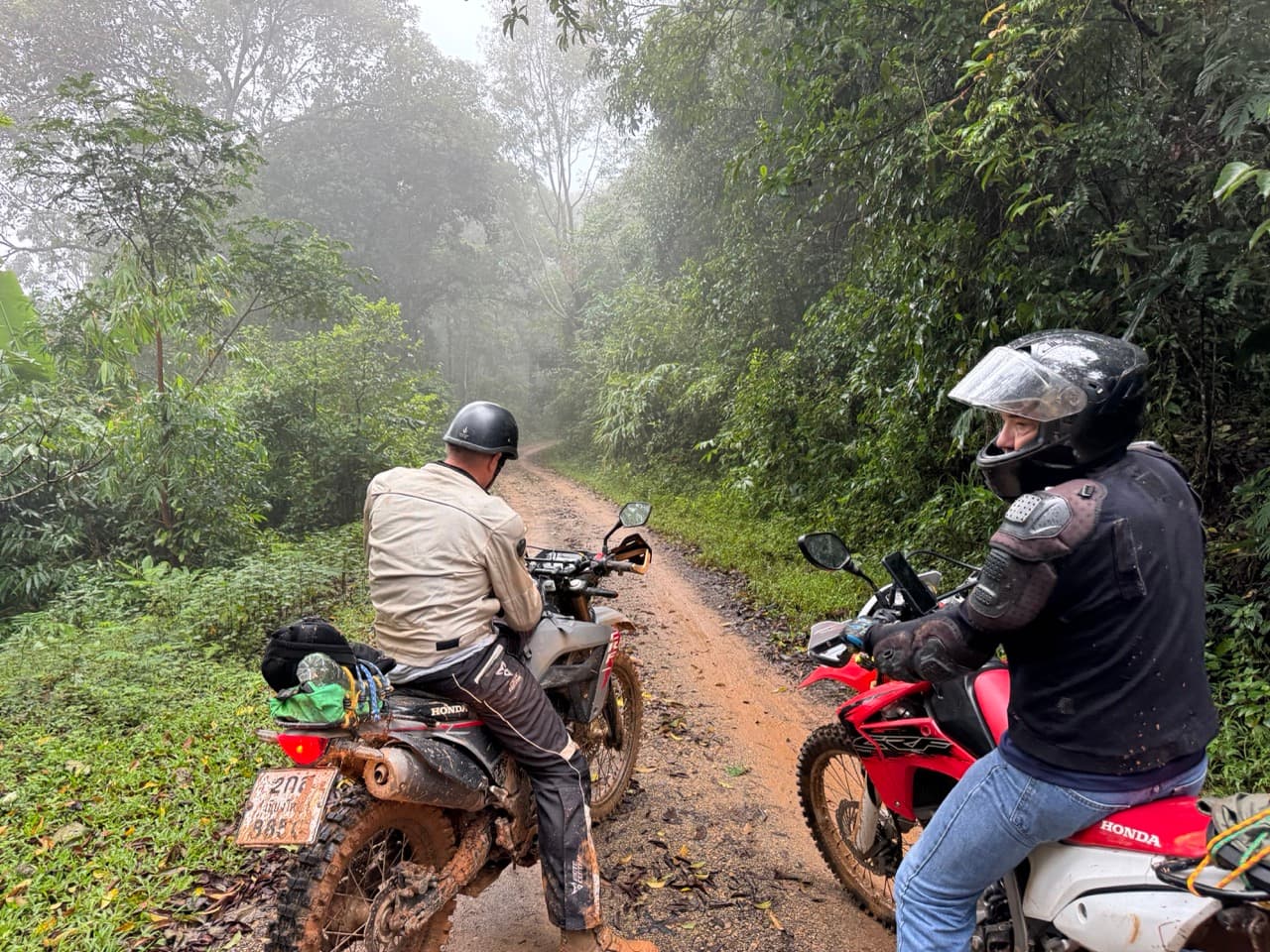
Five of us, three CRF300Ls and two CRF250Ls, out of Chom Thong on a grey Sunday morning in the middle of the wet season. The route is rated intermediate and in the dry it deserves that — mostly decent 4x4 track with the odd rut. In the rain it is a different ride entirely. Everything above about 800 metres out there is red clay, and red clay wet is not mud. It is grease.
| Quick Facts | |
|---|---|
| Distance | 152 km loop (dirt out, tarmac back) |
| Start & finish | Chom Thong |
| Turnaround | Mae Chaem |
| Riders | 5 — 3× CRF300L + 2× CRF250L |
| Season ridden | August (wet season) |
| Climb | ~460 m at the roadside to ~1,330 m in the pines |
| Surface | Farm road, red clay 4x4 track, paddy singletrack, tarmac return |
| Fuel | Mae Chaem |
| Time | All day — we were on the dirt before 11 and eating in Mae Chaem in the rain |
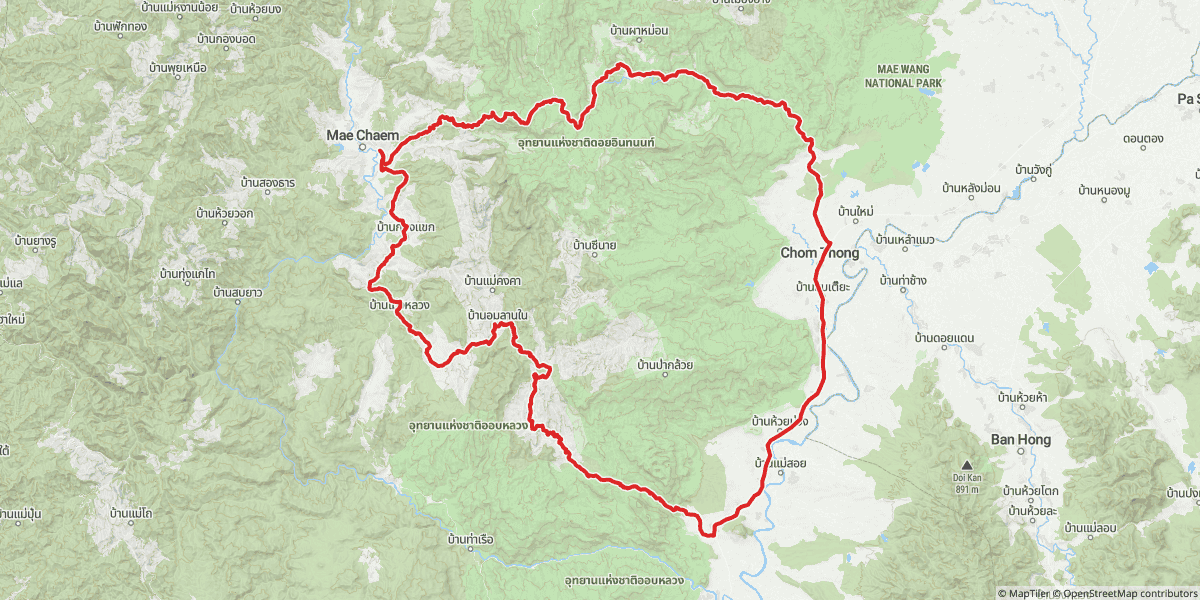
The Loop, in One Map
The red line is the whole day, ridden clockwise from Chom Thong: south along the Ping, west into the hills behind Ob Luang, north over the ridges to Mae Chaem, then home on the tarmac that arcs back east through Doi Inthanon National Park. The dirt is the southern and western two-thirds. The northern arc is the fast bit you earn.
Why Ride It in the Rain?
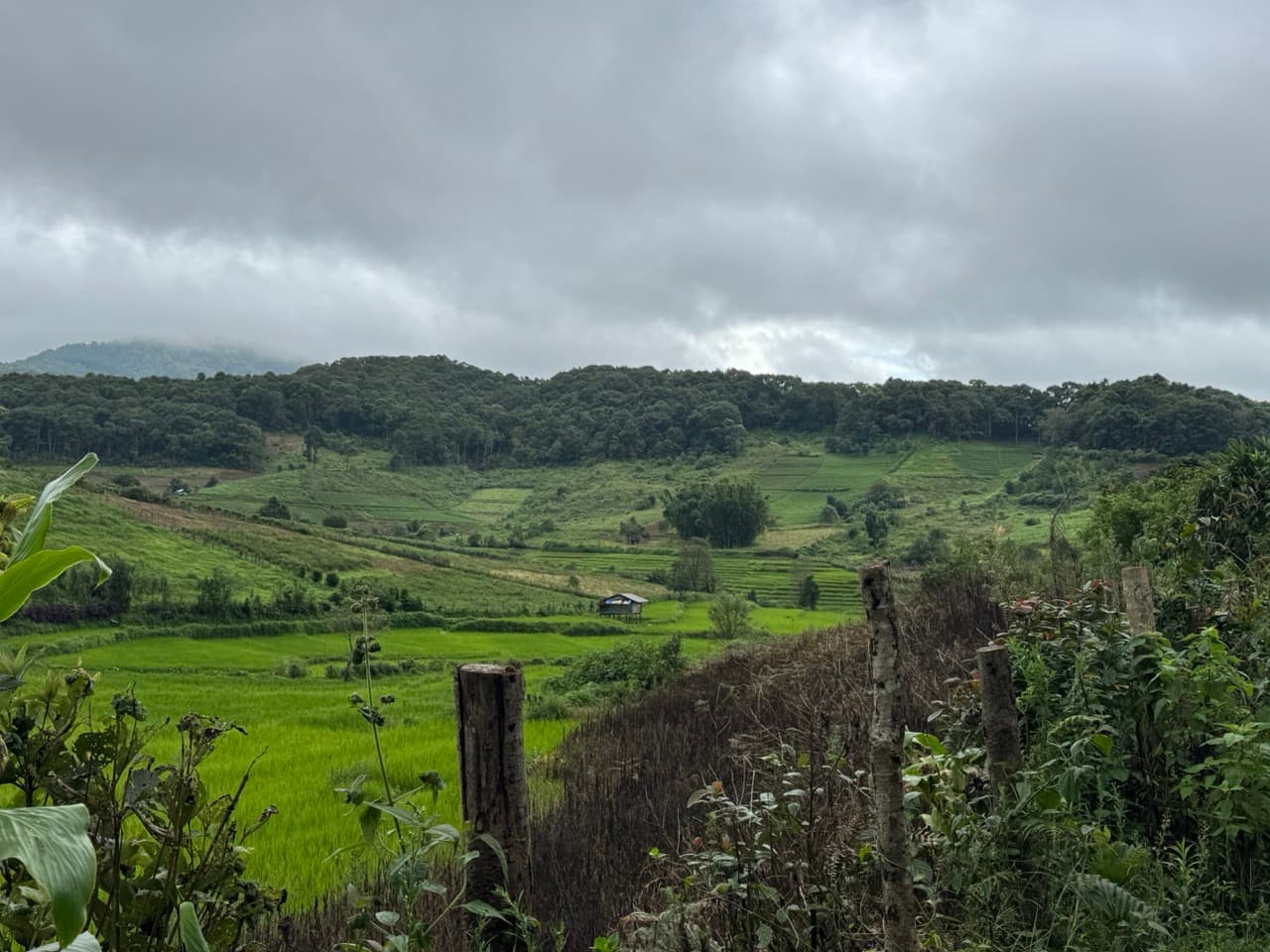
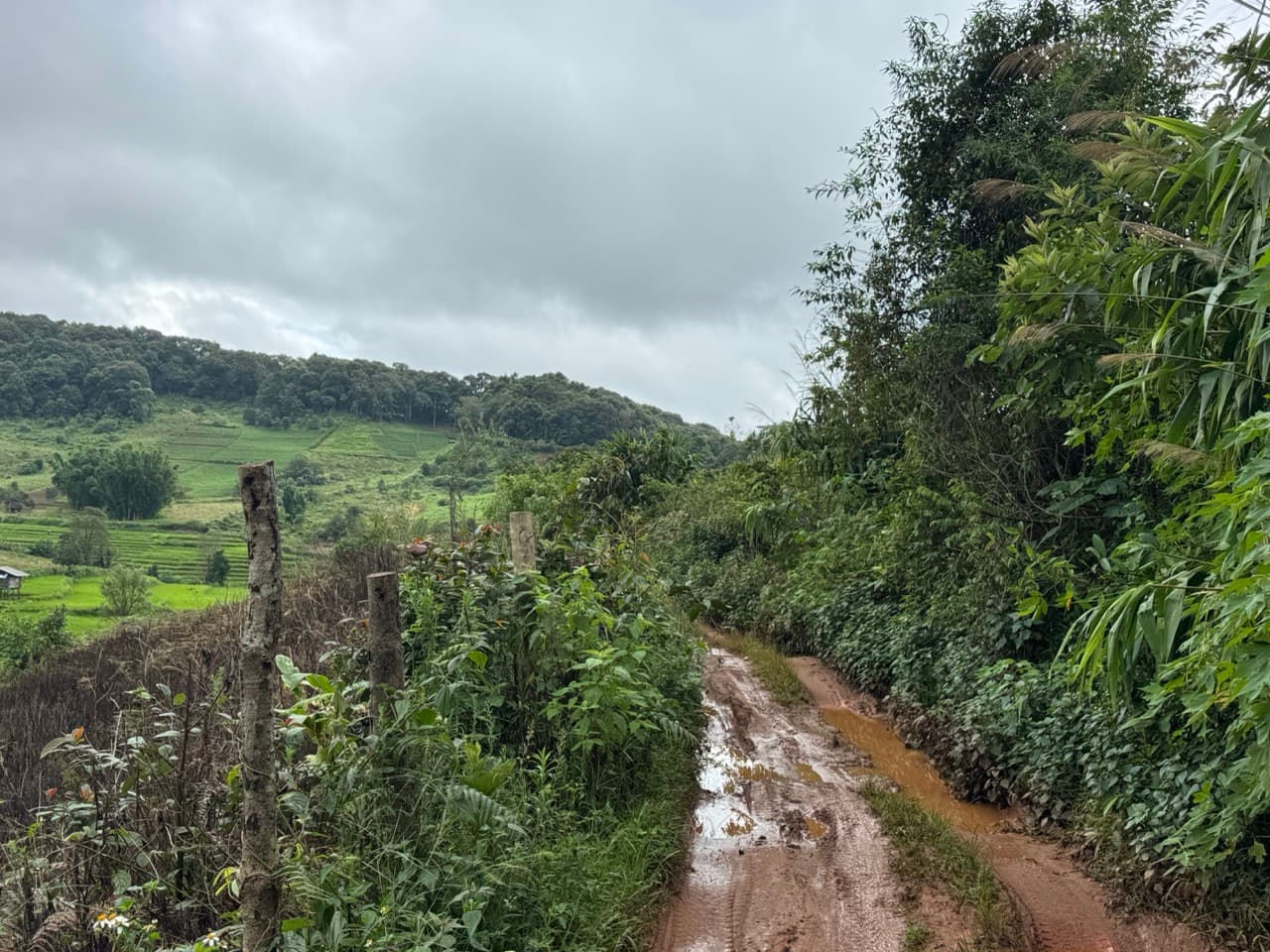
Because the same route is two different rides. In the cool season this is a pleasant, fast, slightly dusty day out — the kind of loop you finish and think you should have gone further. In August the hills are the greenest they get all year, the paddies are flooded and luminous, the cloud sits on the ridgelines, and every clay climb makes you commit to a line before you get to it.
It also means you will be slower than you planned. We averaged something close to walking pace through the middle section, and the day was better for it.
Red clay warning, and we mean it. Wet red clay is far more slippery than it looks, offers no warning before it lets go, and does not care how good your tyres are. If you have never ridden it, this is not the route to learn on alone.
Onto the Dirt
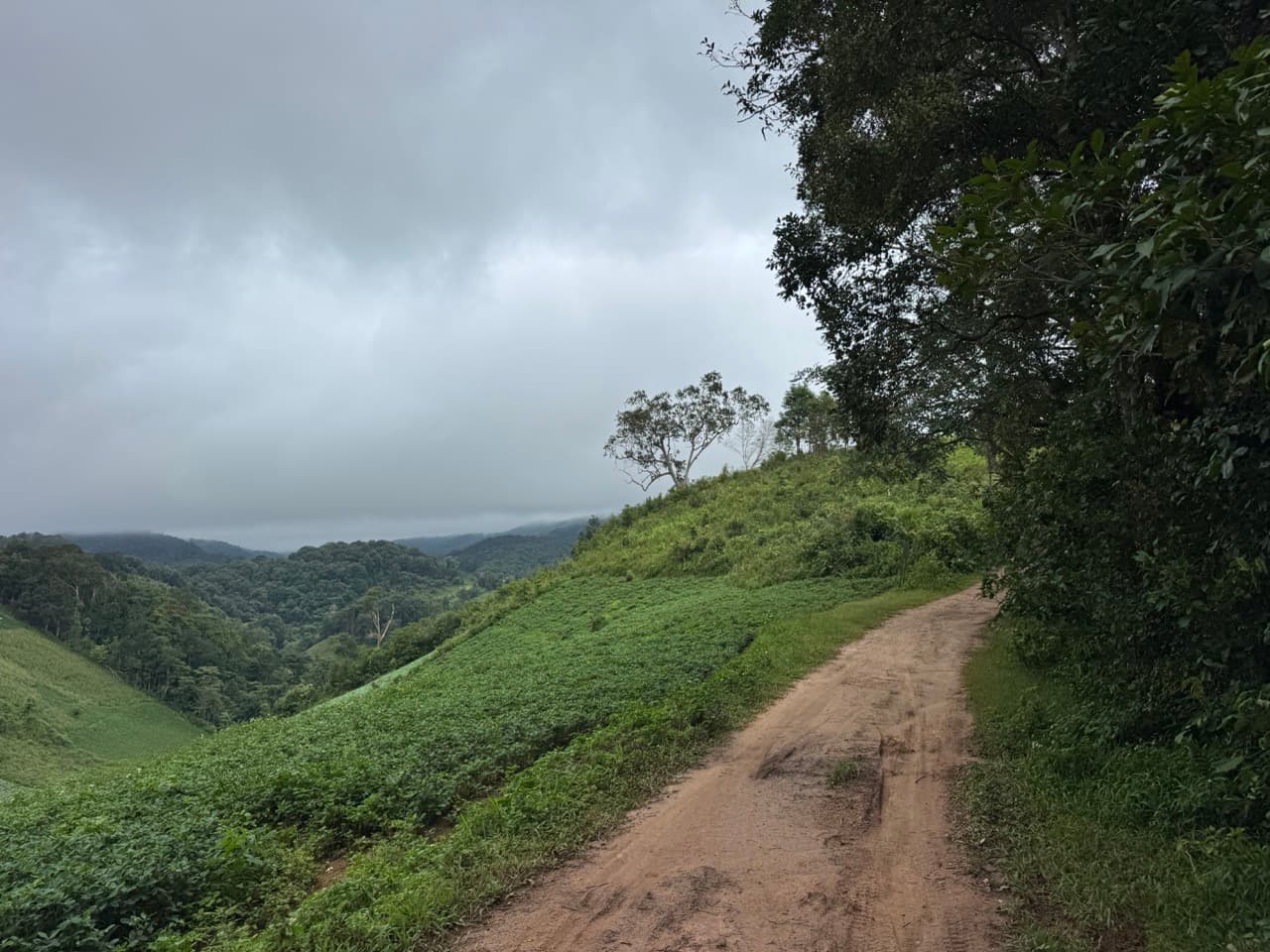
The turn off the paved road comes early and climbs hard — from around 460 metres at the roadside to 1,200 in a little over half an hour. The surface starts out generous: wide farm track, packed hard, corn on both sides, a painted centre line for the first few hundred metres as if someone had ambitions for it.
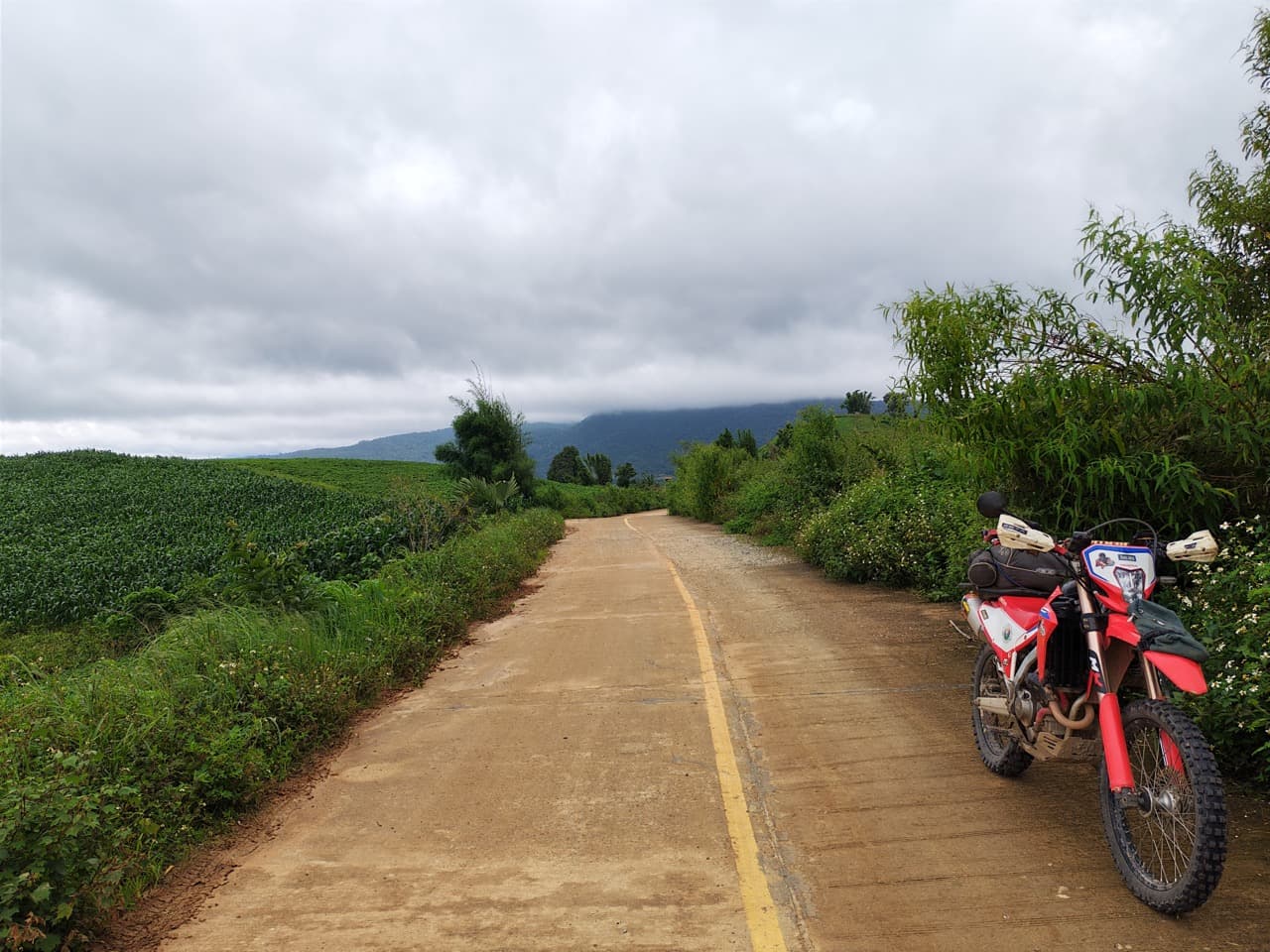
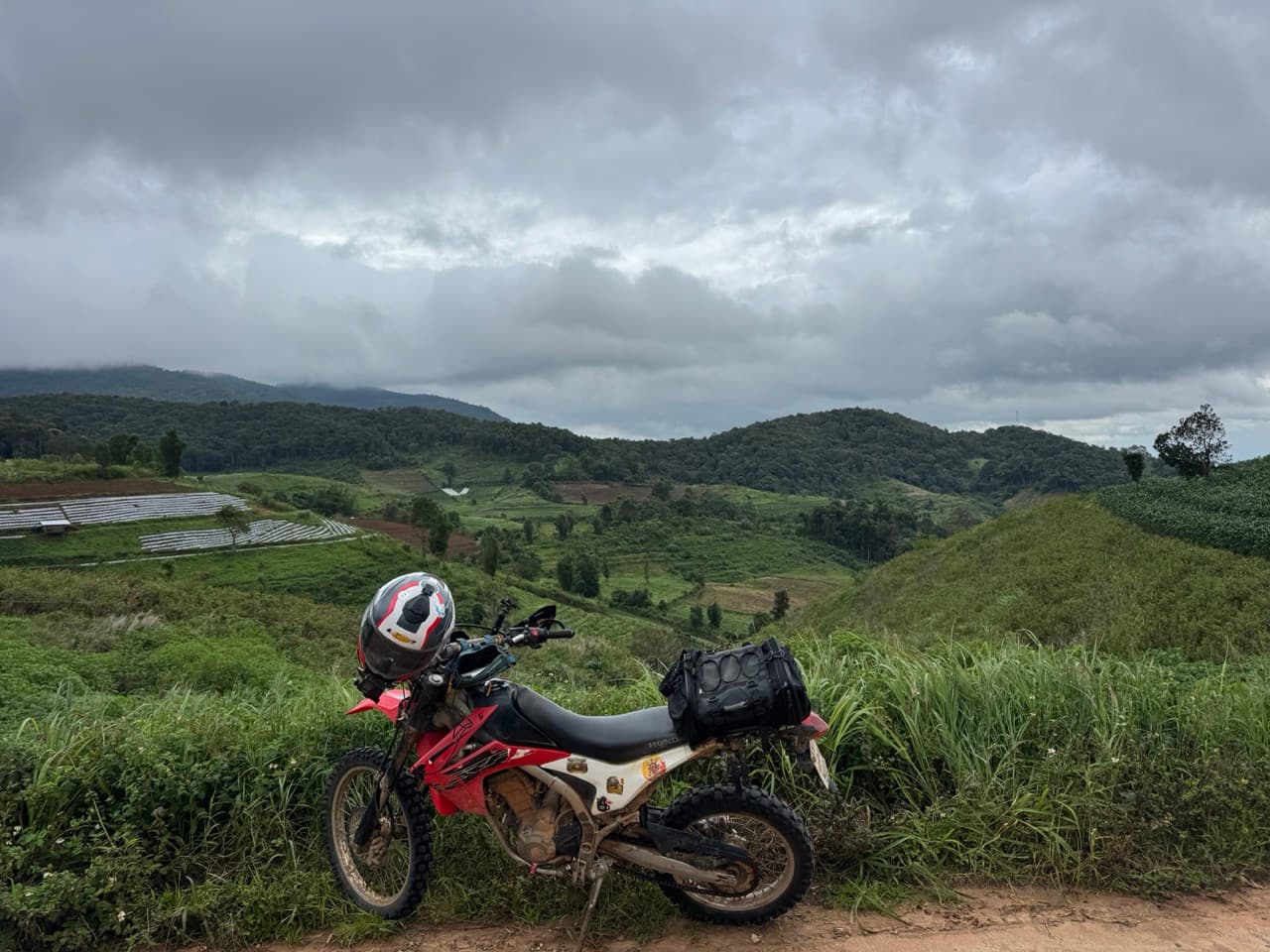
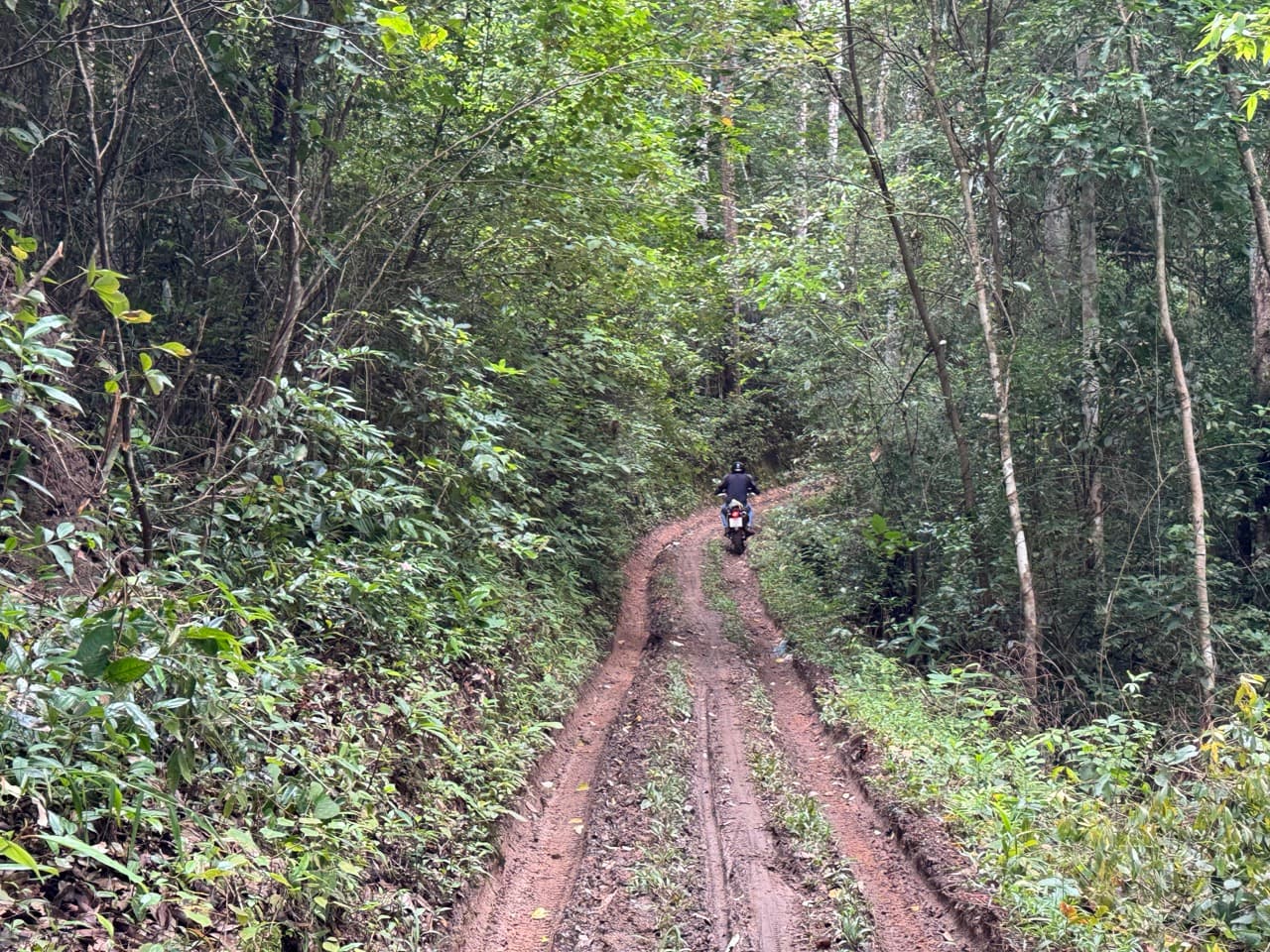
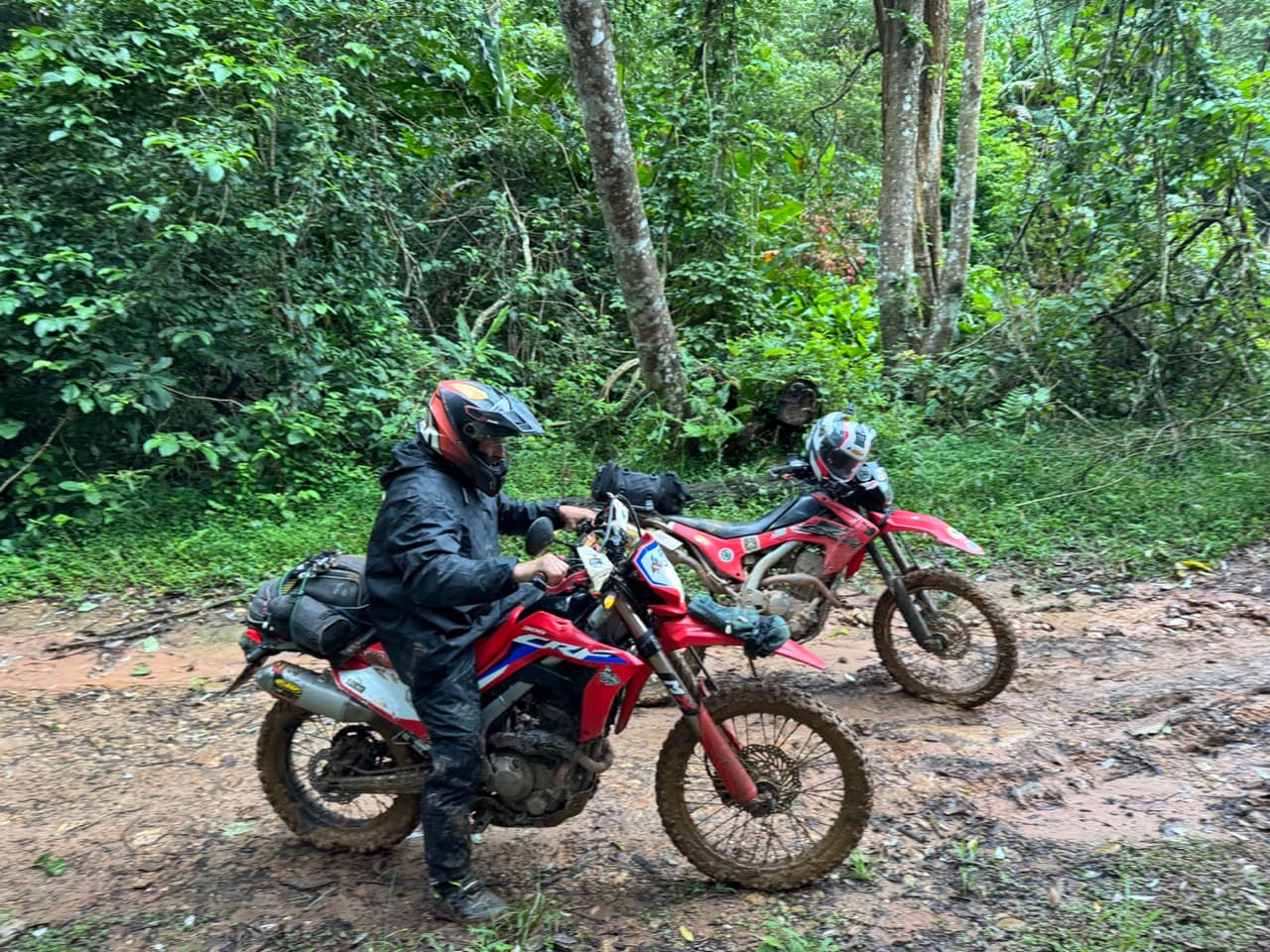
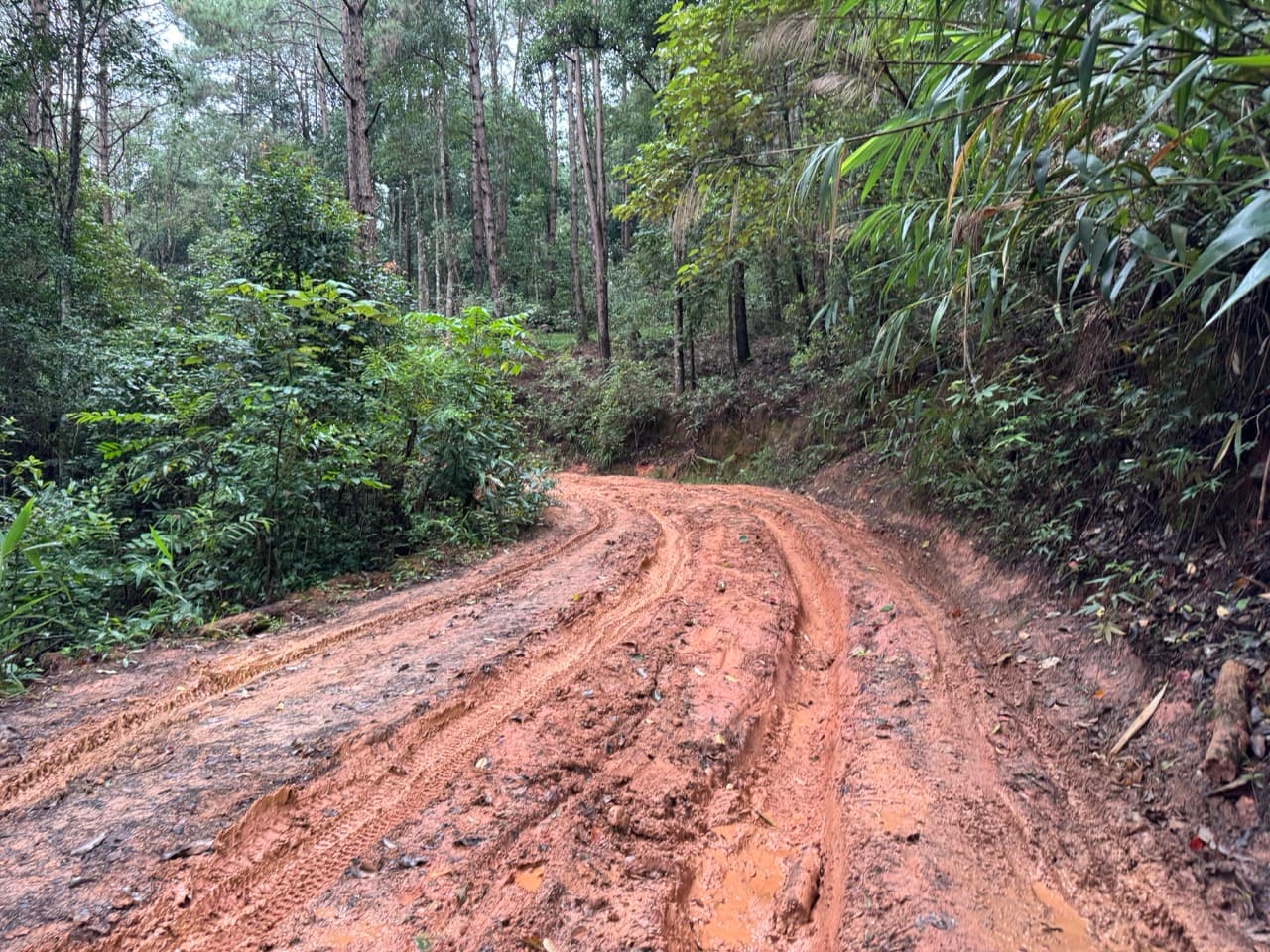
Then the clay starts. Not gradually — you come round a bend and the track is orange, cut into three deep ruts, with water standing in the bottom of each one. This is the surface for most of the next two hours.
Two Down
The first crash was the one that made everyone stop talking. One of the CRF300L riders — easily the most experienced of us, someone who has ridden this kind of ground for years — went down hard in second gear in the slick stuff. No warning, no obvious mistake, just the front washing out and the bike gone. It looked bad from behind. He got up, walked it off, picked the bike up and rode away, and that was the end of it. No injury, nothing bent.
The second was slower and funnier. Another CRF300L rider got to the bottom of a slick downhill with just enough momentum left to run out of options, tipped over at the bottom, and came within a metre or so of putting himself and the bike into a buffalo pond. He stayed dry. The bike stayed dry. Everyone else got a photo they were not fast enough to take.
That is the honest summary of wet red clay: it does not punish bad riding especially, it punishes everybody equally and at random. Ride it in second, look far ahead, stay loose, and accept that you are going to fall off at some point.
The Tree
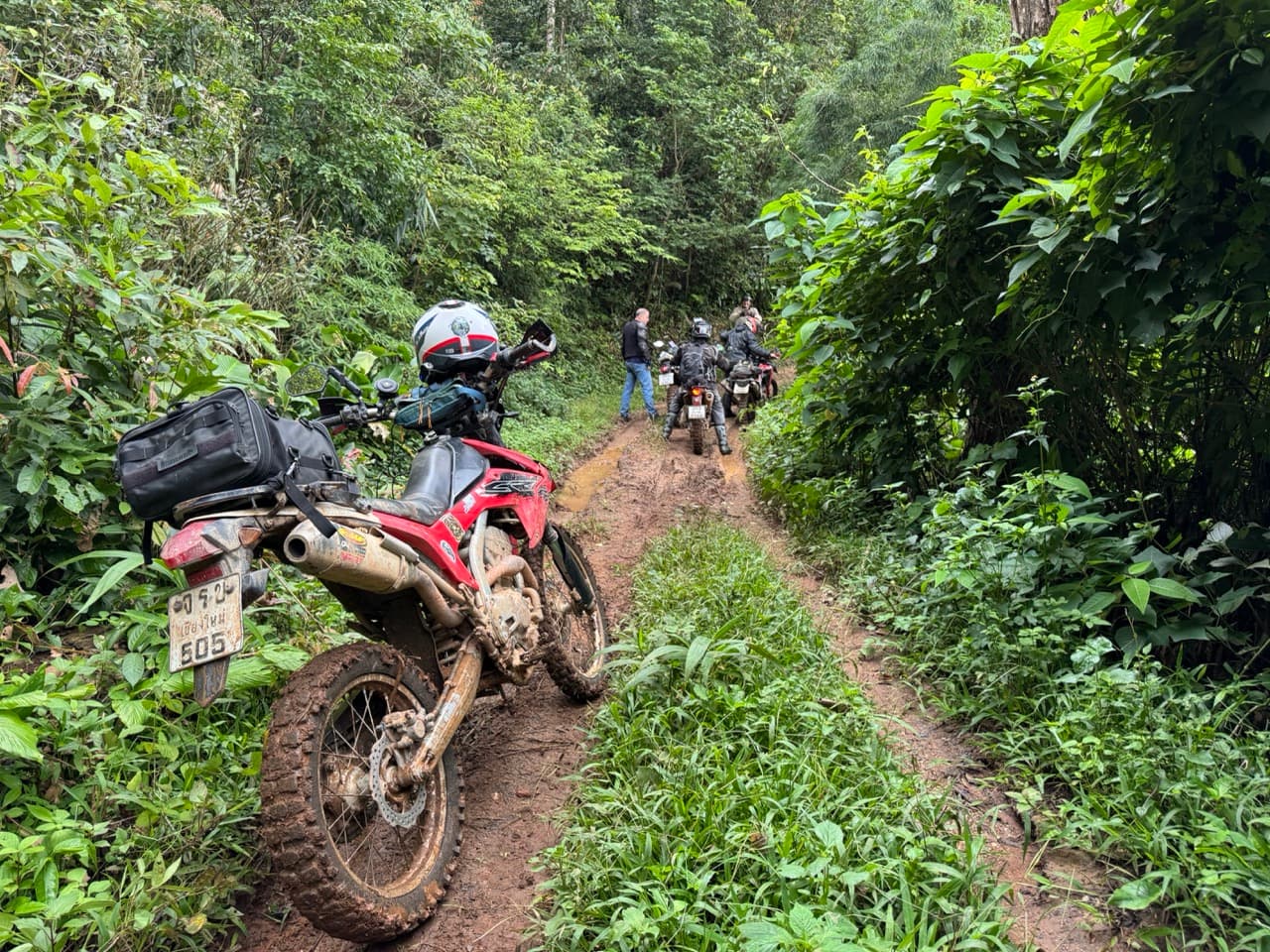
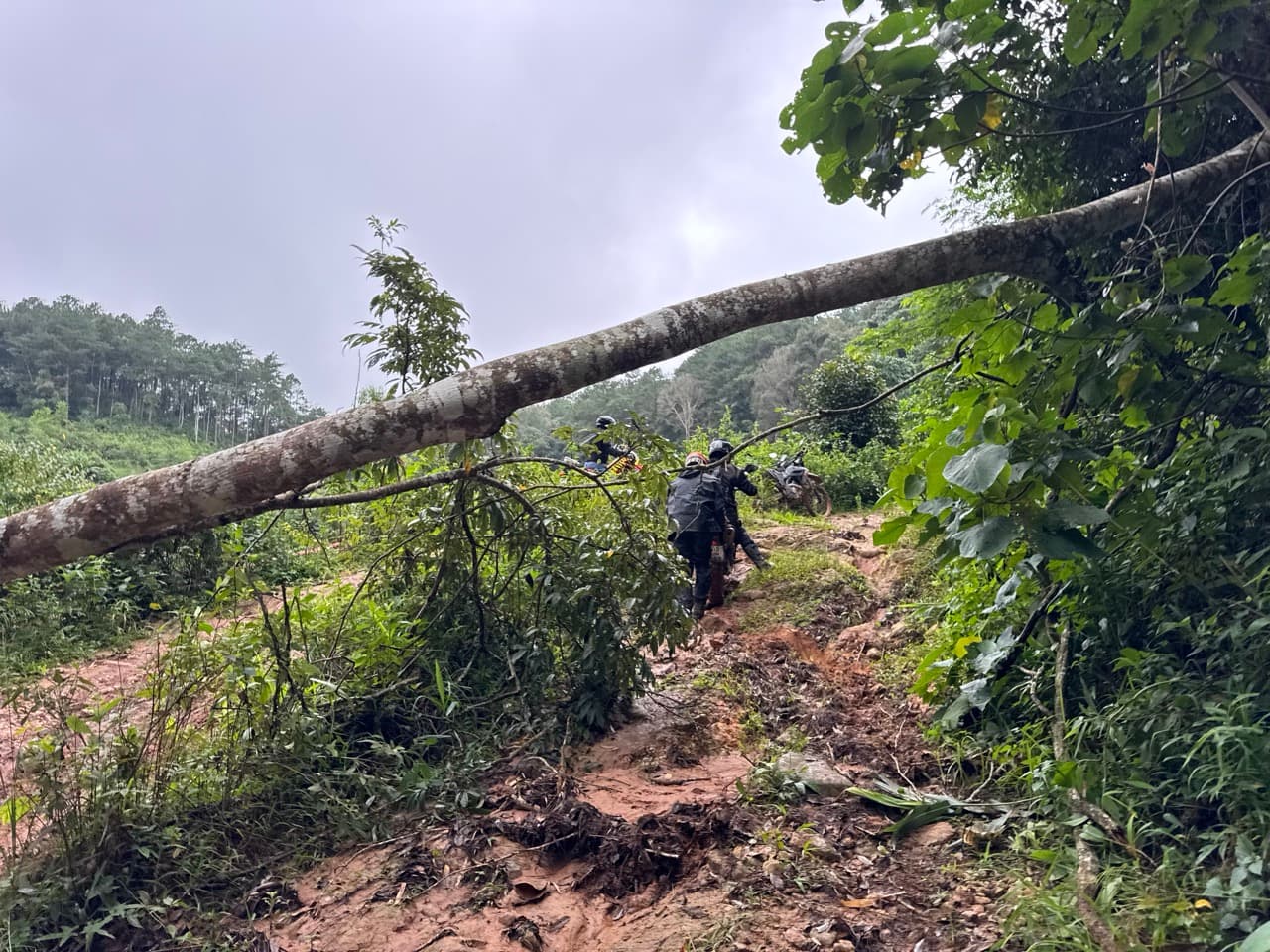
About two-thirds of the way through the dirt we came round a corner into a tree lying flat across the track — a full trunk, waist height at the middle, roots still in the bank on the uphill side. It had come down recently enough that nobody had cut it yet.
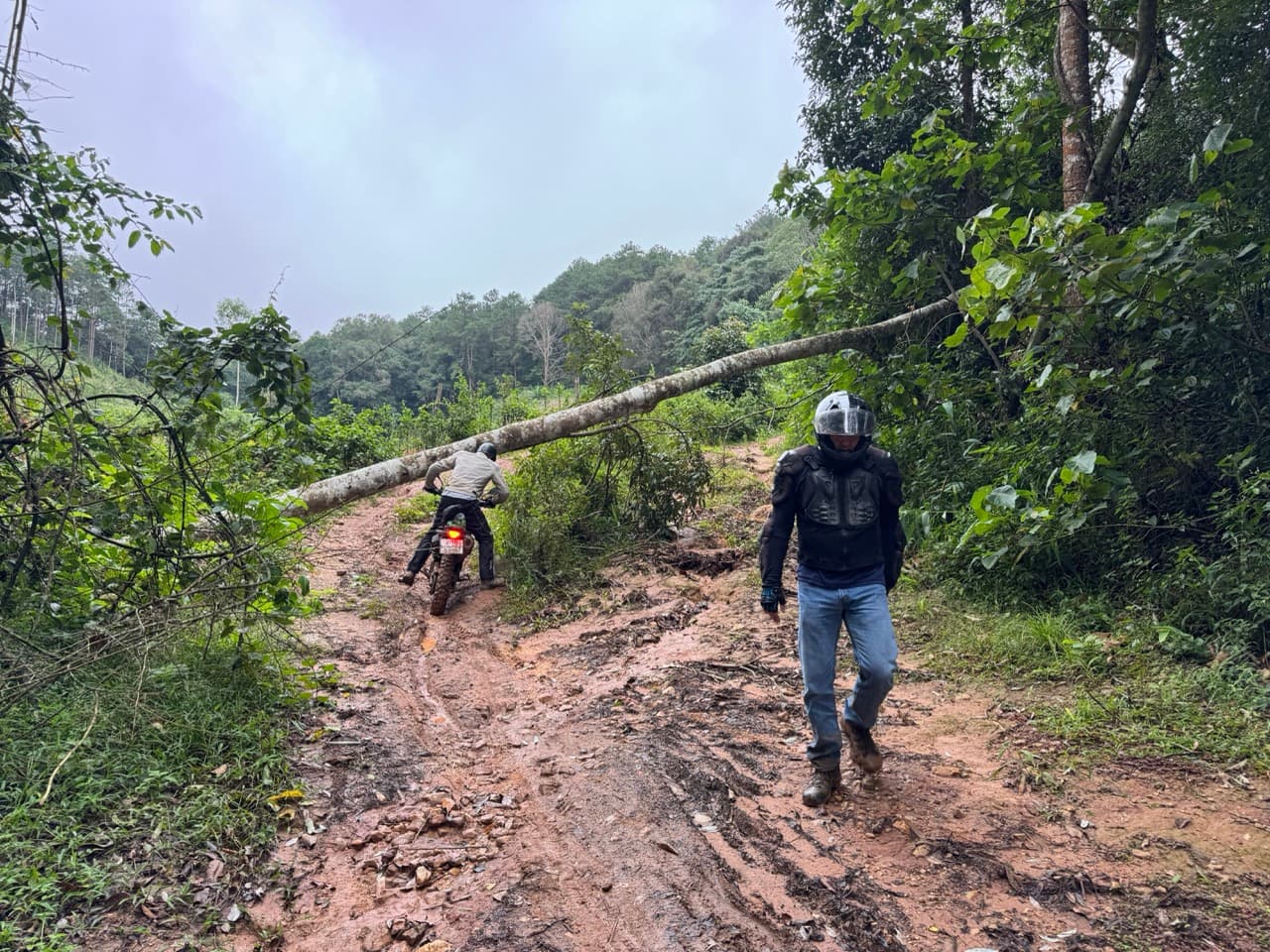
The trunk tapers toward the downhill end, so the answer was to ride down the bank, duck under the thin end where it clears the ground by about a metre, and climb back onto the track. Five bikes, one at a time, with everyone else standing around offering unhelpful advice. Ten minutes, no drama.
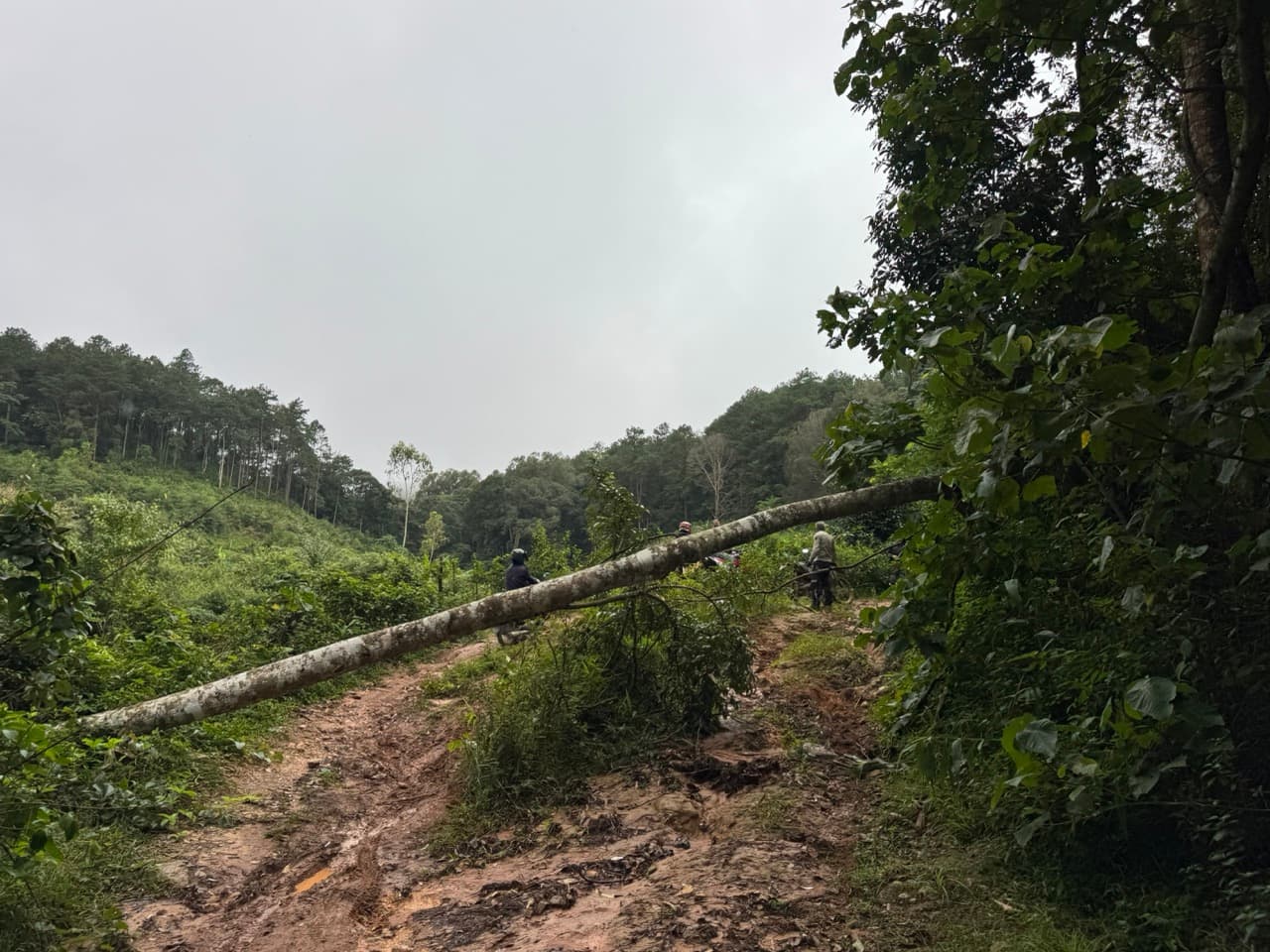
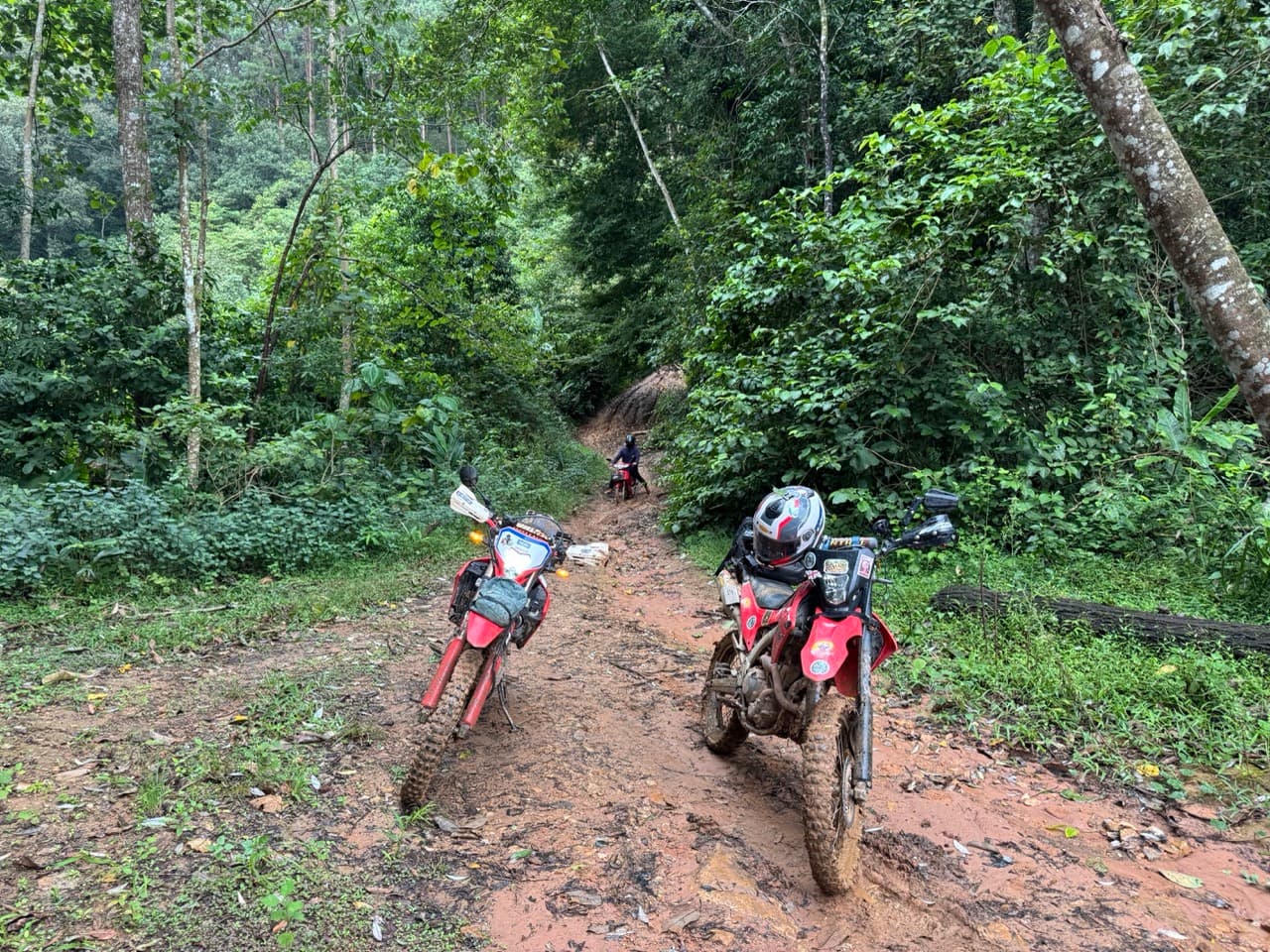
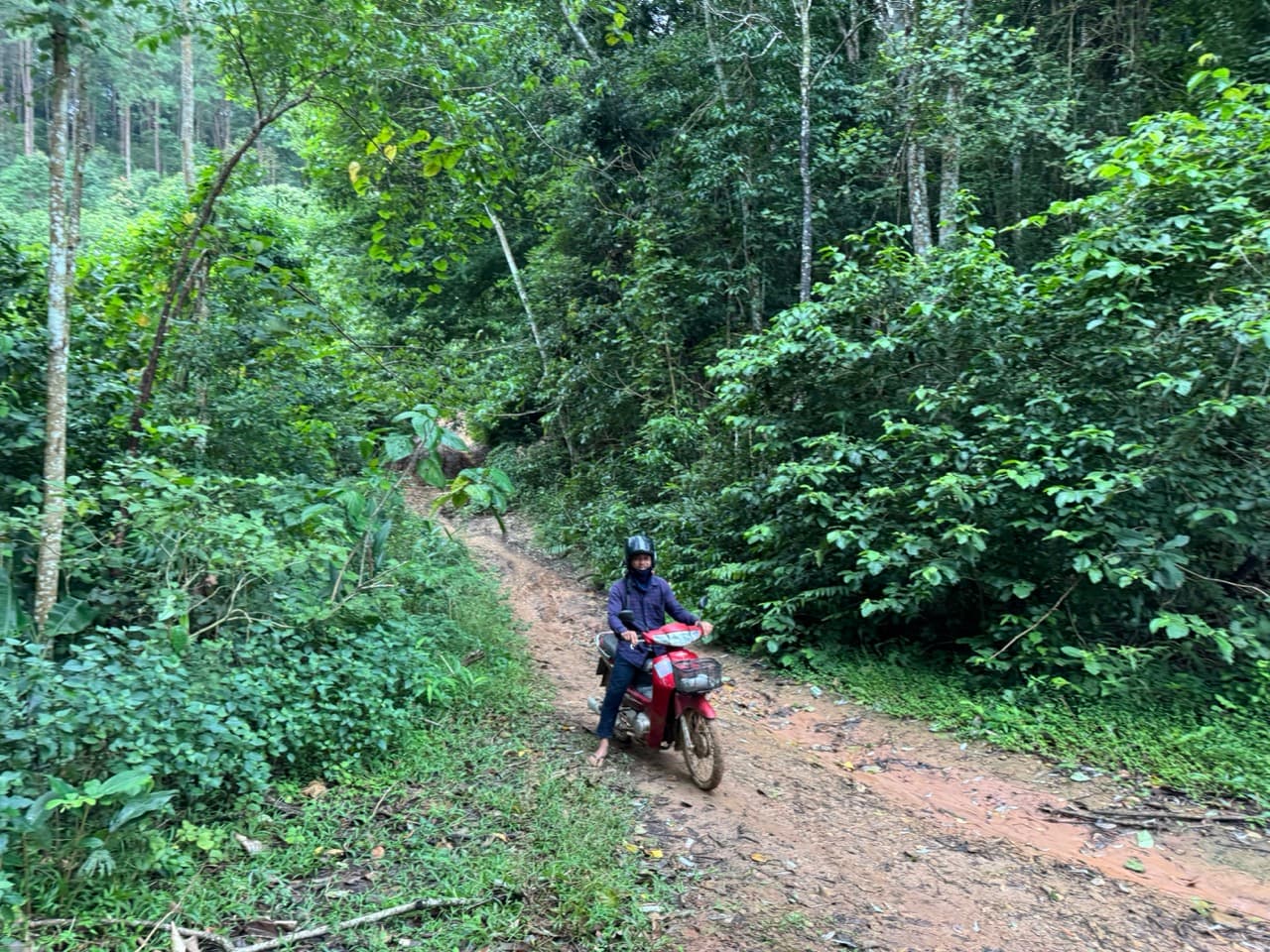
Two minutes later a local came the other way on a Wave, in sandals, no bags, no fuss, and went round the tree without appearing to slow down. We had five enduro bikes, five sets of boots, and had taken ten minutes over the same obstacle. It is a useful thing to be reminded of occasionally.
Into the Pines
The last stretch of dirt climbs into pine forest above 1,300 metres, and the character changes again. The clay goes from orange grease to something closer to wet sand, deeply rutted by pickups, and it is the most fun riding of the day — enough grip to carry speed, enough ruts to keep you honest.
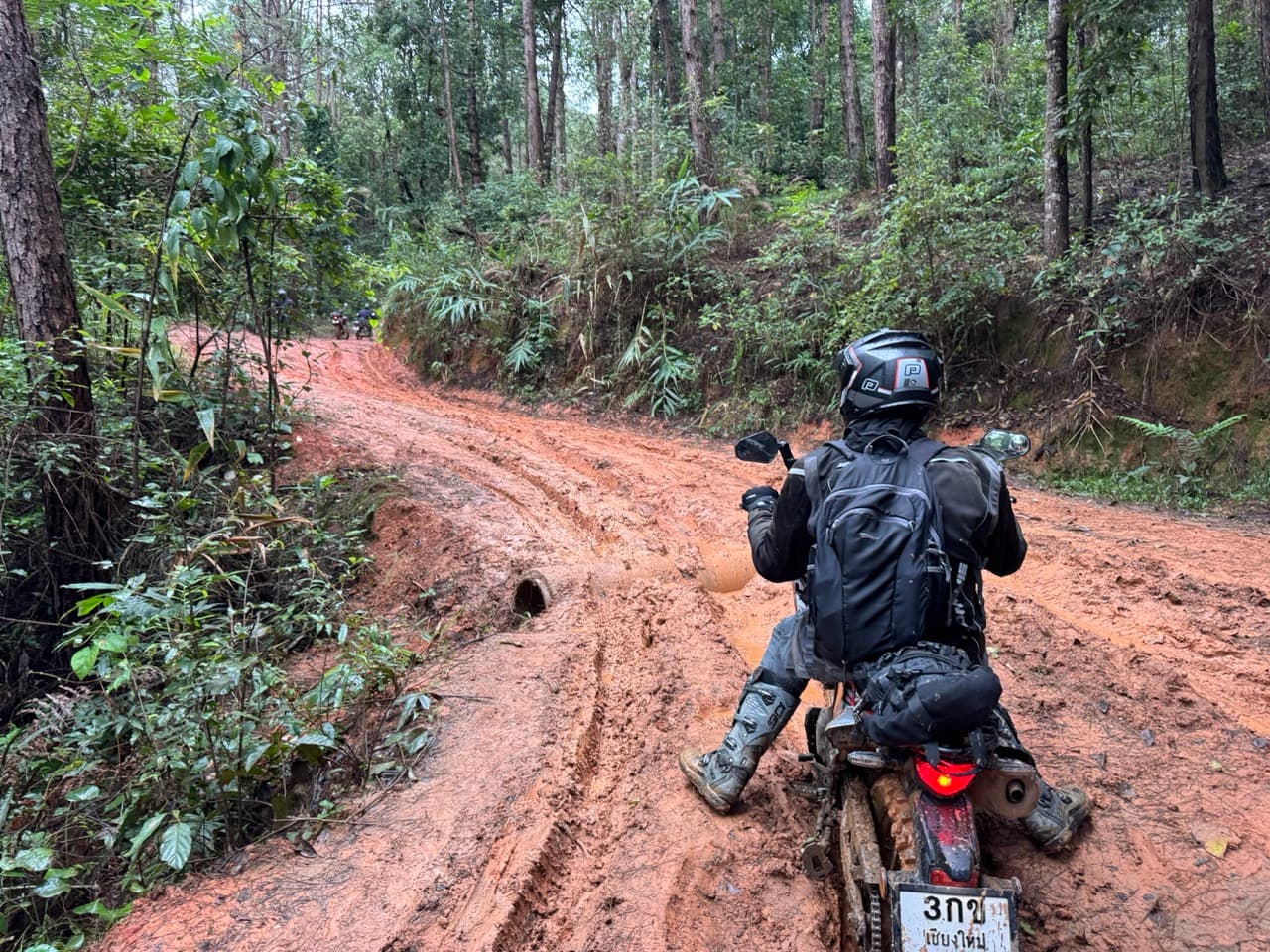
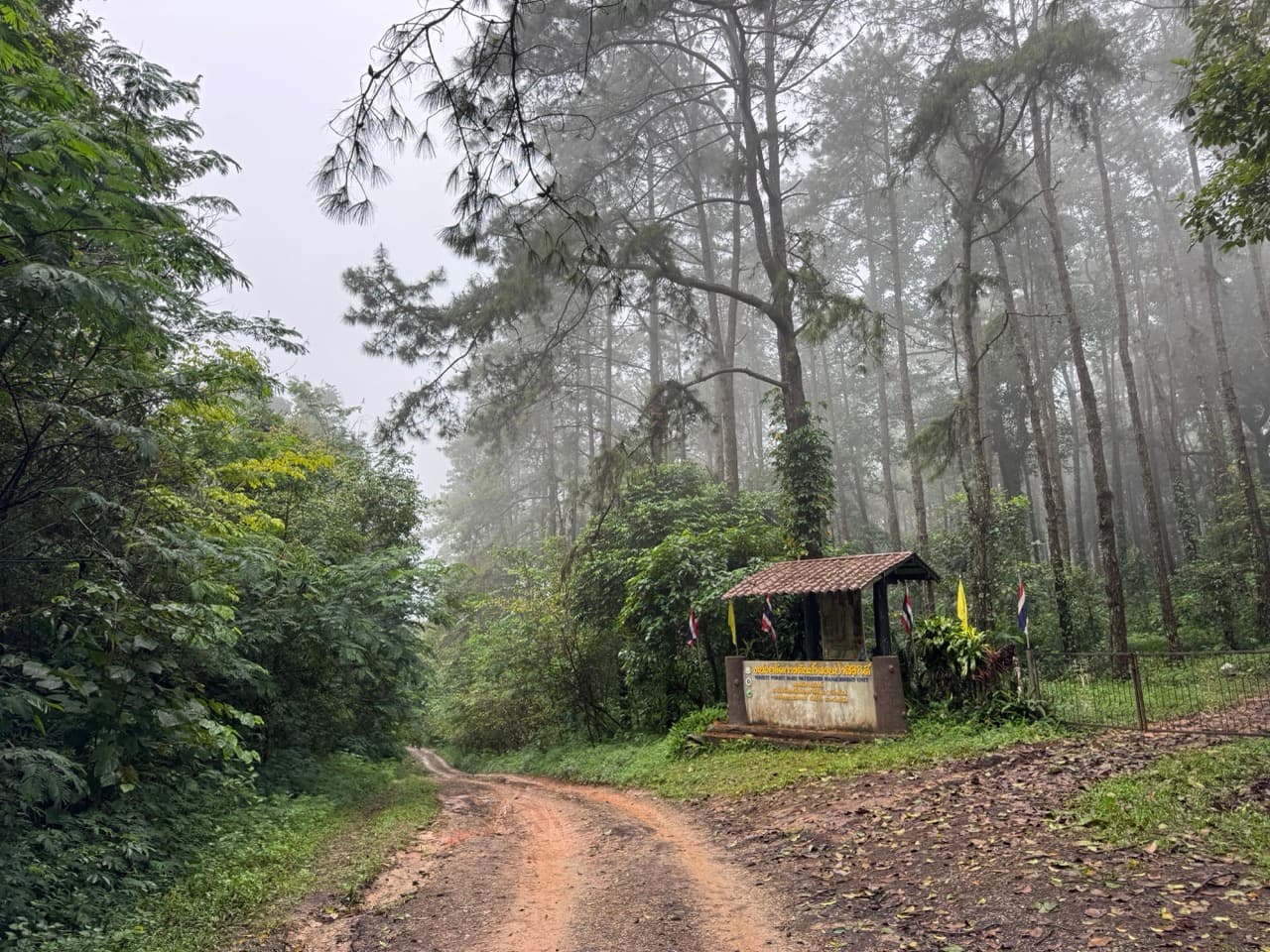
Near the top the cloud came down properly and we rode the last few kilometres in fog, past a forest protection unit with its flags hanging wet and nobody home.
The Chain
One of the CRF250s had been getting noisier all morning and the chain finally came off the sprocket — worn chain, worn sprocket, and a day of clay packed into both. The timing was the only good thing about it: it held all the way through the dirt and let go once we were back on hard surface, where we could stop somewhere flat and dry rather than halfway up a clay climb with four bikes stacked up behind.
It went back on at the roadside, we tightened it up, and that was the repair. It got the bike to Mae Chaem and it got the bike home. The sprocket needed replacing, not adjusting, but adjusting was what we had.
Check your chain and sprockets before a wet-season ride, not after. Clay is abrasive, it packs into the run, and a chain that is merely tired in the dry season becomes a chain that jumps in the wet. Carry the spanners to adjust one at the roadside.
Mae Chaem, and Lunch
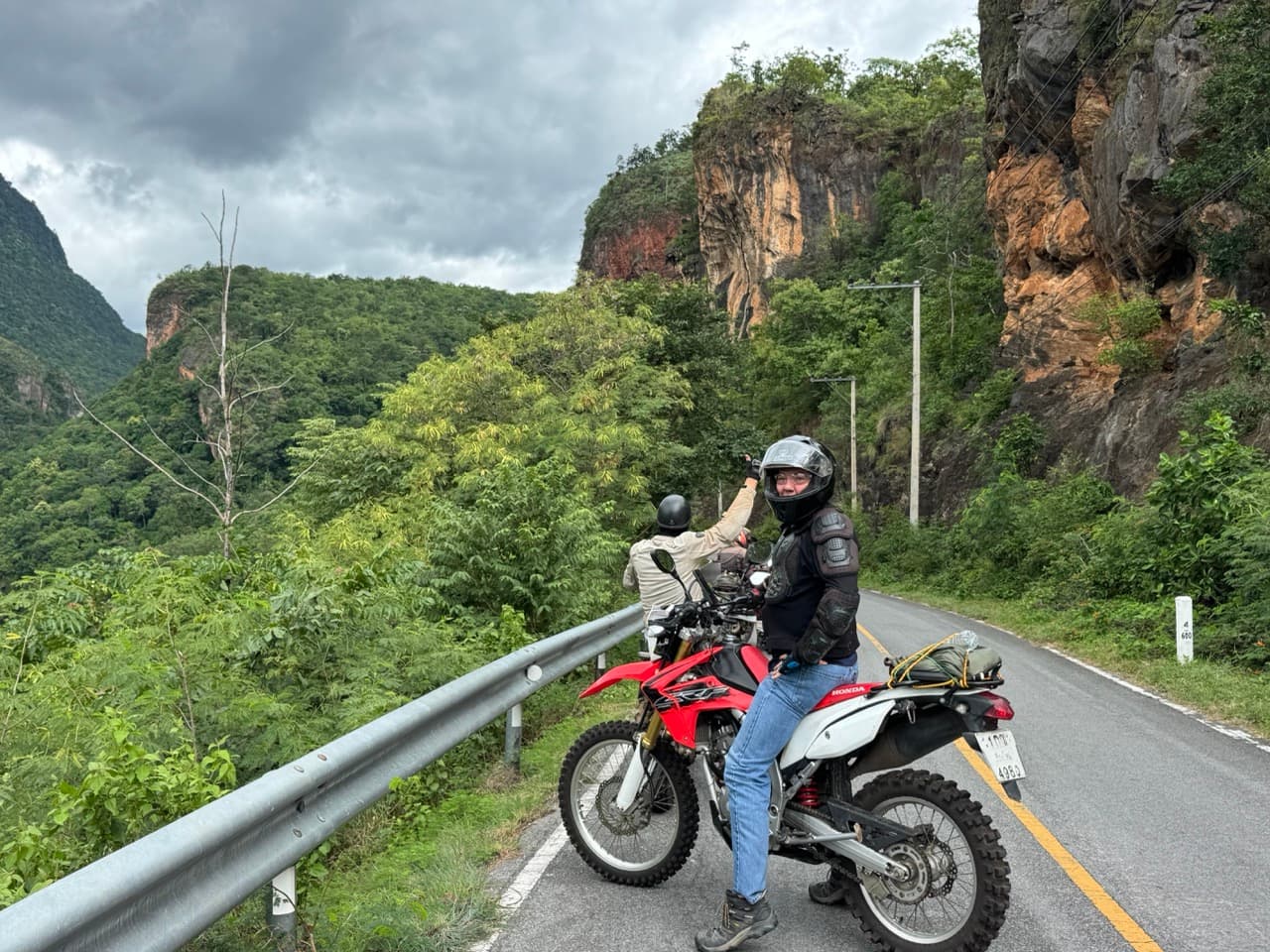
We rolled into Mae Chaem just as the rain properly started — the sort of timing you do not plan and do not admit was luck. Fuel first, because Mae Chaem is where you fuel on this loop and there is nothing reliable in between, then straight to the Mae Chaem Gate Restaurant to sit under a roof and watch it come down.
It was a great lunch. Five people, filthy, steaming gently, eating properly and in no hurry at all while the road outside turned into a river. If you have ridden out to Mae Chaem before you have probably already eaten here. If you have not, it is the correct end to this ride.
The way home is the easy part: the tarmac arc back east through Doi Inthanon National Park to Chom Thong. Wet, cold at altitude, and after five hours on clay it feels like being handed a completely different motorcycle.
Ride this loop — GPX track
1 file · 775 KB
The track we recorded on the day, start to finish. Load it into your GPS or phone app and ride the same 152 km.
If You’re Thinking About Doing This
- ·Bike: any 250 cc+ enduro. We ran three CRF300Ls and two CRF250Ls and nothing was out of its depth — but knobbies matter far more in the wet than displacement does.
- ·Chain and sprockets: check them before you go. Ours was the one mechanical of the day and it was entirely predictable.
- ·Fuel: fill in Chom Thong, fill again in Mae Chaem. There is nothing dependable on the dirt in between.
- ·Water and food: carry both. We saw one local rider and no shops in four hours of dirt.
- ·Tools: enough to adjust a chain and pick a bike up. A tow strap is not a bad idea in the wet.
- ·Season: November to February is the easy version. June to October is the interesting version — slower, greener, and genuinely harder.
- ·Group: do not ride this one alone in the rain. Two falls in one day, both harmless with four other people standing there, would have been a different story solo.
- ·Pace: budget the whole day. We were on dirt before eleven and eating in Mae Chaem in the afternoon.
A hundred and fifty-two kilometres, five riders, two falls, one tree, one chain, and a very good lunch in the rain. The short route to Mae Chaem is only short on the map.
FAQ
- How hard is the Chom Thong to Mae Chaem dirt route?
- In the dry season it is a fair intermediate ride — mostly good 4x4 farm track with occasional ruts and the odd fallen tree. In the wet season it is significantly harder. The red clay above 800 metres becomes extremely slippery, climbs need commitment, and two of our five riders went down on it in a single day without doing anything obviously wrong.
- Can you ride Chom Thong to Mae Chaem on dirt in the rainy season?
- Yes, and it is arguably the better ride — the hills are green, the paddies are flooded, and the trail is empty. But budget far more time than the distance suggests, ride with other people, and be honest with yourself about whether you have ridden wet red clay before. It is much more slippery than it looks and gives no warning before it lets go.
- What bike do you need for this route?
- Any 250 cc+ enduro or dual-sport. We rode three CRF300Ls and two CRF250Ls. Tyres matter more than the bike — proper knobbies are worth far more than extra capacity on wet clay.
- Where do you get fuel between Chom Thong and Mae Chaem?
- You do not. Fill up in Chom Thong before you start and again in Mae Chaem at the turnaround. There is nothing dependable on the dirt section in between, and the 152 km loop with a slow pace and a lot of first and second gear will use more fuel than you expect.
- How long does the loop take?
- Plan a full day. The dirt is roughly two-thirds of the 152 km and moves slowly in the wet — we were on the trail before eleven and did not reach Mae Chaem until the rain arrived in the afternoon. The tarmac return over Doi Inthanon is quick by comparison.
The full route, with the GPX, elevation and current condition notes, is on our routes page.